The Sejahtera MADANI initiative operating in Perak has successfully channeled RM2.3 million in support to around 2,000 beneficiaries, marking a significant step in the government's social welfare efforts across the state. Building on this foundation, the programme has now secured an additional RM3 million in fresh funding that will allow organisers to broaden the scope of assistance and reach more vulnerable groups in coming months.
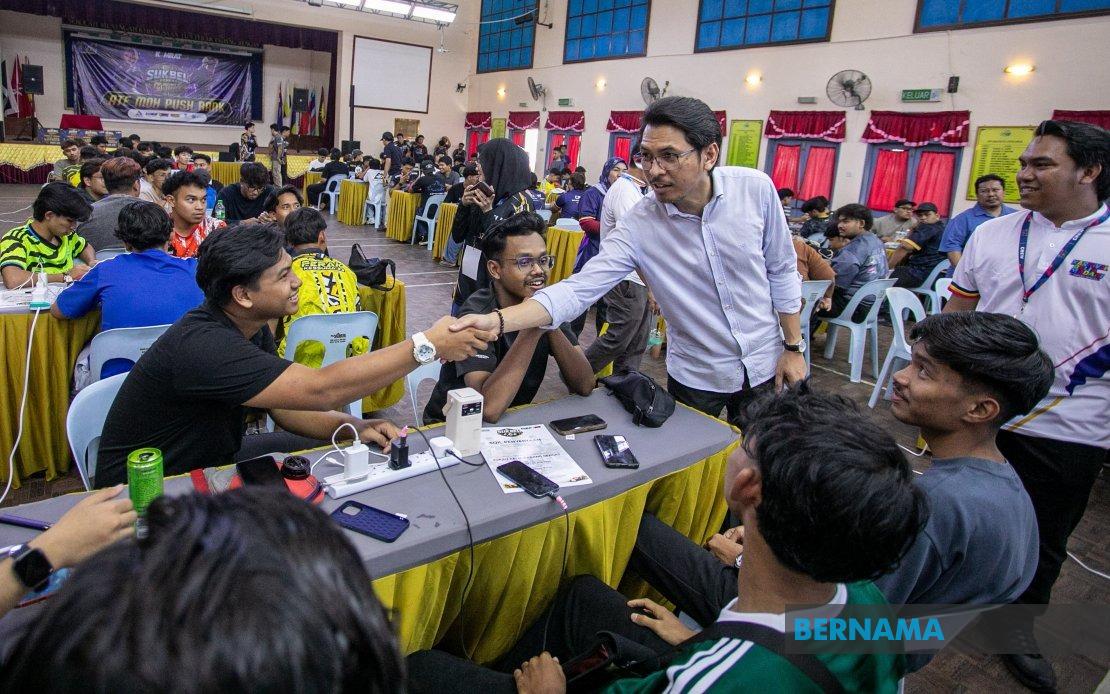
Muhammad Kamil Abdul Munim, the Finance Minister's political secretary, revealed the expansion plans while addressing media representatives at a Sejahtera MADANI roadshow held in Padang Rengas parliamentary constituency. Speaking at the Millennium Hall in Lubok Merbau, he outlined how the supplementary allocation would enable the initiative to extend benefits to a wider cross-section of the population, with particular emphasis on those engaged in small-scale trading, families struggling to make ends meet, and deserving students pursuing tertiary education.
The assistance provided through the Sejahtera MADANI framework goes considerably beyond straightforward cash handouts. The programme combines direct financial transfers with targeted in-kind support designed to enhance productive capacity and economic resilience. For entrepreneurs operating at the grassroots level, this encompasses the provision of business tools and equipment intended to increase operational efficiency and revenue generation. Educational beneficiaries, particularly those who excelled in their Sijil Pelajaran Malaysia examinations, receive technological support such as laptops to facilitate their university studies and professional development.
During the Padang Rengas roadshow, the initiative demonstrated its multifaceted approach in practice. Thirteen high-achieving SPM students enrolled in higher education programmes received laptops as part of the scheme, while five small-scale business operators were presented with equipment packages tailored to their respective commercial activities. These distributions underscored the government's philosophy of delivering aid that directly addresses identified needs and constraints faced by target communities.
Muhammad Kamil emphasised that the Sejahtera MADANI programme reflects a deliberate policy choice by the MADANI Government to ensure that public resources allocated for social support reach intended recipients efficiently and produce measurable improvements in their circumstances. Rather than adopting a one-size-fits-all approach, the initiative seeks to customise interventions based on beneficiary profiles and objectives, whether financial stabilisation, business viability, or educational advancement.
However, the expansion of the scheme comes amid acknowledgment that implementation has encountered challenges requiring corrective action. Muhammad Kamil disclosed that the original operational model, which granted substantial discretion to local communities in identifying and prioritising projects, revealed significant weaknesses during execution. Several initiatives failed to progress as planned, raising concerns about project management and stewardship of public funds in certain instances.
In response to these implementation gaps, the government has committed to substantially strengthening oversight mechanisms across all Sejahtera MADANI projects. Muhammad Kamil stressed that enhanced monitoring protocols would be mandatory going forward, with closer supervisory engagement at multiple implementation stages to identify and rectify deficiencies promptly. While acknowledging that operational shortcomings are inherent to large-scale programmes, he insisted that robust ongoing scrutiny would minimise the risk of fraudulent practices or financial irregularities compromising the integrity of fund deployment.
The tightening of administrative controls reflects lessons learned from earlier phases of the programme and represents an attempt to balance community autonomy in project selection with sufficient government oversight to safeguard public accountability. This recalibration signals recognition that grassroots participation in development planning, though valuable, requires complementary institutional checks to ensure resources serve their intended purpose and reach beneficiaries as designed.
For Malaysia's development landscape, the Sejahtera MADANI initiative exemplifies contemporary approaches to social protection that extend beyond income transfers to encompass capability enhancement. The inclusion of equipment for entrepreneurs and technology for students reflects growing emphasis on breaking poverty cycles through productivity improvements and human capital investment rather than perpetuating dependency on periodic financial assistance.
The Perak results provide important indicators for national programme design. With 2,000 beneficiaries already assisted and plans to scale operations further, the initiative offers a regional test case for integrated support models combining cash, goods, and services. The renewed commitment to stricter monitoring, while potentially tempering some community enthusiasm for autonomous project selection, suggests policymakers are prioritising accountability and results delivery over administrative flexibility.
As the programme expands through additional funding, the practical challenge will lie in maintaining beneficiary engagement and community buy-in whilst imposing tighter procedural controls. Success will hinge on whether supervisory improvements enhance rather than obstruct local participation and whether the additional RM3 million genuinely extends reach to underserved populations or simply consolidates support among existing networks.
The initiative's evolution also carries implications for similar programmes operating across Southeast Asia, where balancing decentralised implementation with central accountability remains persistently difficult. Malaysia's emerging approach to this perennial governance challenge merits close monitoring by regional peers navigating analogous tensions between grassroots empowerment and institutional oversight in poverty alleviation efforts.

