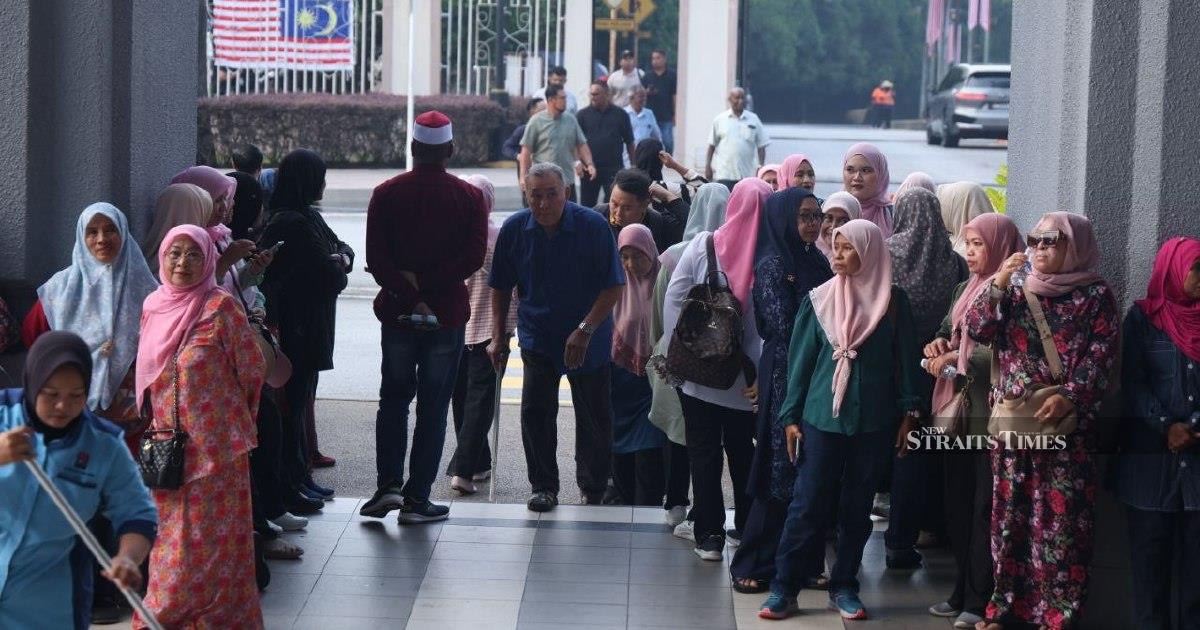
The Kuala Lumpur Court Complex saw a surge of journalistic activity on the day former Prime Minister Datuk Seri Ismail Sabri Yaakob was scheduled to make a court appearance for charging. More than 30 media practitioners converged on the court lobby, positioning themselves to capture the significant moment when the ex-leader would arrive to face legal proceedings. The gathering underscored the intense public interest surrounding the case, reflecting Malaysia's ongoing scrutiny of former high-ranking officials navigating the country's legal system.
The scene at the courthouse reflected the broader pattern of heightened attention that surrounds legal matters involving prominent political figures in Malaysia. Since the country's transition toward greater institutional accountability, court appearances by former prime ministers have drawn unprecedented media attendance and public interest. The substantial media presence at the Court Complex lobby illustrated how closely Malaysians continue to monitor cases involving those who once held the nation's highest executive office.
Ismail Sabri's tenure as Prime Minister, which ended in August 2023, marked a significant period in Malaysian politics. During his eighteen-month leadership, he navigated various domestic challenges while attempting to stabilise the government following the collapse of the Muhyiddin Yassin administration. His subsequent legal entanglements have kept him in the public consciousness, contributing to the media's keen interest in his court proceedings.
The anticipation surrounding his appearance demonstrates how court proceedings involving former leaders function as pivotal moments in Malaysia's legal and political landscape. Such cases often carry implications beyond the individual defendant, raising broader questions about governance, accountability, and the rule of law. The gathering of numerous media representatives signifies the national importance attributed to ensuring transparent and accessible reporting of the proceedings.
The Court Complex, located in the heart of Kuala Lumpur's administrative district, has become a focal point for high-profile cases in recent years. The venue's prominence in politically sensitive litigation has necessitated careful management of media access and public movement. The presence of over 30 journalists created logistical considerations for court administrators seeking to balance transparency with the smooth functioning of judicial proceedings.
Medial practitioners representing various news organisations, from print to broadcast to digital platforms, converged to secure firsthand accounts and footage of the former premier's arrival. This multi-platform coverage approach reflects the modern news cycle's demand for simultaneous reporting across different channels, ensuring widespread dissemination of developments to Malaysian audiences across the country and internationally.
The specific charges that Ismail Sabri would face remained a focal point of media inquiry and public speculation in the hours preceding his court appearance. Legal analysts and political commentators had been examining potential implications of the charges, both for the former prime minister personally and for the broader political establishment. Such cases often serve as testing grounds for how Malaysia's judiciary handles matters involving the highest echelons of political power.
The energy and preparation evident in the Court Complex lobby underscored the significance Malaysians attach to transparency in legal proceedings involving prominent figures. Media access to court facilities and the ability to document proceedings publicly forms an essential component of judicial accountability and public confidence in the legal system. The substantial journalist turnout suggested widespread editorial decisions to dedicate resources to comprehensive coverage of the unfolding case.
For legal observers and scholars tracking Malaysia's institutional development, such high-profile court appearances offer valuable insights into the functioning of the judicial system and its capacity to address allegations implicating senior political figures. The media's robust engagement with these proceedings contributes to broader public discourse regarding accountability standards and the principle that no one, regardless of previous office, stands above the law. This evolving dynamic represents a notable shift in Malaysian governance culture, where unprecedented numbers of former leaders have faced legal scrutiny in recent years.
The convergence of media attention at the courthouse also reflected international interest in Malaysia's legal and political developments. Foreign news organisations and international observers frequently monitor cases involving former prime ministers, viewing them as indicators of Malaysia's institutional maturity and commitment to rule of law. The presence of both local and international media underscored the case's significance beyond Malaysia's borders.
The anticipatory atmosphere at the Court Complex illustrated how major political and legal events continue to command substantial resources and attention within Malaysia's news ecosystem. The dedication of more than 30 media practitioners to covering a single court appearance demonstrated the case's perceived importance across multiple news organisations. This coordinated media engagement ensures that developments would be swiftly communicated to Malaysian citizens through diverse platforms and formats, maintaining public awareness and engagement with the legal process.

