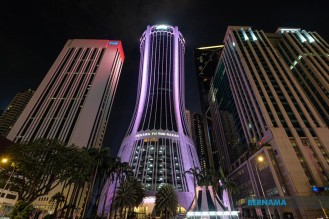
The establishment of Securities Commission Malaysia (SC) oversight of Lembaga Tabung Haji's investment operations represents a pivotal structural reform designed to safeguard the interests of millions of Muslim depositors who entrust their savings to Malaysia's premier haj financing institution. In implementing recommendations from the Royal Commission of Inquiry, the government has signalled its commitment to subjecting TH's fund management to the same rigorous regulatory scrutiny applied to other major financial institutions under SC jurisdiction, marking a significant departure from past governance arrangements that permitted excessive autonomy in investment decision-making.
According to Dr Mohd Faisol Ibrahim, a senior lecturer in Islamic Economics and Banking at Universiti Sains Islam Malaysia, the SC's expanded supervisory framework addresses a fundamental tension within TH's operational mandate: the institution must simultaneously pursue investment returns competitive enough to attract depositors, maintain capital stability, preserve sufficient liquidity for haj operations, and fulfil its religious and social obligations. Without robust external oversight, institutional decision-makers face conflicting incentives that can lead to excessive risk-taking or commercially irrational choices prioritising political considerations over fiduciary duty. The SC's technical expertise and regulatory authority provide an essential counterbalance to these pressures.
The August 2024 government decision to place TH's fund management under SC supervision followed extensive investigation into operational failures spanning 2014 to 2020, during which the institution suffered significant losses that devastated countless Malaysian pilgrims dependent on dividend income. The Royal Commission of Inquiry, whose findings became public in late July, identified systemic weaknesses in governance, risk management, and investment oversight that allowed strategically questionable decisions to proceed without adequate institutional checks. By consolidating investment supervision within the SC framework while maintaining religious affairs administration under the Prime Minister's Department, the government has attempted to preserve TH's unified identity whilst extracting financial operations from potentially compromising political influences.
Dr Mohd Faisol advocates for the SC to maintain direct representation on TH's investment committee, ensuring that all major capital allocation decisions undergo independent professional scrutiny before implementation. This structural arrangement would functionally separate commercial investment determinations from administrative or political considerations, creating institutional distance between those responsible for protecting depositors' assets and those concerned with broader governmental objectives. The consultant emphasises that TH's investment portfolio must meet disclosure, governance, and risk-management standards equivalent to those imposed on other SC-regulated institutions, preventing any regulatory arbitrage that might incentivise problematic behaviour.
Implementing more stringent solvency, reserve, and investment standards represents a critical safeguard against repeating the institutional failures that culminated in the recent crisis. Dr Mohd Faisol contends that strengthened governance and profit-distribution frameworks are essential not merely as bureaucratic compliance measures but as concrete protections for depositors who have already experienced severe financial harm. The regulatory gaps that previously permitted questionable investment decisions must be permanently closed through explicit standards, transparent reporting requirements, and clear accountability mechanisms. Without such structural safeguards, the institutional vulnerabilities that generated past losses would inevitably persist, potentially creating conditions for future crises.
A dual-committee mechanism comprising both investment and risk oversight bodies would introduce effective checks and balances into TH's decision-making process. Rather than permitting investment choices by TH management alone, significant capital allocations would require collaborative evaluation and approval from multiple specialised committees drawing expertise from the SC, Bank Negara Malaysia, and the Ministry of Finance. This distributed authority model prevents any single institutional actor from unilaterally pursuing strategically questionable investments, while simultaneously incorporating diverse professional perspectives—regulatory, monetary policy, and fiscal—into major financial decisions. Such collaborative governance has proven effective in protecting financial system stability elsewhere and deserves implementation within TH's structure.
Bank Negara Malaysia's enhanced role as TH's principal financial adviser should be substantially strengthened to ensure comprehensive review of major investment decisions and implementation of sophisticated strategic risk management protocols. The central bank's technical capacity, regulatory authority, and independence from political pressures position it ideally to evaluate whether proposed investments meet professional standards and prudential requirements. Strengthening BNM's advisory functions would provide TH management with access to world-class technical expertise whilst simultaneously creating an additional institutional veto point against commercially imprudent decisions or politically motivated capital allocation schemes that would compromise depositor protection.
Longer-term financial sustainability requires proactive restructuring of TH's balance sheet to ensure that asset and liability positions remain sound across extended time horizons. Dr Mohd Faisol notes that enhanced reserves could be accumulated through modest increases in minimum savings requirements for prospective pilgrims, adjusted to reflect macroeconomic conditions including ringgit strength and global economic volatility. Such calibrated adjustments would strengthen TH's shock-absorption capacity without imposing disproportionate burdens on individual savers. Rigorous financial modelling should inform these decisions, ensuring that dividend competitiveness remains attractive relative to alternative investment vehicles whilst building sufficient institutional buffers to weatherstand external economic stresses.
The RCI's broader recommendations—including prohibitions on active politicians serving as TH board directors, clearer separation of powers between religious affairs and finance ministerial portfolios, and establishment of independent mechanisms for board appointment selection—complement the SC supervision initiative by addressing governance failures that permitted political influence to contaminate commercial financial decision-making. These complementary reforms collectively establish institutional architecture designed to insulate TH from competing government priorities whilst maintaining democratic accountability through transparent regulatory frameworks. Implementation of this comprehensive reform package offers genuine opportunity to prevent recurrence of the mismanagement patterns that damaged depositor trust and inflicted substantial financial losses across Malaysian Muslim communities dependent on TH's dividend income.
The regulatory transformation of TH's investment operations reflects broader global trends toward consolidating financial institution oversight within professional regulatory agencies rather than permitting dispersed governance across multiple ministries and appointed boards. Malaysia's SC possesses the technical expertise, regulatory experience, and institutional independence necessary to fulfil this enhanced supervisory function effectively. By positioning the SC as active participant in TH's investment governance whilst maintaining separate administration of haj logistics, the government has crafted an arrangement that accommodates both institutional integrity and religious mission. Successful implementation will require sustained political commitment to respecting SC expertise and authority, resisting pressures to subordinate commercial investment considerations to short-term government policy objectives.

