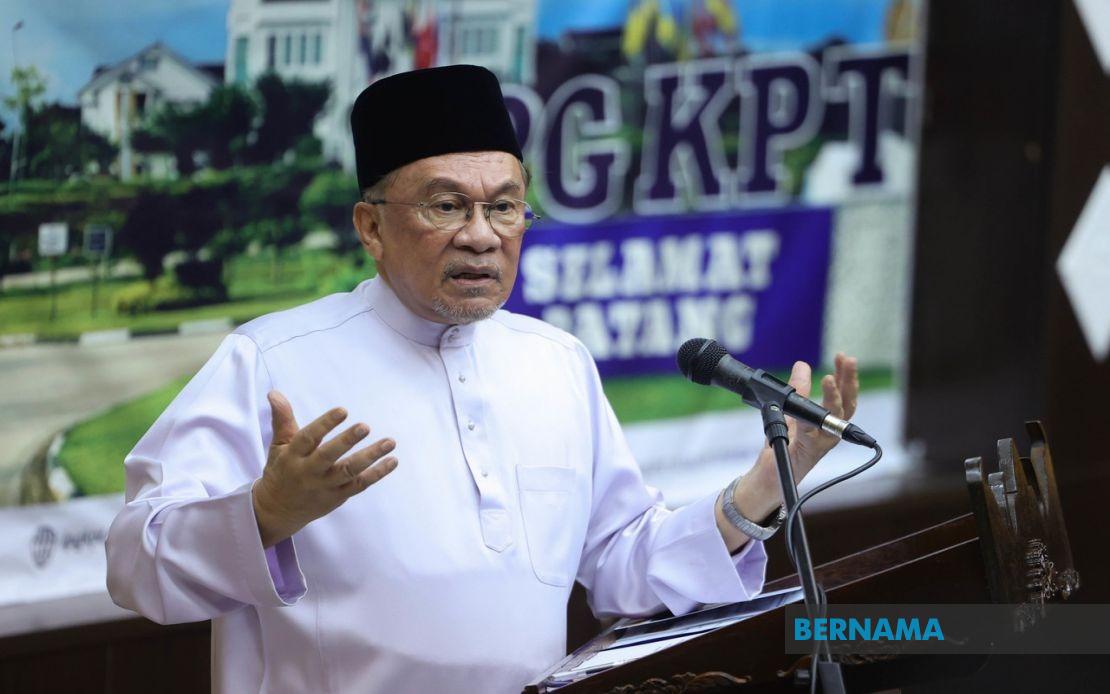
Prime Minister Datuk Seri Anwar Ibrahim has delivered a stern message to Malaysian schools: concealing bullying cases to shield institutional reputation is unacceptable and counterproductive. Speaking in Nilai on July 17, the Prime Minister stressed that transparent reporting and immediate action against bullying must take precedence over image management, and that educational leaders who fail to act on known incidents bear greater responsibility than those who acknowledge problems and address them.
Anwar's remarks underscore a growing concern about how educational institutions across Malaysia respond to reports of student mistreatment. Rather than viewing bullying disclosures as damaging, the Prime Minister framed transparency as a sign of institutional responsibility and proactive leadership. He illustrated his point with a hypothetical scenario: a school with 1,000 students reporting two bullying cases should not face criticism for disclosure. Instead, institutional leaders deserve commendation for acknowledging the problem and taking corrective steps. The real failure, he argued, occurs when schools become aware of bullying yet choose silence and inaction to preserve their public standing.
The Prime Minister's intervention reflects deeper anxieties about bullying's psychological toll on young Malaysians. He rejected the notion that bullying represents a trivial school issue, instead characterising it as profoundly damaging to victims' emotional wellbeing and educational experience. This perspective aligns with international research demonstrating that bullying can lead to depression, anxiety, academic decline, and in severe cases, self-harm. By elevating the seriousness with which bullying should be treated, Anwar signalled that Malaysian society must move beyond minimising such incidents as ordinary childhood friction.
Education Minister Fadhlina Sidek's presence at the event underscored government commitment to addressing bullying systematically. Her attendance suggested the education ministry would likely translate the Prime Minister's call into concrete policy directives requiring schools to establish transparent reporting mechanisms and protocols for handling bullying complaints. Such institutional frameworks would discourage the culture of concealment that currently allows some schools to prioritise reputation management over student protection.
Anwar attributed the persistence of bullying to inadequacies in character and moral education, despite Malaysia's expanded provision of religious instruction in recent years. This diagnosis points to a significant gap between curriculum content and actual behavioural change among students. Even as schools allocate more classroom time to religious studies and ethics modules, bullying incidents continue, suggesting that formal instruction alone proves insufficient without complementary initiatives fostering empathy, emotional intelligence, and interpersonal respect among pupils.
The Prime Minister articulated a compelling vision of holistic education that extends far beyond academic or technical achievement. He questioned what value emerges from producing graduates with outstanding examination results, computer science expertise, or doctoral credentials if those same individuals lack basic human decency, emotional awareness, or respect for peers. This critique resonates with Malaysian parents and educators concerned that exam-driven curricula create pressure-cooker environments where ruthless competition overshadows collaboration and compassion. Anwar's intervention suggests the government may soon prioritise character development more prominently within educational policy frameworks.
Teachers occupy a central position in Anwar's conception of bullying prevention and broader moral education. The Prime Minister emphasised that educators shoulder substantial responsibility for ensuring schools function as sanctuary spaces where learning flourishes alongside the cultivation of strong faith, ethical grounding, and humanitarian values. This framing elevates the teacher's role beyond subject instruction to encompass mentorship, moral exemplification, and vigilant protection of vulnerable students. It also implies that teacher training programmes may require redesign to equip educators with skills in identifying, documenting, and addressing bullying incidents confidently rather than deferring to administrators who might prefer silence.
While delivering his critique of institutional concealment, Anwar simultaneously acknowledged that Malaysia's teaching profession operates at high professional standards. This balanced approach—combining accountability demands with recognition of genuine achievement—likely aims to encourage rather than demoralise educators. By praising teachers' overall contributions whilst calling for improved bullying responses, the Prime Minister incentivised continued advancement in educational quality without implying systemic failure or professional incompetence.
The government's public stance on bullying transparency holds significant implications for schools nationwide. Institutions must now recalibrate their risk management strategies, recognising that concealment carries greater reputational damage than honest disclosure and swift remediation. Forward-thinking schools will likely develop robust reporting channels—including anonymous complaint mechanisms—that encourage students and staff to surface bullying without fear of retaliation or institutional defensiveness. Such systems would also generate data allowing administrators to identify patterns and implement targeted prevention programmes.
Malaysia's approach to bullying reflects regional challenges affecting schools throughout Southeast Asia, where competitive academic cultures sometimes create environments conducive to student mistreatment. By positioning transparency as a leadership virtue rather than a weakness, Anwar's intervention offers other regional governments a framework for cultural change around institutional accountability and student protection. Other Malaysian stakeholders—parents, civil society organisations, and student advocates—may now cite the Prime Minister's statements when pressing individual schools to strengthen anti-bullying mechanisms.
The longterm effectiveness of Anwar's message depends substantially on whether the education ministry translates rhetorical commitment into enforceable regulations with meaningful consequences for non-compliance. Without clear protocols, measurable targets, and audit mechanisms, some schools may continue prioritising reputation over student welfare despite prime ministerial warnings. Conversely, if the ministry establishes binding standards requiring transparent reporting, systematic investigation, and documented intervention, Malaysian schools could meaningfully reduce bullying's prevalence and severity. Students harmed by bullying deserve nothing less than institutional environments where their safety supersedes concerns about public perception.

