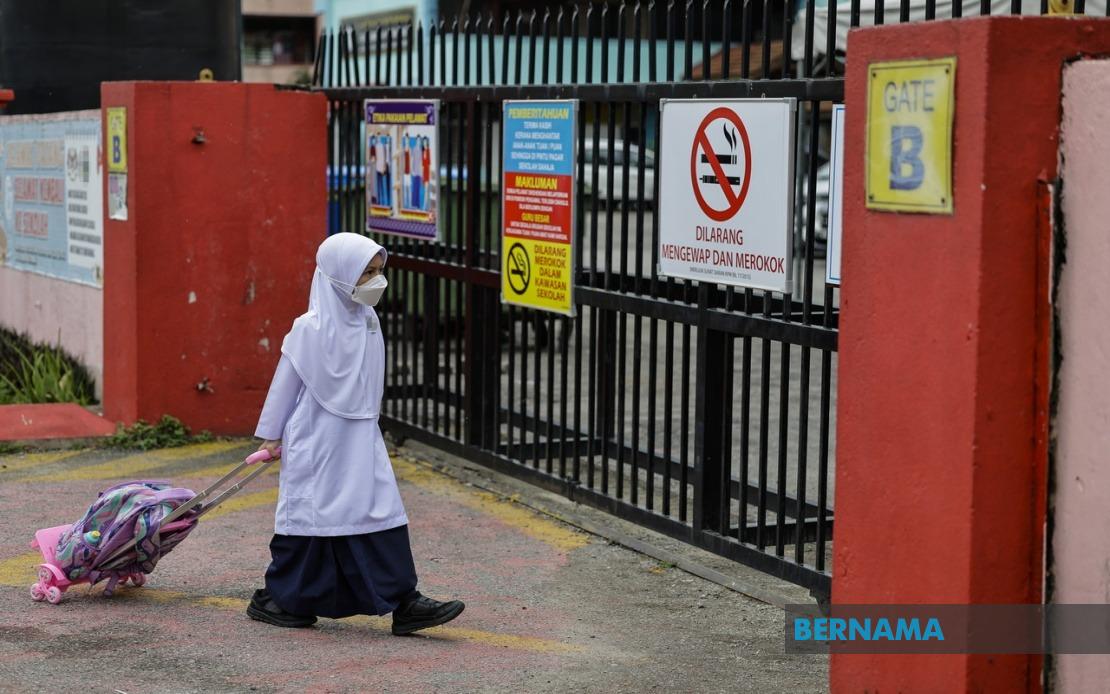
School principals across Malaysia have been granted the authority to shut their institutions if air quality deteriorates significantly, with the Ministry of Education confirming flexible protocols that prioritise student health during periods of poor air quality. Deputy Education Minister Wong Kah Woh outlined these operational guidelines while addressing concerns about elevated Air Pollutant Index readings recorded in several regions. The decision to close schools rests with principals and headmasters, though they are expected to base such determinations on recommendations from State Education Departments and District Education Offices, ensuring consistency across regional variations in haze severity.
The threshold for potential school closures has been set at an API reading of 200, representing significantly unhealthy air quality conditions. However, the decision-making structure allows for flexibility rather than mandatory blanket closures, recognising that local conditions and circumstances differ across Malaysia's diverse geography and urban centres. This discretionary approach acknowledges that while air quality may reach critical levels in certain hotspot areas, other regions may experience milder pollution episodes. Wong emphasised that education authorities at various administrative levels will work collaboratively to assess real-time atmospheric conditions and provide guidance to school management, enabling informed decisions that balance educational continuity with health protection.
The Ministry of Education has maintained standing operational circulars addressing haze management protocols for more than a decade, with formal guidance documents issued in 2016, 2019, and 2023. These periodically updated directives reflect evolving understanding of air quality impacts on student populations and refined implementation strategies. The 2023 circular represents the most recent iteration of these guidelines, indicating the government's ongoing commitment to adapting its approach as environmental challenges persist. These documents serve as reference frameworks that allow schools to align their responses with national standards while accommodating regional variations that may occur during transboundary haze events or localised pollution episodes.
Intermediate thresholds trigger progressively restrictive measures before closures become necessary. When API readings exceed 100, schools must immediately suspend all outdoor physical activities and cancel outdoor gatherings and assemblies. Sports events scheduled to occur outdoors face postponement obligations, protecting students from prolonged exposure to unhealthy air while maintaining their educational experience through indoor alternatives. This tiered approach prevents overreaction to minor air quality fluctuations while ensuring protective measures activate early enough to prevent harm during sustained pollution episodes. The threshold of 100 provides a clear operational trigger that school administrators can reference without requiring constant consultation with education authorities.
Responsibility for monitoring atmospheric conditions has been distributed across multiple levels of Malaysia's education bureaucracy to ensure rapid response capabilities. State Education Departments and District Education Offices maintain continuous surveillance of haze situations and API measurements within their jurisdictions, providing regular updates and recommendations to school administrators. This decentralised monitoring system allows for prompt identification of deteriorating conditions and enables timely dissemination of guidance before air quality becomes dangerously compromised. Wong indicated that routine surveillance activities occur regardless of whether visible haze episodes are occurring, maintaining vigilance throughout the year and particularly during seasons associated with increased transboundary pollution.
School administrators bear primary responsibility for translating technical atmospheric data and official recommendations into operational decisions affecting their institutions. Principals and headmasters must evaluate local conditions beyond numerical API readings, considering factors such as student demographics, special populations with respiratory vulnerabilities, school location in relation to pollution sources, and available indoor instructional space. This localised decision-making authority recognises that identical API readings may present different risk profiles depending on specific environmental and institutional circumstances. The framework essentially trusts experienced school leaders to implement national guidelines sensibly rather than imposing rigid numerical triggers that ignore contextual variations.
The immediate trigger for announcing these clarifications stemmed from unhealthy API readings recorded across multiple areas within Malaysia during the preceding day. Wong's statement represented an official response to public concern about whether schools would remain open during episodes of degraded air quality. The timing of the announcement during a public event in Taiping underscored the government's recognition that air quality management affects educational operations and warrants transparent communication about institutional protocols. Families across affected regions sought clarity about whether schools would maintain normal operations or implement protective measures, and the Deputy Minister's confirmation provided authoritative guidance during an ongoing atmospheric pollution event.
Transboundary haze originating from forest fires in neighbouring countries has emerged as a recurring challenge for Southeast Asian nations, and Malaysia faces periodic air quality deterioration that extends beyond the country's borders. The country's proximity to major burning hotspots means that regional pollution episodes can rapidly impact Malaysian airspace and population centres across multiple states simultaneously. This regional dimension makes coordination of haze response protocols essential, as atmospheric pollution does not respect administrative boundaries. Malaysia's education system must therefore maintain vigilance and maintain flexible response mechanisms that acknowledge the unpredictable nature of transboundary air quality events.
The health impacts of prolonged air exposure on young populations provide the primary justification for restrictive measures and potential closures. Children's respiratory systems remain under development, making them particularly susceptible to pollution-related complications and long-term pulmonary damage. Exposure to unhealthy air during critical developmental periods may trigger acute respiratory infections, exacerbate existing asthma conditions, and potentially compromise long-term lung function. Students with underlying respiratory conditions face heightened vulnerability, as does any population segment with compromised immune function. The decision to suspend outdoor activities at relatively lower API thresholds reflects scientific evidence about cumulative health risks from even moderate air quality degradation.
Implementation of these protocols relies substantially on effective communication between education authorities and school leadership to ensure consistent application across diverse institutional settings. Schools must understand not merely the numerical thresholds but the underlying rationale for protective measures, enabling them to make informed decisions when circumstances present ambiguous situations. Training initiatives and regular updates help school administrators maintain current understanding of haze management best practices and recognise signs of deteriorating air quality that warrant preventive action. The distributed nature of decision-making authority makes such communication and professional development investments particularly critical for ensuring that schools respond appropriately to air quality challenges.
The Ministry's approach balances educational continuity against health protection, recognising that prolonged school closures create educational disruptions while minimal protective measures risk student health. By establishing clear thresholds and granting principals discretionary authority within defined parameters, the framework allows schools to implement proportionate responses that reflect actual local conditions. This flexibility enables educators to maintain instructional momentum during minor air quality fluctuations while implementing protective measures during genuinely hazardous episodes. As transboundary haze episodes become increasingly common across Southeast Asia, such responsive governance models may offer template approaches for neighbouring countries facing similar atmospheric challenges.

