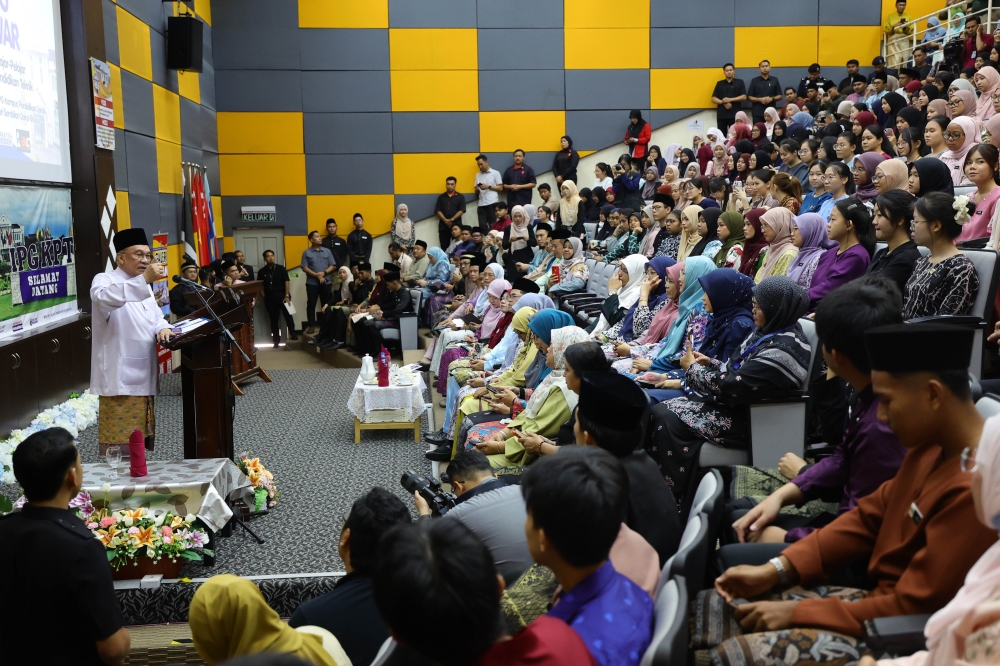
Prime Minister Datuk Seri Anwar Ibrahim has delivered a pointed reminder to educational institutions across Malaysia that institutional reputation must never become a shield against accountability for bullying cases. Speaking in Nilai, Anwar stressed that the welfare and safety of young students cannot be compromised by administrative concerns about how schools are perceived by the public or potential parents. His comments reflect growing concern about the culture of silence that has surrounded bullying in Malaysian schools, where incidents are frequently downplayed or concealed rather than addressed transparently.
The Prime Minister's intervention signals a shift in how the government intends to address school violence and harassment. Rather than allowing educational institutions to operate under the assumption that negative publicity about bullying incidents damages their standing, Anwar has made clear that transparency and swift action are non-negotiable. This approach challenges a long-standing practice in Malaysian schools where management teams sometimes prioritize maintaining a positive institutional image over ensuring justice for victims and their families. The emphasis on protecting student welfare represents a fundamental reordering of priorities within Malaysia's education system.
Bullying in Malaysian schools has become an increasingly visible problem, with numerous high-profile cases coming to light in recent years. These incidents range from physical assault and harassment to psychological abuse and cyberbullying, affecting students across primary and secondary levels. When schools attempt to minimize or conceal such cases, the underlying culture of intimidation and violence persists unchecked, allowing perpetrators to continue harassing peers with impunity. Anwar's statement suggests the government recognizes that institutional silence enables bullying to flourish rather than contain it.
The psychological and social impact of bullying on young Malaysians extends far beyond the immediate victims. Students who experience harassment often suffer from anxiety, depression, and declining academic performance. In extreme cases, bullying has contributed to self-harm and tragedy. When schools fail to address these issues properly, they send a message to bullies that their behavior will face no meaningful consequences, while victims are left without institutional support or recourse. Anwar's directive essentially demands that schools invert this equation, making clear consequences and victim support paramount.
From an administrative perspective, schools that conceal bullying incidents expose themselves to greater long-term liability. When bullying cases eventually emerge—as they frequently do despite attempts at concealment—the damage to institutional credibility is substantially greater than it would have been had the school addressed the matter openly and fairly from the outset. Transparent handling of bullying incidents, coupled with demonstrated commitment to preventing future occurrences, actually strengthens public confidence in schools. Anwar's message implicitly encourages schools to recognize that honesty serves their reputational interests better than silence.
The Prime Minister's stance also addresses systemic failures in how Malaysian schools are currently structured to handle bullying. Many institutions lack clear, robust protocols for reporting, investigating, and addressing harassment. Teachers and administrators may receive insufficient training on recognizing bullying and responding appropriately. Parents often struggle to navigate complaints procedures that are either non-existent or deliberately obscured. By insisting that schools cannot prioritize reputation over student safety, Anwar is effectively demanding institutional reform that goes beyond symbolic gestures to address these operational deficiencies.
Implementing Anwar's directive will require coordinated action across multiple levels of Malaysia's education system. The Ministry of Education must establish mandatory reporting frameworks that compel schools to document and disclose bullying incidents. Training programs for teachers, school counselors, and administrators need strengthening to ensure all staff can identify bullying and respond appropriately. Grievance mechanisms must be made accessible and transparent, allowing students and parents to report incidents without fear of retaliation or dismissal. Without these structural changes, even a clear prime ministerial directive may struggle to gain traction at the school level.
The cultural shift required represents perhaps the greatest challenge. For decades, Malaysian schools have operated under an implicit understanding that protecting institutional image was a legitimate priority. Teachers and administrators have been conditioned to view bullying complaints as administrative inconveniences rather than urgent safeguarding issues. Students have learned that reporting bullying may bring retaliation rather than resolution. Reversing these deeply embedded attitudes demands sustained pressure, clear accountability mechanisms, and consequences for schools that continue concealing incidents.
International precedent suggests that countries which have successfully reduced school bullying have done so through exactly the kind of transparent, victim-centered approach Anwar is advocating. Schools that openly acknowledge bullying problems and implement evidence-based interventions demonstrate better outcomes for student safety and wellbeing than those attempting to minimize or hide incidents. By aligning Malaysia with this international consensus, Anwar is positioning the country to benefit from proven strategies rather than persisting with ineffective concealment.
The implications extend beyond schools themselves. Parents will likely increase scrutiny of their children's institutions, demanding evidence of anti-bullying policies and transparent reporting. Media outlets will feel emboldened to investigate bullying cases that schools attempt to suppress. Civil society organizations focused on child welfare may intensify advocacy efforts. Schools that resist Anwar's directive will face growing reputational damage precisely through the kind of public exposure they sought to avoid by covering up incidents initially.
Implementing systemic change around bullying will require sustained commitment beyond rhetorical declarations. The Education Ministry must translate the Prime Minister's directive into specific policy requirements, implementation timelines, and accountability measures. School leaders need support and resources to build capacity for handling bullying cases fairly and transparently. Teachers require training to recognize and address bullying effectively. Importantly, students themselves must be empowered as agents of change, helping to shift peer culture away from tolerating or perpetrating harassment.
Anwar's intervention marks a critical juncture in Malaysian education policy. By explicitly stating that school reputations cannot supersede student safety, he has set a clear expectation that institutional accountability will be prioritized. How effectively schools respond to this directive will determine whether his words produce meaningful protection for bullied children or remain symbolic gestures. The coming months will reveal whether Malaysian educational institutions are genuinely prepared to embrace the transparency and institutional change his statement demands.

