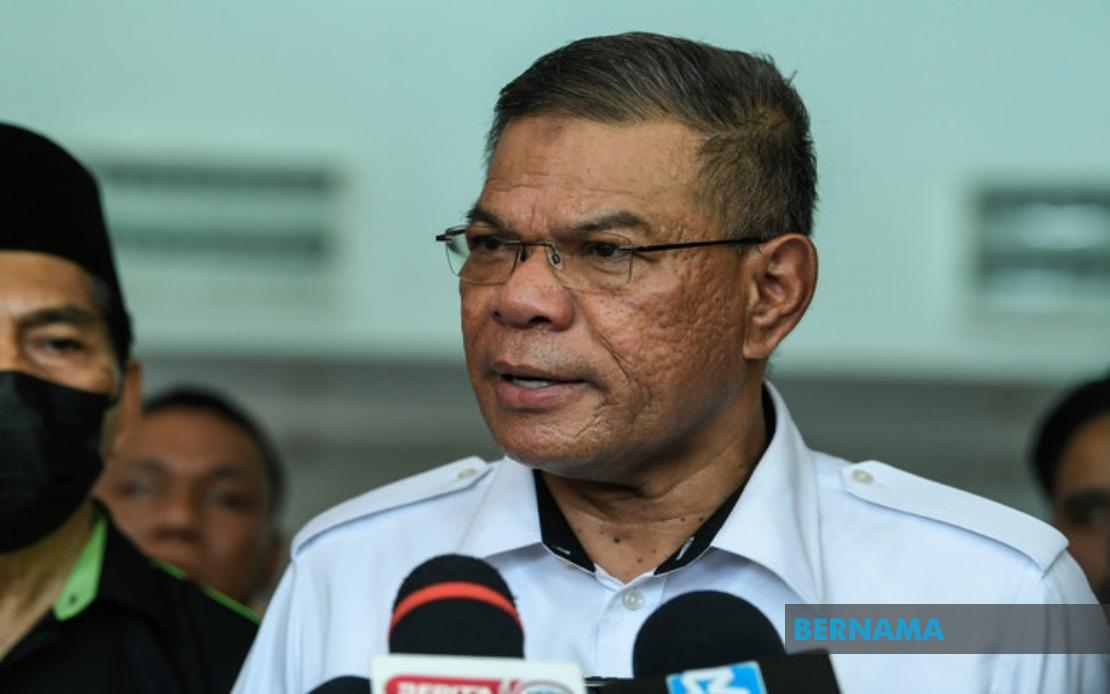
Home Minister Datuk Seri Saifuddin Nasution Ismail has moved to reframe public understanding of School Liaison Officers' responsibilities, stressing that their mandate encompasses far more than responding to bullying incidents among students. Speaking in Kulim on July 22 after visiting a damaged hostel at Sekolah Menengah Agama Tarbiah Diniah, the minister outlined how these uniformed personnel function as part of a broader ecosystem designed to safeguard students across Malaysia's schools.
The clarification came as the minister sought to contextualize the role of School Liaison Officers, police-deployed professionals stationed at district headquarters and nearby stations who maintain regular engagement with school communities. Their responsibilities span accident investigation, substance abuse monitoring, and the coordination of safety protocols that extend well beyond the immediate crisis of bullying. The Royal Malaysia Police continues to strengthen this national deployment programme as part of a comprehensive approach to school security.
Saifuddin Nasution highlighted the complementary work undertaken by officers from the National Anti-Drugs Agency, who are also positioned within schools to assess broader dimensions of student welfare and safety. This multi-agency architecture reflects official thinking about how modern schools require layered protection against diverse threats. When bullying cases garner social media attention—as happened recently in Cheras—the public perception often narrows to a single problem, yet institutional safeguarding involves vigilance across numerous risk categories.
To illustrate the expanded scope, the minister referenced an incident at a Kuala Nerang school involving a student who fell, a matter still under police investigation. Such cases, he explained, represent the investigative workload that School Liaison Officers routinely manage. The framework acknowledges that schools face safety challenges ranging from accidental injury to criminal conduct, requiring trained responders capable of assessing and documenting incidents appropriately.
The visit itself underscored the urgency of comprehensive school safety measures. The hostel fire at Sekolah Menengah Agama Tarbiah Diniah broke out at approximately 2.30 am, destroying the building and leaving 116 students without shelter or personal belongings. The incident exemplified how disaster can strike schools with little warning, demanding both immediate humanitarian response and longer-term remedial action.
Government relief measures were swiftly activated following the fire. Each affected student received RM500 in immediate cash assistance, intended to help them replace essential school items and personal effects lost in the blaze. Some students had escaped with only the clothes they wore, highlighting the totality of loss experienced. For many families, this direct financial support provided critical relief during an unprecedented disruption to their children's education and daily routines.
Beyond emergency cash transfers, the government committed to more substantive reconstruction. After briefing the Prime Minister, Saifuddin Nasution secured an immediate allocation of RM200,000 earmarked for temporary accommodation construction. This intervention demonstrates the MADANI Government's stated priority of responding decisively when school infrastructure fails, acknowledging that educational continuity depends on functional facilities.
Supporting services extended to administrative needs. The National Registration Department announced it would deploy mobile services to the school, enabling affected students to obtain replacement identity cards at no cost. This coordination between agencies addressed a practical barrier that might otherwise have prolonged disruption to students' school operations and daily activities. The measure reflected official recognition that disasters create cascading administrative complications alongside immediate material losses.
The minister's office contributed RM10,000 to the school's Parent-Teacher Association, supplementing community and institutional responses to the crisis. This contribution, while modest in numerical terms, signalled ministerial engagement with school governance structures and acknowledged the association's coordinating role in supporting affected families.
The incident and official response highlight tensions between addressing spectacular crises like fires and maintaining consistent attention to chronic safety challenges like bullying. While emergency funding and temporary shelters address acute disasters, the positioning of School Liaison Officers represents an attempt at sustained, preventive oversight. Both approaches remain necessary within Malaysia's school ecosystem, yet funding and media attention often concentrate narrowly on headline incidents rather than supporting the everyday work of professional monitoring.
For Malaysian parents and school administrators, the expanded articulation of School Liaison Officers' remit offers reassurance that police presence in schools reflects comprehensive mandates. However, it also raises questions about resource adequacy and whether personnel are sufficiently trained and staffed to manage the full scope of responsibilities claimed. The effectiveness of this multi-layered safety architecture ultimately depends on sustained political investment and institutional coordination across police, education, health, and social service agencies.
The fire at Sekolah Menengah Agama Tarbiah Diniah has refocused attention on school safety vulnerabilities—not just security threats but infrastructure resilience. As Malaysia's student population continues expanding, ensuring that both prevention and response capabilities grow accordingly remains a significant governance challenge. The government's rapid mobilization of resources for this particular crisis demonstrates capacity for emergency action, yet whether such responsiveness can be consistently maintained across thousands of schools nationwide remains a substantive test of institutional commitment.

