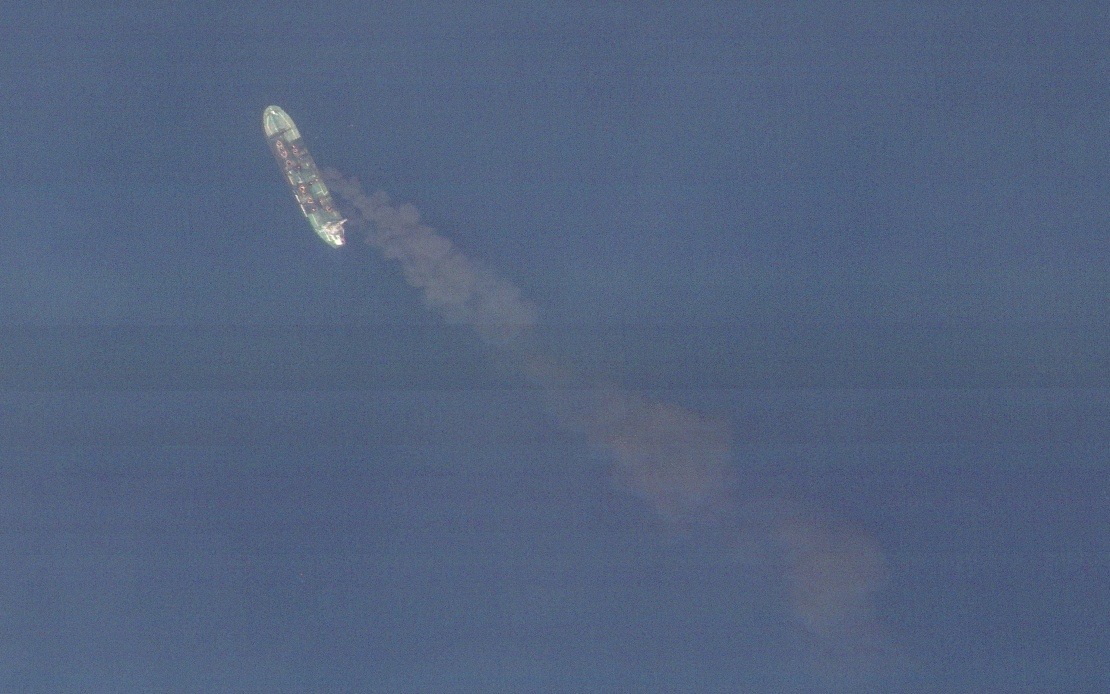
The Saudi-led military coalition operating in Yemen has publicly committed to taking all necessary measures to protect commercial vessels transiting the strategically vital Bab al-Mandab Strait, pledging a firm response to any threats posed by the Houthi group. This declaration emerged following the Houthis' announcement of a ban on Saudi shipping, marking a significant escalation in maritime tensions in one of the world's most critical trade corridors. The Joint Forces Command spokesperson Turki Al-Malki stated through social media that the coalition would implement decisive operational measures in accordance with international law to safeguard coalition-flagged vessels passing through the waterway.
The Houthi move represents a tit-for-tat escalation, as the Iran-aligned militia framed its maritime prohibition as a proportional response to what it characterises as a decade-long Saudi blockade of Yemen. The group's leadership justified the action through a "blockade for blockade" principle, arguing that the kingdom's embargo on Yemeni ports has severely hampered the civilian population's access to essential commodities and fuel. This rhetorical framing seeks to position the Houthis as defending Yemeni sovereignty and civilian welfare against an external siege, despite international concerns about the group's own role in prolonging the conflict.
Saudi Arabia's Foreign Ministry swiftly countered the Houthi allegations, issuing a formal statement that rejected characterisations of a blockade while highlighting the kingdom's development initiatives and financial assistance aimed at alleviating Yemeni hardship. The ministry pointed to humanitarian efforts and budget support as evidence of constructive engagement with Yemen's population. Simultaneously, coalition officials challenged the credibility of the maritime ban by citing data showing over 300 commercial vessels had accessed Houthi-controlled ports during the first half of the year, transporting food, fuel, and other necessities, suggesting that a comprehensive blockade was neither in place nor feasible.
The immediate catalyst for this escalation traces back to the Saudi-backed Yemeni government's strike on Sanaa International Airport last week, targeting an Iranian aircraft that was allegedly transporting a senior Houthi delegation. The airfield attack triggered a swift Houthi retaliation campaign, with the group launching both missiles and armed drones toward Saudi territory. This incident exposed the fragility of ongoing diplomatic channels and illustrated how quickly tactical military actions can spiral into tit-for-tat cycles of provocation and counter-response.
For regional and international observers, particularly those monitoring maritime security in Southeast Asia, the escalating Red Sea tensions carry significant implications. The Bab al-Mandab Strait represents one of the world's most congested shipping chokepoints, with hundreds of vessels daily transiting between the Indian Ocean and the Suez Canal. Any disruption to shipping flows through this corridor reverberates across global supply chains, affecting everything from energy prices to consumer goods availability. Malaysian and other Southeast Asian traders with interests in Middle Eastern markets or European commerce face direct exposure to potential delays, insurance premium increases, and logistical complications arising from heightened maritime insecurity.
The underlying Yemen conflict, which has persisted since late 2014, demonstrates the enduring structural challenges within the Arabian Peninsula. The Houthis seized control of the capital Sanaa and substantial portions of northern Yemen in 2014, prompting Saudi Arabia to launch a military intervention in 2015 alongside a coalition of regional and international partners. This nearly decade-long conflict has resulted in one of the world's worst humanitarian catastrophes, with millions facing acute food insecurity, disease, and displacement. The fighting has also created a complex proxy environment where various regional powers, including Iran and the United Arab Emirates, maintain competing interests and influence networks.
The 2022 United Nations-brokered truce represented a cautious step toward de-escalation, introducing a temporary ceasefire and creating space for humanitarian and diplomatic engagement. However, this fragile arrangement has repeatedly faced tests from both the coalition and Houthi factions, with incidents such as the airport strike demonstrating how precarious the arrangement remains. Analysts and diplomatic observers have expressed concern that the current escalatory spiral could undermine the nascent peace framework and trigger a renewed cycle of intensive military operations, reversing months of relative stability.
The Houthis' maritime interdiction threat must be understood within the context of the group's established pattern of disrupting shipping in contested waters. Over previous years, the movement has periodically launched attacks on commercial vessels in the Red Sea and Gulf of Aden, citing Saudi military operations and the blockade as justification. These maritime actions, though sporadically enforced, have heightened shipping insurance costs and prompted some commercial operators to reroute cargo via the longer Cape of Good Hope passage, effectively adding weeks to transit times and significantly increasing operational expenses for traders.
For Malaysian policymakers and business interests, this deteriorating situation in the Red Sea region warrants close monitoring given Malaysia's substantial maritime trade connections and investments in the broader Middle East-North Africa region. Many Malaysian-flagged vessels and those operated by Malaysian companies transit these waters regularly, and any significant disruption would create immediate commercial pressures. The insurance and logistics sectors, both significant employers in Malaysia's economy, would face elevated operational costs that could translate into price increases for Malaysian consumers purchasing imported goods.
The coalition's public emphasis on operating within international law reflects awareness that any military response must maintain international legitimacy and avoid accusations of escalation that could undermine diplomatic efforts. The careful framing by coalition spokesperson Turki Al-Malki attempts to position the military response as defensive and proportionate rather than aggressive, a distinction that matters considerably in contemporary international relations where public perception of military operations influences geopolitical positioning and international support.
The trajectory of the Yemen conflict remains deeply uncertain, with this latest maritime confrontation potentially signalling either a temporary spike in tensions or the beginning of a more prolonged escalatory phase. The involvement of external powers, competing humanitarian concerns, and the strategic importance of the Red Sea shipping corridor ensure that international actors will maintain active engagement in Yemen's political and military dynamics. For Malaysia and the broader Southeast Asian region, the outcome of these tensions carries implications extending far beyond Yemen's borders, affecting trade patterns, energy security, and the stability of global maritime commerce.

