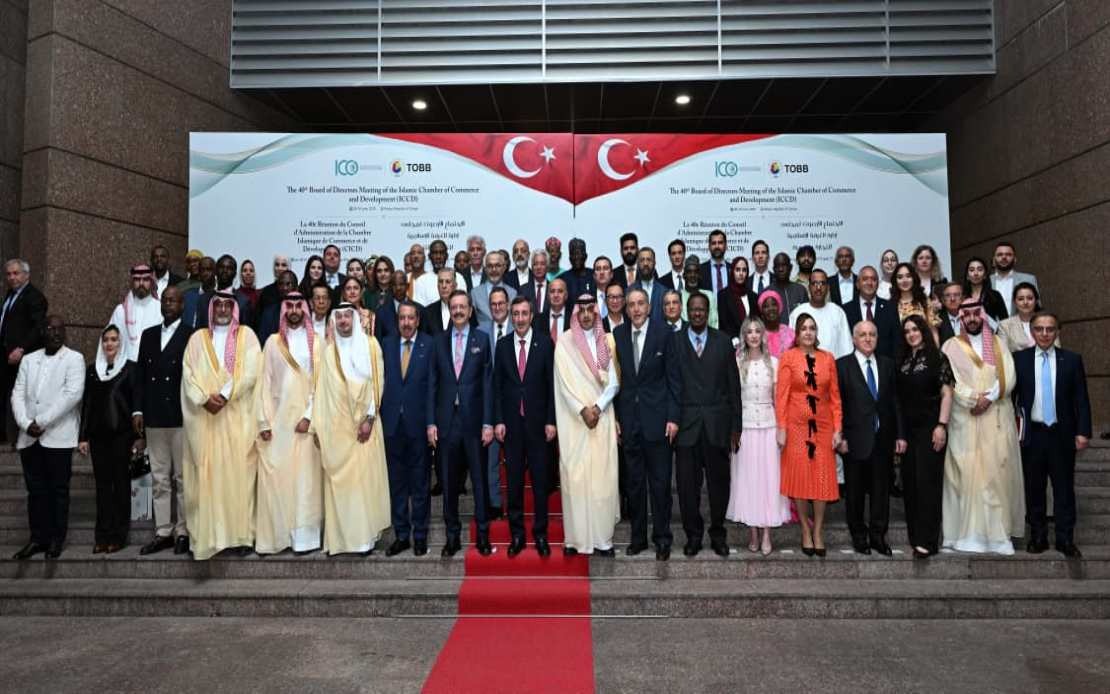
The Kingdom of Saudi Arabia has renewed its push for closer economic integration among Islamic nations, with senior business figures emphasizing the strategic importance of deepening ties with major Muslim-majority economies across the region. The appeal was articulated during high-level discussions in Ankara, Turkiye, where representatives from Saudi Arabia's business establishment gathered alongside counterparts from the Islamic Chamber of Commerce and Development to chart new pathways for cross-border economic collaboration.
Abdullah Saleh Kamel, chairman of the Federation of Saudi Chambers and president of the Islamic Chamber of Commerce and Development, positioned the initiative as part of Saudi Arabia's broader commitment to leveraging its influence within the Islamic business community. His remarks underscored how the Kingdom views itself not merely as a participant in ICCD structures, but as a foundational pillar supporting the organization's mission since its inception. This framing reflects Riyadh's strategic positioning within multilateral Islamic institutions and its desire to shape the direction of intra-Islamic economic policy.
Malaysia and Indonesia have been explicitly identified as priority partners within this framework, a designation that carries significant implications for Southeast Asian policymakers and business leaders. Both nations represent major economic centres within the broader Muslim world, commanding substantial populations, sophisticated financial systems, and growing technological capabilities. The Saudi emphasis on these two countries suggests a deliberate geographic and economic strategy to anchor ICCD initiatives within Southeast Asia, a region increasingly vital to global trade patterns and emerging market dynamics.
The statement issued following the meetings highlighted how private-sector expansion, youth-driven entrepreneurship, agricultural sustainability, and regional supply chain development remain central to long-term prosperity across Muslim-majority nations. These identified priorities reflect contemporary economic challenges that transcend borders—food security concerns, demographic pressures requiring employment creation, and the necessity of building resilient agricultural systems amid climate uncertainties. By framing cooperation around these concrete challenges, Saudi leadership is positioning ICCD initiatives as responses to genuine development pressures rather than ideological exercises.
Youth entrepreneurship emerges as a particular focus area, addressing a demographic reality across much of the Islamic world. Malaysia, with its relatively developed startup ecosystem and government support for small and medium enterprises, alongside Indonesia's vast young population and expanding digital economy, represent laboratories for testing new models of intra-Islamic business collaboration. The emphasis on youth suggests recognition that sustained economic cooperation requires investment in the generation that will lead businesses and drive innovation over the coming decades.
Food security represents another strategic priority that resonates deeply within Southeast Asia. Malaysia and Indonesia both face pressures related to agricultural production, supply chain vulnerabilities, and the need to feed growing urban populations. Cooperation frameworks that facilitate knowledge-sharing in sustainable agriculture, reduce trade barriers on agricultural products, and enable joint investment in farming technology could yield tangible benefits for regional food stability. This connects Islamic economic cooperation to humanitarian and security concerns that extend beyond purely commercial considerations.
The ICCD's ambitions extend beyond immediate bilateral arrangements to encompass broader economic integration among Islamic countries. The organization's leadership expressed determination to expand both intra-Islamic trade flows and investment patterns, viewing these mechanisms as catalysts for development. The underlying logic posits that removing barriers to commerce and capital movement among Muslim-majority nations could unlock productive capacity currently constrained by tariffs, regulatory misalignment, and insufficient financial infrastructure.
The Board of Directors meeting also reviewed various initiatives designed to strengthen economic cooperation among member states, signalling that the organizations intends to move beyond rhetorical commitments toward concrete institutional action. Implementation of existing programmes received scrutiny, indicating a focus on execution rather than merely announcing ambitious schemes. This operational emphasis suggests that ICCD leadership recognizes the credibility challenges facing multilateral organizations and is attempting to build track records of delivery.
A significant milestone anchors these discussions: the ICCD's golden jubilee in 2027. This 50-year anniversary provides an organizational deadline for demonstrating meaningful progress in economic integration. Planning now for this celebration effectively creates pressure to implement substantive outcomes before the milestone arrives. For Malaysia and other Southeast Asian participants, this timeline offers an opportunity to shape the organization's direction during a critical development phase.
For Malaysian policymakers and business communities, these Saudi overtures present both opportunities and considerations. Deeper integration with Islamic economies could provide alternative markets for Malaysian exports, sources of capital for expansion, and partnerships in strategic sectors. The emphasis on youth entrepreneurship and sustainable agriculture aligns with Malaysia's own development priorities. However, participation requires careful assessment of how such arrangements might affect Malaysia's existing trade relationships and whether terms of engagement truly benefit Malaysian enterprises or primarily serve other parties' interests.
The regional context surrounding these initiatives matters significantly. Southeast Asia's position within broader Indo-Pacific dynamics, the evolving trade environment following major bilateral and regional agreements, and shifting geopolitical alignments all influence how Malaysia might approach deeper ICCD engagement. Malaysian decision-makers must weigh commitments within Islamic frameworks against competing interests and partnerships with non-Muslim majority nations that also constitute important economic partners.
These developments also reflect Saudi Arabia's broader strategic pivot toward expanding its economic footprint beyond oil production and petrochemical industries. By promoting regional economic cooperation frameworks, the Kingdom positions itself as a convener and facilitator of development beyond its own borders. This soft power dimension—exercising influence through economic architecture rather than merely through capital deployment—represents an important dimension of contemporary Saudi foreign policy under ongoing Vision 2030 reforms.
Moving forward, the success of these initiatives will depend on translating strategic declarations into operational programmes that generate measurable benefits for participating nations. For Malaysia specifically, monitoring how ICCD structures evolve, what concrete opportunities emerge, and how partnership terms are negotiated will prove essential for maximizing advantages while protecting national economic interests within an increasingly complex multilateral environment.

