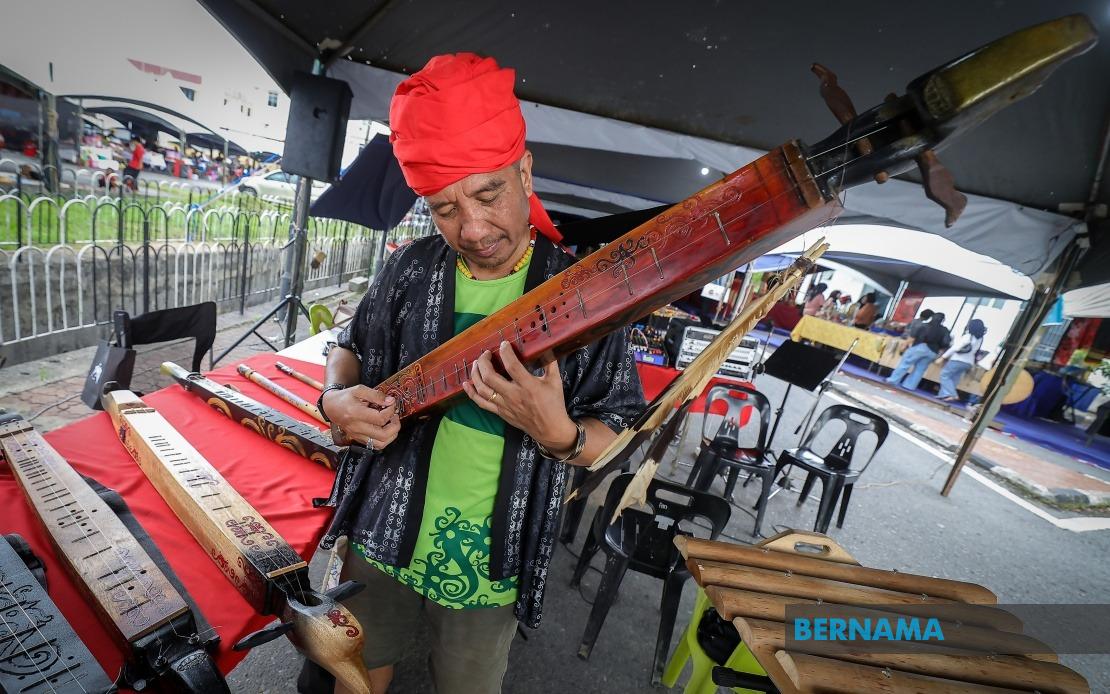
A 53-year-old Sarawakian musician is taking deliberate steps to safeguard the cultural identity of the Lun Bawang community through contemporary music and traditional instrument making. Rining Peter Paris, who released his latest single 'Sigar Suba' on July 1, has positioned himself at the intersection of heritage conservation and musical innovation, using world music fusion to keep indigenous traditions alive in an increasingly globalised landscape.
The track, performed alongside his band Bata' Uduh, marks a significant thematic departure from Rining's earlier compositions. While previous works such as 'Busak Baku' and 'Busak Elai' explored conventional subjects like feminine beauty and natural landscapes, 'Sigar Suba' deliberately centres on the masculine cultural identity of the Lun Bawang people. Rining recognised a gap in musical representation—that existing songs predominantly celebrated women's cultural elements, particularly the aesthetic appeal of traditional beaded jewellery. This observation drove him to create a composition that would reflect and honour the identity markers specific to Lun Bawang men.
The song's title carries deep cultural significance. 'Sigar' refers to a traditional head covering worn by Lun Bawang men during celebrations, while 'suba' denotes the colour red. Together, the terms describe a distinctive red headpiece that has become emblematic of Lun Bawang ceremonial dress, particularly at the Irau Aco festival. By naming his composition after this iconic garment, Rining created an immediate cultural anchor that resonates with community members and serves as a focal point for exploring broader elements of male traditional identity.
The musical arrangement itself demonstrates Rining's commitment to blending authenticity with accessibility. 'Sigar Suba' prominently features the Tapi', a traditional two-string plucked instrument central to Lun Bawang heritage, alongside other indigenous instruments including the Pek Bu, Ruding, and xylophone. This instrumentation grounds the work firmly within cultural tradition while the modern production techniques and fusion elements—drawing from reggae and contemporary world music genres—create an aesthetic appeal designed to captivate younger listeners who might otherwise overlook traditional music.
The lyrical content, composed entirely in the Lun Bawang language, provides meticulous documentation of traditional male ceremonial attire. The song references the kuyu talun, a bark garment worn during formal occasions, the pelepet, a traditionally crafted machete that carries both practical and symbolic importance, and distinctive tusk ornaments that signify status and heritage. Through these specific references, Rining transforms the composition into an educational vehicle, embedding cultural knowledge within an engaging musical format that younger generations can absorb naturally.
Rining's dedication to cultural preservation extends well beyond songwriting. Over nearly a decade, he has devoted substantial effort to reviving and promoting the Tapi' instrument, which had declined in contemporary use. As an accomplished instrument maker, he has handcrafted 66 Tapi' instruments that have found their way into homes and collections locally and internationally, including buyers in Australia, the United States, and Canada. This entrepreneurial approach to cultural preservation demonstrates that indigenous heritage can sustain economic activity while maintaining cultural integrity. His work has attracted attention from other musicians in Malaysia's experimental music scene, including Belle Sisoski, who recognises the artistic and cultural value of the instrument.
The strategy of modernising traditional sounds represents a pragmatic response to a persistent challenge facing indigenous communities throughout Southeast Asia. Young people increasingly gravitate toward global popular music genres, and heritage often appears incompatible with contemporary tastes. Rining's approach—embedding traditional instruments within world music fusion frameworks—offers a model for cultural sustainability that doesn't demand young people choose between heritage and modernity. By making Lun Bawang music sound contemporary without diluting its cultural essence, he creates pathways for intergenerational knowledge transfer.
The availability of 'Sigar Suba' on major streaming platforms reflects the evolving landscape of cultural music distribution. Whereas indigenous music once remained confined to community celebrations and limited physical releases, digital platforms now provide direct channels to global audiences. This accessibility amplifies both the potential reach and the cultural impact of works designed to preserve community identity. For young Lun Bawang people scattered across Malaysia or abroad, such music becomes a digital connection to ancestral culture.
Rining's stated ambition to transition toward full-time Tapi' instrument making and music composition by 2028 reveals his confidence in the commercial and cultural viability of this work. This timeline suggests he believes market demand exists—both from heritage enthusiasts and from musicians seeking authentic traditional sounds—to sustain a livelihood based on cultural production. His success would demonstrate to other indigenous artisans that cultural preservation and economic sustainability need not be mutually exclusive pursuits.
The broader significance of Rining's work resonates across Southeast Asia's diverse indigenous communities. Malaysia's Lun Bawang people represent one of dozens of ethnic groups navigating rapid modernisation while seeking to maintain distinctive cultural identities. The challenges Rining addresses—how to make heritage relevant to younger generations, how to document and preserve traditional knowledge, how to generate economic value from cultural work—are common to indigenous communities throughout the region. His integrated approach to music, instrument-making, and community education offers insights applicable beyond the Lun Bawang context.
For Malaysian cultural observers and policymakers, Rining's work exemplifies grassroots cultural preservation that requires minimal institutional support yet generates considerable cultural value. Unlike heritage initiatives dependent on government funding or academic institutions, his efforts rely primarily on personal investment and market forces. This independent sustainability model warrants attention as Malaysia increasingly confronts questions about how to preserve indigenous cultures amid globalisation pressures. The success of 'Sigar Suba' and the growing international recognition of his Tapi' instruments suggest that contemporary audiences, including young people, demonstrate genuine interest in authentically presented traditional culture—provided it meets modern expectations for accessibility and artistic quality.

