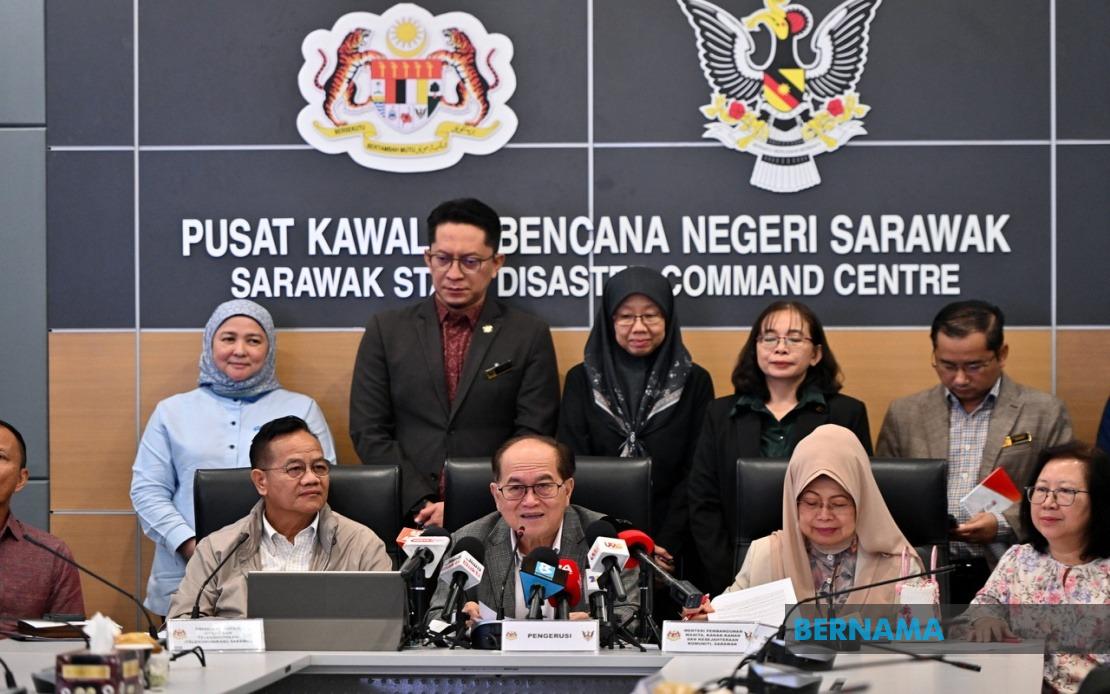
Sarawak will activate an emergency status across affected localities once the Air Pollutant Index climbs to 500, Sarawak Deputy Premier Datuk Amar Douglas Uggah Embas announced in Kuching on August 31. Such a declaration would mark an unprecedented intervention in the state's air quality response framework, signalling the severity with which authorities treat hazardous pollution levels. Beyond the threshold, the matter would escalate to the National Disaster Management Agency in Kuala Lumpur, which would coordinate response measures in line with national disaster protocols, underscoring the integrated approach between state and federal authorities.
The ramifications of an emergency declaration would be far-reaching across Sarawak's economy and public administration. All government offices, alongside both public and private sector operations, would be mandated to cease their regular functions within the affected zones, with only essential services permitted to maintain limited activity. This threshold-based system provides stakeholders with clarity regarding when severe operational disruptions might occur, allowing businesses and institutions time to prepare contingency arrangements. The API 500 benchmark aligns Sarawak with international standards for declaring public health emergencies related to air quality, reflecting how Malaysian states are adopting globally recognised metrics to manage environmental crises.
Uggah, who chairs the Sarawak State Disaster Management Committee, articulated the state's position that transboundary haze represents fundamentally a regional challenge that demands coordinated governmental engagement across established diplomatic and institutional frameworks. The committee has already reached out to Natural Resources and Environmental Sustainability Minister Datuk Seri Arthur Joseph Kurup, who serves as the body's deputy chairman, to ensure Sarawak's urgent concerns gain traction within national decision-making structures. This multilayered engagement strategy recognises that addressing the haze phenomenon requires action at multiple governance levels simultaneously.
The pathway chosen by Sarawak involves channelling its concerns through ASEAN mechanisms rather than pursuing independent bilateral negotiations. This approach reflects the regional architecture established for managing transnational environmental challenges, acknowledging Indonesia's role as a neighbouring state whilst respecting diplomatic protocols. By working through federal-level engagement and ASEAN platforms, Sarawak positions itself as part of Malaysia's cohesive national response rather than pursuing isolated state-level interventions. The strategy also ensures that any collaborative proposals involving assistance to Indonesia would be coordinated centrally by the federal government, preventing ad hoc arrangements that might complicate broader bilateral relations.
Parallel to diplomatic efforts, Sarawak is moving forward with cloud seeding operations scheduled for September 3 to 5, contingent upon meteorological conditions proving favourable during that window. While the initiative carries the obvious objective of mitigating haze presence in the atmosphere, authorities frame it with a broader environmental purpose. The operation simultaneously aims to replenish water resources depleted throughout the prolonged dry season afflicting the region, addressing pressures on water supply systems and reservoir levels across multiple catchment zones.
Four critical water catchment areas have reached concerning depletion levels: Simunjan, Lingga, Spaoh and Lijok. The interconnection between air quality management and water resource restoration reflects how environmental crises in Southeast Asia often present compounded challenges. Cloud seeding offers a dual-benefit intervention that tackles two simultaneous threats to public welfare and economic activity. For Malaysian readers, this demonstrates how state governments must navigate multiple environmental pressures concurrently, particularly in regions prone to seasonal dry spells combined with transboundary pollution episodes.
The haze situation has become increasingly familiar across Southeast Asia, yet the underlying causes remain largely unaddressed. Agricultural practices in Indonesian territories, coupled with natural climatic patterns, periodically generate smoke that drifts across maritime boundaries into Malaysian airspace. Sarawak's experience exemplifies the vulnerability of all Malaysian states to pollution sources beyond their territorial control. The API 500 threshold mechanism represents an attempt to impose local governance solutions within the constraints of regional environmental realities.
For Malaysian businesses and investors operating in Sarawak, the emergency declaration protocol introduces new variables into operational planning. Supply chain continuity, workforce management, and regulatory compliance become more complex when emergency shutdowns represent genuine possibilities rather than theoretical scenarios. Companies must now factorably incorporate potential API-triggered disruptions into their business risk assessments, particularly those serving essential services exempted from closure orders.
The diplomatic dimension merits particular attention for regional observers. By channelling concerns through ASEAN and federal structures, Sarawak's approach acknowledges that environmental governance increasingly transcends traditional sovereign boundaries. The committee's engagement with the Natural Resources minister and coordination through established regional channels suggests Malaysia is attempting to institutionalise cross-border environmental management rather than relying on episodic crisis responses. This represents a maturing approach to transnational environmental challenges that plague Southeast Asia.

