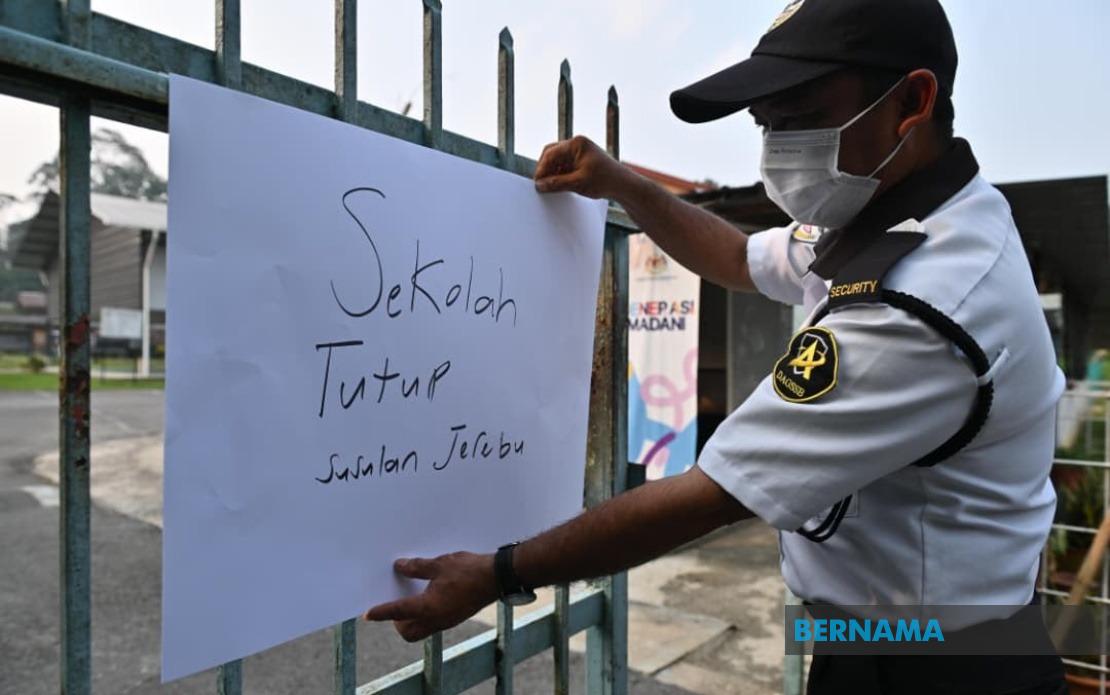
The Sarawak State Disaster Management Committee initiated the closure of 108 educational institutions across the Serian district after air pollutant readings breached the critical 200-point threshold on Tuesday, activating established safeguarding protocols designed to shield students and educators from respiratory hazards during severe haze episodes. This action reflects mounting atmospheric degradation that has progressively worsened across Peninsular Malaysia's largest state since the beginning of August.
Under provisions established by the National Haze Action Plan, responsibility for implementing school closures rests with the Sarawak State Education Department director, who must immediately suspend classroom operations when pollution readings cross the 200 mark. The committee emphasized that this threshold represents a "very unhealthy" classification warranting immediate intervention to mitigate health risks among vulnerable populations, particularly children and young people whose respiratory systems remain underdeveloped.
To prevent educational disruption, authorities have activated Home-Based Teaching and Learning programs, commonly referred to as PdPR, allowing instruction to continue through digital platforms and distance learning modalities. This transition ensures that academic progress remains uninterrupted despite physical school closures, a lesson learned from pandemic-related campus shutdowns that demonstrated the viability of remote education delivery across Sarawak's dispersed communities.
The air quality measurement scale employed by Malaysian authorities categorizes readings in ascending severity: zero to 50 denotes good conditions, 51 to 100 represents moderate air quality, 101 to 200 indicates unhealthy circumstances, 201 to 300 constitutes very unhealthy status, and anything exceeding 300 triggers hazard warnings. By this standard, Serian's recorded reading of 202 and Tebedu's 212 both crossed into the "very unhealthy" band, necessitating the protective response initiated by regional authorities.
As of mid-afternoon on August 12, atmospheric monitoring across Sarawak revealed a troubling geographic spread of pollution. Alongside Serian and Tebedu, eleven additional monitoring stations registered unhealthy-level readings: Kuching, Samarahan, Sri Aman, Sarikei, Sibu, Bintulu, Samalaju, Miri, Lundu, Lubok Antu and Lawas. This broad distribution indicates that Sarawak's air quality crisis extends beyond isolated pockets, suggesting regional-scale atmospheric degradation linked to transboundary pollution sources, a pattern familiar to observers of Southeast Asian seasonal haze.
The trajectory of pollution levels since August 1 demonstrates consistent deterioration rather than temporary fluctuations, according to data compiled by the State Disaster Management Committee. This escalating trend raises concerns about further deterioration if meteorological conditions remain stagnant and pollution sources remain unabated, potentially triggering even more disruptive public health interventions across critical sectors including healthcare, transportation and commerce.
Authorities advised residents to curtail outdoor recreational and occupational activities, particularly during peak pollution hours when concentrations intensify. The guidance specifically targets high-vulnerability demographic segments including children, elderly citizens, pregnant women and individuals managing chronic respiratory diseases such as asthma or cardiovascular conditions, who face substantially elevated morbidity risks when exposed to contaminated air for extended periods.
Sarawak's disaster management framework emphasized the importance of obtaining verified information exclusively through official governmental communication channels, explicitly cautioning against speculation and the circulation of unconfirmed reports regarding haze dynamics. This public messaging reflects growing concerns about misinformation propagation across social media platforms during environmental emergencies, which can generate panic and undermine coordinated government response efforts.
For Malaysian readers and policymakers, Sarawak's escalating haze situation underscores persistent vulnerabilities in Southeast Asia's transboundary air pollution mechanisms. As a regional manufacturing hub with growing economic integration, Sarawak remains susceptible to pollution sources originating across the Brunei-Indonesia-Malaysia triangle, many linked to agricultural burning and industrial emissions that respect no political boundaries. The school closures represent merely the visible manifestation of deeper environmental and public health challenges requiring sustained regional cooperation on emissions reduction, environmental monitoring and enforcement of antipollution standards. Without coordinated interventions addressing root causes—including industrial regulation across Kalimantan and Sumatra—similar disruptions will likely recur seasonally, perpetually interrupting education and threatening population health across Malaysian Borneo.

