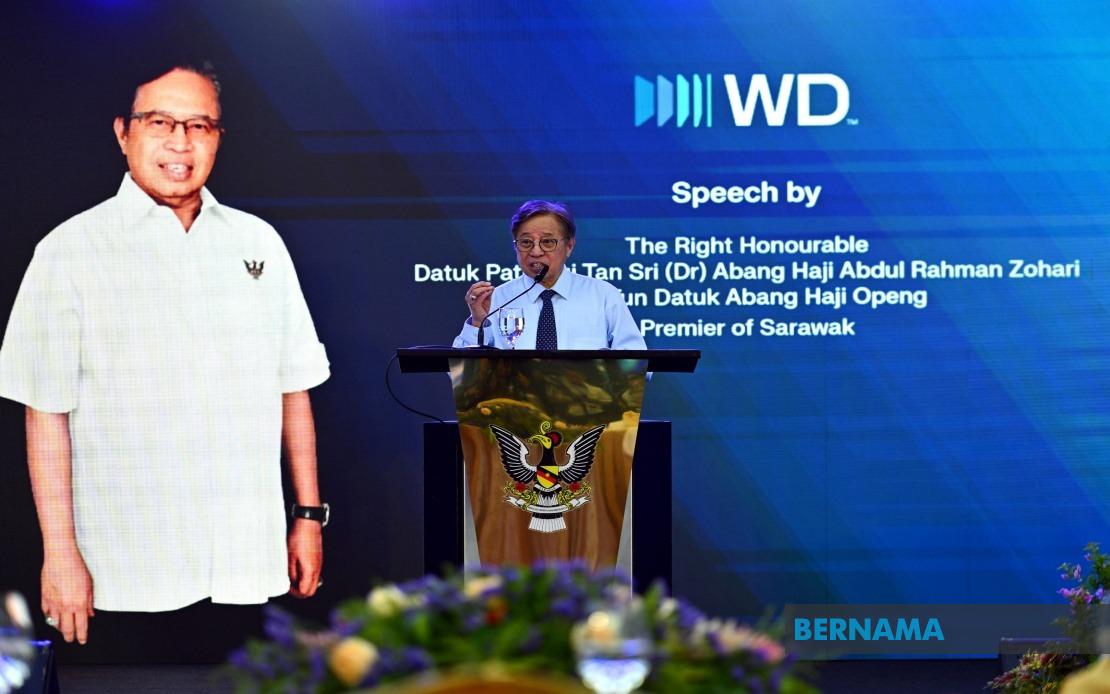
Sarawak's leadership has signalled receptiveness to a potential increase in the state's special grant, though any enhancement would necessarily depend on whether Kuala Lumpur possesses the fiscal bandwidth to deliver. Premier Tan Sri Abang Johari Tun Openg, speaking after a technology event in Kuching on July 2, adopted a pragmatic tone, indicating that while Sarawak would naturally welcome additional federal allocations, the state recognises the constraints facing the national government and would not press the matter if finances do not permit.
The remarks come as negotiations between Sarawak and the federal administration continue regarding Article 112D of the Federal Constitution, which governs special grants to the state. During remarks made in Parliament, Prime Minister Datuk Seri Anwar Ibrahim confirmed that such discussions are ongoing, framing them explicitly within the context of the Malaysia Agreement 1963. This constitutional agreement, signed at Malaysia's formation, bestowed certain fiscal and administrative autonomies upon Sarawak and Sabah, making the special grant mechanism a particularly sensitive political issue for the state.
Abang Johari clarified that substantive dialogue on the topic remains in preliminary stages. While the subject emerged during a recent meeting between the premier and the prime minister in Bintulu, no detailed proposals or figures have been formally tabled. His measured language suggests a negotiating posture that seeks to maintain constructive relations with the federal centre while keeping expectations realistic. The premier's acknowledgement of federal fiscal constraints appears designed to prevent the issue from becoming a flashpoint in centre-state relations at a time when the Perikatan Nasional-led Sarawak government has been gradually repositioning itself within Malaysia's broader political architecture.
For Malaysian observers, the strategic significance of this discussion extends beyond mere budgetary mechanics. Sarawak's special grant represents one of the few remaining concrete manifestations of the autonomies promised under the 1963 agreement, and any adjustment to it carries symbolic weight alongside its fiscal implications. The state has long contended that its contribution to federal coffers through natural resources and taxation justifies enhanced financial recognition. Against this backdrop, Abang Johari's conditional endorsement reflects both his desire to secure additional resources and his recognition that aggressive demands could destabilise his administration's working relationship with Putrajaya.
Simultaneously, the premier used the occasion to underscore Sarawak's competitive advantages in attracting high-technology investment, a pivot that arguably provides alternative pathways to economic growth beyond reliance on increased federal transfers. His participation in the New Horizon programme with Western Digital highlighted the state's 30-year partnership with the American technology giant, a relationship that continues to deepen through investment in glass substrate-based data storage technology. This sector represents a crucial element of Sarawak's long-term economic strategy, as traditional hydrocarbon revenues inevitably face pressure from global energy transitions.
Abang Johari explicitly articulated a forward-looking vision in which data storage infrastructure supplants petroleum as the primary source of state revenue. He emphasised that Sarawak possesses distinct competitive advantages that position it to capture significant market share in this emerging industry: abundant renewable energy resources, particularly hydroelectric capacity, and plentiful water supplies essential for cooling high-density data centres. These natural endowments, combined with existing technological partnerships and improving digital connectivity, create a tangible foundation for economic diversification.
Western Digital's investment in glass substrate technology underscores the commercial reality behind this vision. The technology enables substantially larger data storage capacity per unit, a capability increasingly critical as artificial intelligence applications and cloud computing infrastructure expand exponentially. The company's confidence in Sarawak's operational environment, demonstrated through sustained capital deployment and partnership development, provides validation of the state's positioning as a viable alternative to more saturated technology hubs in other regions.
The intersection of these two themes—negotiating enhanced federal support while simultaneously building economic resilience through private investment—reveals a sophisticated dual-track approach to Sarawak's development strategy. Rather than portraying the special grant negotiation as an urgent matter of fiscal justice, Abang Johari frames it as a desirable but non-essential element within a broader economic transformation. This recalibration of emphasis may reflect realistic assessment of federal budgetary constraints following the government's expenditure patterns and revenue challenges in preceding years.
For the wider Southeast Asian region, Sarawak's technological pivot carries implications for regional competitiveness in digital infrastructure. As ASEAN nations compete to establish themselves as data-processing hubs and digital economy leaders, Sarawak's positioning could contribute to Malaysia's capacity to compete with neighbouring economies in Indonesia, Thailand, and Vietnam. The state's development trajectory increasingly suggests that its future prosperity may depend less on petroleum revenues or federal largesse than on its ability to attract and retain sophisticated manufacturing and service operations tied to global digital value chains.
The underlying fiscal relationship between Sarawak and the federal government also reflects broader constitutional questions about centre-state resource distribution in Malaysia's federal system. The 1963 agreement established certain fiscal arrangements, but demographic changes, economic shifts, and evolving federal-state relations have frequently created tension around the adequacy of those original provisions. Sarawak's cautious approach to negotiating enhanced grants likely stems from awareness that aggressive demands could trigger broader constitutional debates neither side necessarily wishes to pursue at this juncture.
Looking forward, the trajectory of these negotiations will significantly influence Sarawak's political orientation and economic planning. Should the federal government find capacity to enhance the special grant, even modestly, it would reinforce the state leadership's narrative of productive engagement with Putrajaya. Conversely, if discussions stall or yield disappointing outcomes, it could revive pressures for more assertive assertion of constitutional rights and historical grievances. The careful language deployed by both Abang Johari and Anwar Ibrahim suggests both sides recognise these sensitivities and are attempting to manage expectations while maintaining forward momentum in their relationship.

