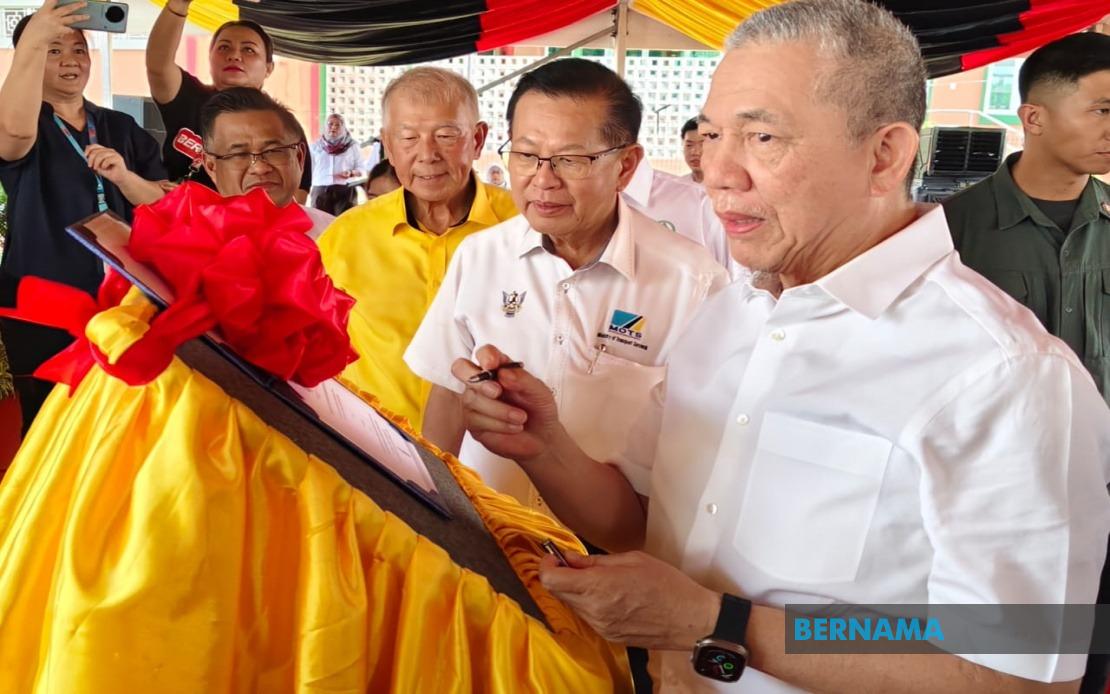
Sarawak is taking decisive action against the growing threats of erosion and flooding through a substantial investment programme that underscores the government's commitment to protecting vulnerable communities and infrastructure. Deputy Prime Minister Datuk Seri Fadillah Yusof announced that 52 projects authorised under the Cakna MADANI Programme, collectively valued at RM9.46 million, are being rolled out across the state this year to mitigate coastal and riverbank erosion while reducing flood hazards.
The portfolio demonstrates varying stages of advancement. A dozen initiatives have already reached completion, while thirteen others are currently under active construction. The remaining 27 projects remain in preliminary preparation phases, suggesting a sustained implementation schedule extending well into the coming months and years. This phased approach allows for careful planning and execution while maintaining momentum across multiple sites simultaneously.
During a visit to Miri, Fadillah inspected the Riverbank Stabilisation Project at Tab Cinaq Cemetery, one of three Cakna MADANI initiatives operating in the district. The cemetery project, budgeted at RM134,682, commenced construction in May and targets completion by November. The work centres on erecting a 50-metre retaining wall designed to arrest riverbank erosion, fortify the cemetery grounds, and safeguard adjacent structures and amenities from further deterioration.
Beyond these immediate erosion-control measures, the state government is pursuing an expansive long-term strategy encompassing 29 substantial flood mitigation undertakings. These initiatives, approved with an aggregate outlay of RM3.834 billion, represent a comprehensive assault on the region's recurring flooding challenges. The portfolio includes the Flood Mitigation Plan (RTB), High Priority Flood Mitigation (TBBT) schemes, coastal erosion mitigation programmes, and river conservation initiatives spanning multiple watersheds.
The composition of these 29 projects reflects a balance between consolidating existing efforts and launching fresh interventions. Eighteen are continuations of earlier programmes commanding RM3.567 billion in total expenditure, while eleven represent new initiatives with a combined budget of RM267 million. This distinction is significant for Sarawak, as continuation projects typically benefit from accumulated expertise and established procurement frameworks, whereas new projects indicate expanding geographical coverage or innovative approaches to persistent challenges.
Among the continuation ventures is the RTB Sungai Miri, allocated RM31 million. This particular initiative commenced in October 2023 and has achieved 58.11 percent physical progress as of Fadillah's announcement. Completion is anticipated in November 2026, positioning it as a multi-year endeavour that will fundamentally reshape flood management capacity in the Miri River basin. The extended timeline reflects the substantial engineering challenges inherent in major riverine infrastructure projects.
The timing of these announcements carries weight for Malaysian stakeholders, particularly those in Sarawak's coastal and riparian zones where climate variability and developmental pressures have intensified environmental vulnerabilities. The Cakna MADANI Programme itself represents a broader national push to integrate disaster risk reduction with community development, embedding protective infrastructure within frameworks that benefit local economies and livelihoods.
For Southeast Asian observers, Sarawak's investment pattern illustrates how regional governments are adapting to evolving hydrological and coastal hazards. The combination of immediate stabilisation projects with decade-spanning flood mitigation planning suggests recognition that piecemeal responses prove insufficient against compounding environmental stressors. The RM3.834 billion commitment signals political will to finance resilience at scales commensurate with the challenges.
Fadillah's portfolio responsibilities as Energy Transition and Water Transformation Minister add institutional weight to these initiatives. The bundling of water management within a broader energy transition narrative reflects growing understanding that water security, infrastructure resilience, and energy systems are deeply interconnected. Sarawak's hydroelectric resources and river systems make this integration particularly pertinent.
The geographic concentration in Miri exemplifies how certain districts face disproportionate exposure to erosion and inundation risks, necessitating targeted governmental response. However, the statewide distribution of 52 Cakna MADANI projects indicates that vulnerabilities extend across multiple municipalities, each with distinct geological and hydrological characteristics requiring customised interventions.
Implementation fidelity will ultimately determine whether these investments translate into measurable risk reduction for residents and economic actors. Historical experience across Southeast Asia demonstrates that project completion rates and maintenance standards significantly influence long-term effectiveness. The stated progression—with 12 finished and 13 under construction—suggests reasonable momentum, though the 27 pre-implementation projects represent a substantial pipeline requiring sustained execution capacity and funding discipline.
For Malaysian policymakers and development practitioners, Sarawak's programme offers instructive precedent. The combination of hazard-specific interventions like the Tab Cinaq retaining wall with ecosystem-scale planning embodied in comprehensive flood mitigation frameworks demonstrates integrated thinking. As other states confront intensifying hydrological extremes, whether from anthropogenic climate modification or developmental encroachment on natural drainage corridors, Sarawak's methodical approach provides a template for proportionate, well-sequenced responses.

