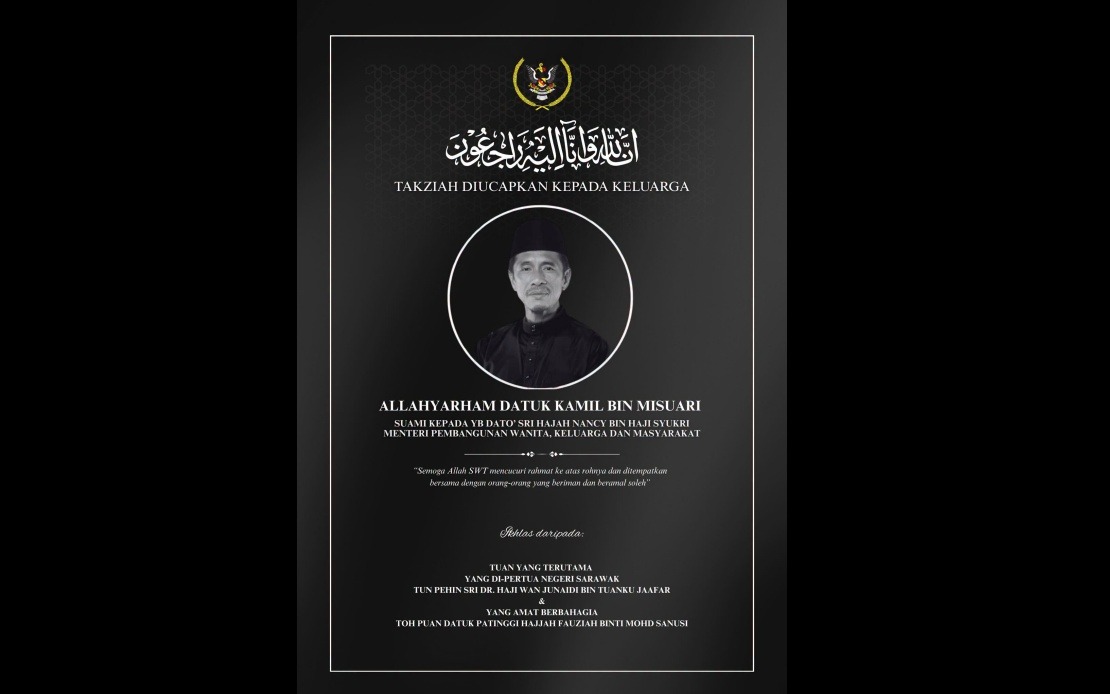
Tun Dr Wan Junaidi Tuanku Jaafar, Sarawak's Yang Dipertua Negeri, has conveyed his sympathies to Women, Family and Community Development Minister Datuk Seri Nancy Shukri following the passing of her husband, Datuk Kamil Misuari, who died at a hospital in Kuala Lumpur on June 18. The senior statesman's message of condolence, delivered through a formal statement from Astana Sarawak, marks the beginning of what is expected to be an outpouring of tributes from Malaysia's political establishment to the minister and her family during this period of bereavement.
In his carefully worded statement, Wan Junaidi, alongside his wife Toh Puan Fauziah Mohd Sanusi, invoked religious sentiment by praying that divine blessings would be bestowed upon Kamil's soul. The governor expressed hope that Allah SWT would accept the late Datuk's virtuous deeds and grant him a place among the righteous in the afterlife, reflecting the significance of Islamic observance in high-level Malaysian political discourse and the personal faith that guides the nation's leadership.
Beyond spiritual wishes, the Yang Dipertua Negeri extended prayers for Nancy Shukri and her immediate family, asking that they be granted the emotional fortitude and patience necessary to navigate the grief accompanying such a profound loss. The message conveyed in the Astana Sarawak statement emphasised the broader implications of bereavement for a minister actively engaged in national governance, acknowledging both the personal tragedy and the challenges that lie ahead as the family adjusts to life without their patriarch.
The late Datuk Kamil Misuari, aged 65 at the time of his death, had been married to Nancy Shukri for nearly four decades. Their union, which began in 1985, resulted in the birth of three children and created a family unit that has remained largely out of the public eye despite Nancy's prominence in federal politics. The longevity of their marriage underscores the personal stability that often sustains Malaysia's political figures through demanding professional careers.
According to the Office of the Minister of Women, Family and Community Development, Kamil's final hours were spent in medical care at a Kuala Lumpur hospital before his death was officially announced. The announcement, made through official ministerial channels, signalled both the gravity of the situation and the need to inform the broader Malaysian public of the personal circumstances affecting one of the government's cabinet-level officials during what is typically a busy period in the parliamentary calendar.
The arrangements for Kamil's funeral reflect the family's deep connection to Sarawak, with plans already underway to transport his remains back to the state for interment. This decision to bring the deceased home for final rites is consistent with cultural and religious practices observed among prominent Malaysian families, particularly those with significant roots in East Malaysia. The choice of location carries symbolic weight, suggesting that despite Nancy's career in federal politics based in Kuala Lumpur, family ties to Sarawak remain paramount.
The Samariang Muslim Cemetery, designated as the place of burial, is a significant final resting place that has received other notable figures from Sarawak's political and social circles. The selection of this cemetery underlines the family's commitment to Sarawak traditions and Islamic observances, even as Nancy balances her responsibilities as a federal minister overseeing women's, family, and community development matters at the national level. This geographical and cultural choice may provide Nancy and her family with the communal support that often characterises bereavement in small, tight-knit communities.
For Malaysia's broader political landscape, the passing of Kamil Misuari removes a background figure who has quietly supported one of the government's female ministers during an era when women's representation in senior cabinet positions remains relatively limited. While Kamil himself held no public office, his role as the spouse of a cabinet minister and his presence in Sarawak's social circles meant he was part of the extended network that underpins much of Malaysia's political establishment. His death thus ripples through multiple spheres of influence across the country.
Nancy Shukri's tenure as Women, Family and Community Development Minister has placed her at the forefront of policy discussions regarding family structures, women's rights, and social cohesion in Malaysia. The loss of her spouse comes at a time when such ministerial roles demand significant personal attention and public engagement, raising questions about how she will manage her professional obligations while navigating private grief. The government's acknowledgement of her circumstances through official channels suggests sensitivity to the human dimension of public service.
The circumstances of Kamil's death, occurring in a Kuala Lumpur medical facility rather than in his home state, point to the reality that even prominent Malaysian families must sometimes seek specialised medical care in the capital city. This reflects the centralised nature of Malaysia's healthcare system, where complex cases are often referred to federal territory hospitals despite patients' geographical distances from the capital. The implications for Nancy Shukri involved managing a health crisis affecting someone she had been married to for nearly forty years while simultaneously maintaining her official duties.
The formal nature of Wan Junaidi's condolence message, issued through official governmental channels, demonstrates the protocol and dignity that Malaysian political culture extends during times of personal tragedy among its leadership. Such statements serve multiple purposes: they acknowledge the human suffering at the heart of political service, they affirm the values of community and compassion that Malaysian leaders wish to project, and they create space for public acknowledgement of private sorrow within the structured world of official politics. The message reflects broader Malaysian traditions of showing respect and support during bereavement through formal, dignified expression.
As Nancy Shukri prepares to say farewell to her husband and return him to Sarawak for burial, Malaysian political circles will likely continue to express their support through various channels. The weeks ahead will test both her resilience as a public servant and the support systems available to cabinet ministers facing personal loss. Her colleagues in government, party structures, and community organisations may all play roles in easing her transition through this difficult period, demonstrating the interconnected nature of Malaysia's political establishment beyond the formal structures of government.