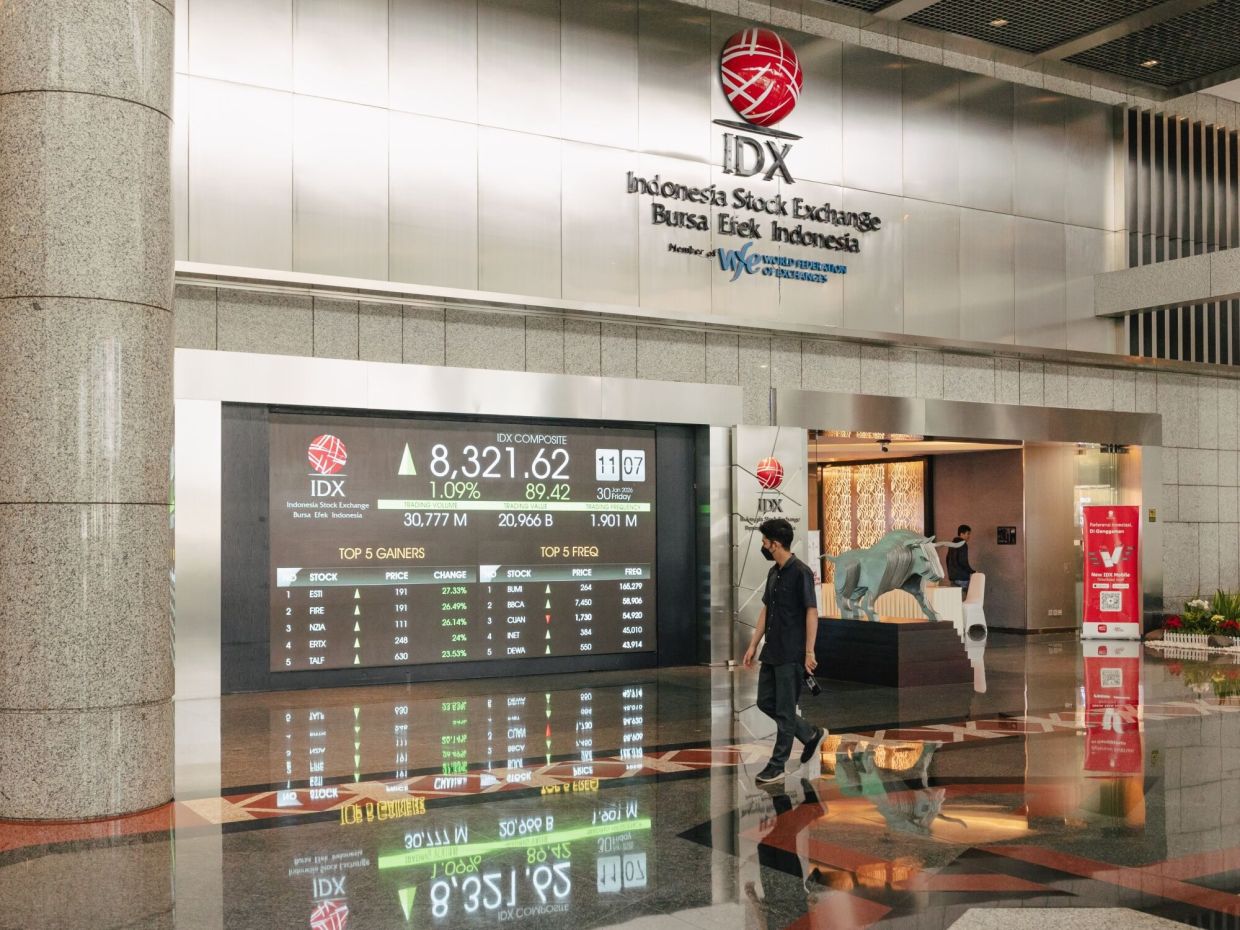
Index provider MSCI has amplified concerns about Indonesia's suitability as an emerging market, citing murky ownership structures and coordinated trading patterns that undermine confidence among global investors. The announcement, delivered Thursday, arrives at a critical juncture: MSCI is set to announce next week whether Indonesia will be demoted from emerging market to frontier status, a reclassification that could precipitate as much as $13 billion in fund withdrawals from Southeast Asia's largest economy.
The deterioration in MSCI's assessment reflects deepening structural challenges facing Indonesia's capital markets. The index provider specifically downgraded Indonesia's information flow criterion to negative status, pointing to opacity surrounding ownership data and market activity patterns that compromise the integrity of price discovery mechanisms. This lack of transparency makes it significantly harder for international investors to accurately calculate the true free float of Indonesian-listed companies—a critical metric in determining exposure and portfolio positioning.
The credibility of Indonesia's market has eroded substantially since January, when MSCI first flagged investability concerns and warned of a potential downgrade. That initial warning, combined with subsequent negative developments, has pummelled Indonesia's stock market, transforming it into the worst-performing major equity market globally. The psychological impact of downgrade risk has fed a vicious cycle, with investors preemptively reducing exposure and exacerbating losses.
However, some market observers offer a more nuanced interpretation of MSCI's latest findings. Mohit Mirpuri, fund manager at SGMC Capital in Singapore, characterises the market accessibility review as more balanced than headline concern suggests. He notes that only a single accessibility measure deteriorated, while Indonesia continues to perform respectably against regional and global peers including South Korea, China and India across numerous key benchmarks. This reading suggests the deterioration, while significant, may not presage a complete market reclassification.
Indonesian authorities moved quickly after January's initial warning, implementing a series of reform initiatives aimed at addressing MSCI's core complaints. Regulators doubled the minimum free float requirement for listed companies to 15 percent, raising barriers that should theoretically improve transparency and reduce concentrated ownership risks. In a dramatic show of accountability, the heads of both the stock exchange and the financial services regulator resigned on the same day in January, signalling the government's acknowledgement of systemic failures.
Yet these remedial efforts have failed to restore investor confidence. In April, MSCI extended its comprehensive review of Indonesian market accessibility, and the following month removed six companies from its indexes, most of which were connected to prominent tycoons with controlling stakes. That May purge triggered another sharp selloff in Indonesian equities, suggesting that technical reform measures are insufficient without demonstrable changes in market structure and behaviour.
The stakes of a potential downgrade extend far beyond Jakarta's trading floors. MSCI indexes are tracked by billions of dollars in passive investment vehicles globally, meaning any reclassification would force mechanistic selling by index-tracking funds and pressure active managers benchmarked to MSCI standards to reduce their Indonesian allocations. Such forced selling would amplify downward pressure on valuations and currency rates precisely when Indonesia can least afford it.
Indonesia's broader macroeconomic environment has deteriorated alongside its market reputation. President Prabowo Subianto's administration has pursued populist fiscal measures that have strained the public finances of the $1.4 trillion economy, historically a darling of emerging market investors. Concurrently, currency pressures have intensified, pushing the rupiah to record lows and forcing the central bank to implement successive interest rate increases in recent weeks merely to stabilise the exchange rate. International rating agencies have taken note: both Moody's and Fitch downgraded their outlooks on Indonesia's sovereign debt to negative earlier this year, citing eroding policymaking credibility.
Currency market dysfunction represents another dimension of Indonesia's investability problem. MSCI's latest review highlighted the absence of an efficient offshore currency market, while simultaneously noting constraints affecting the onshore foreign exchange market. These limitations restrict the mechanics by which international investors can hedge currency exposure, adding another layer of complexity and risk that deters capital inflows during periods of uncertainty.
The scale of investor flight from Indonesian markets underscores deepening alarm. Foreign investors have liquidated approximately $3.65 billion worth of Indonesian equities thus far in 2026, contributing to a devastating 29 percent decline in the Jakarta Composite Index this calendar year. This rate of selling, if sustained, would represent a significant reversal of Indonesia's position as a preferred destination for emerging market capital.
Probably more concerning for policymakers than any single metric is the broader loss of institutional faith in Indonesian governance and market infrastructure. MSCI's focus on information opacity and coordinated trading patterns reflects investor anxieties about fairness and market integrity—concerns that cannot be resolved through incremental technical adjustments alone. Restoring confidence will require demonstrable improvements in enforcement, transparency, and regulatory credibility over an extended period.
The forthcoming MSCI decision represents a potential inflection point for Indonesia's development trajectory. A downgrade would cement the perception that Southeast Asia's largest economy has slipped from its position as a preferred emerging market destination, with long-term consequences for capital formation, currency stability, and growth prospects. Conversely, retention of emerging market status, while hardly reversing recent losses, would at least prevent the mechanical selling that a demotion would trigger.
%22%2F%3E%3C%2Fpattern%3E%3C%2Fdefs%3E%3Crect%20width%3D%22100%25%22%20height%3D%22100%25%22%20fill%3D%22url(%23phy91pg)%22%2F%3E%3Crect%20width%3D%22100%25%22%20height%3D%22100%25%22%20fill%3D%22url(%23phy91pp)%22%2F%3E%3Ctext%20x%3D%2250%25%22%20y%3D%2250%25%22%20text-anchor%3D%22middle%22%20dominant-baseline%3D%22central%22%20fill%3D%22rgba(255%2C255%2C255%2C0.95)%22%20font-family%3D%22Georgia%2C%20'Times%20New%20Roman'%2C%20serif%22%20font-weight%3D%22700%22%20font-size%3D%22272%22%20letter-spacing%3D%22-0.02em%22%3EAnwar%3C%2Ftext%3E%3C%2Fsvg%3E)