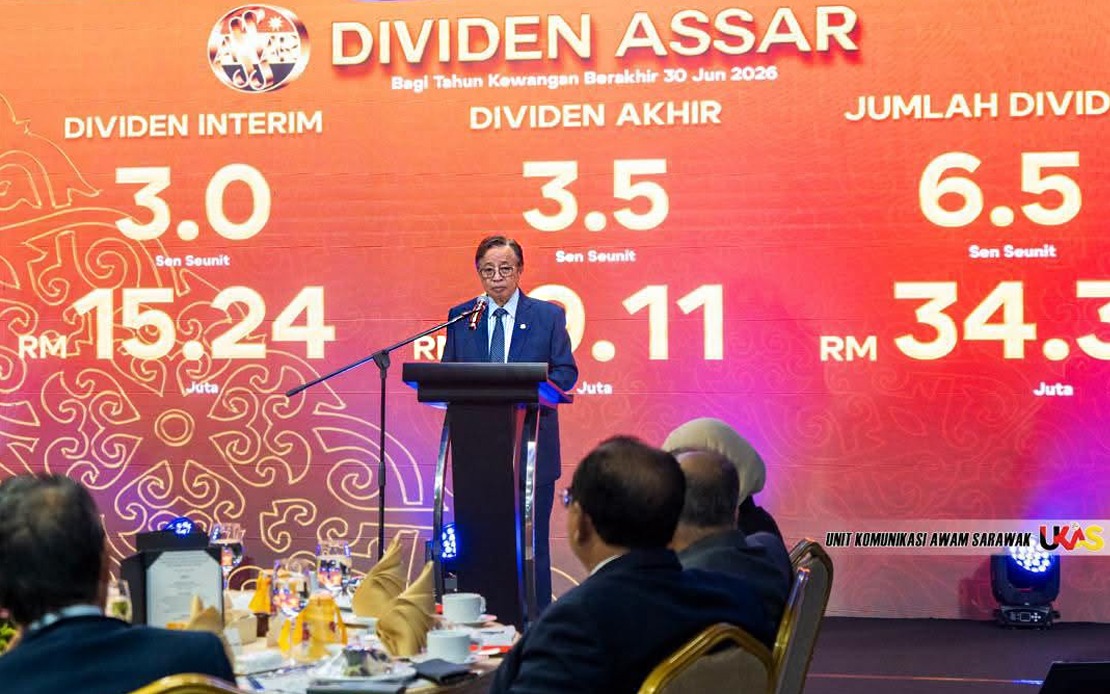
The Sarawak state government is exploring a significant expansion of its investment portfolio by opening the Amanah Saham Sarawak scheme to non-Bumiputera residents through a proposed new initiative dubbed ASSAR 2. Premier Tan Sri Abang Johari Tun Openg announced the proposal during the ASSAR dividend ceremony for the financial year ending June 30, 2026, signalling Sarawak's intent to broaden access to state-based investment instruments that have traditionally been restricted to Bumiputera investors.
The move represents a notable pivot in economic policy for the resource-rich state, reflecting broader regional trends towards more inclusive growth models. By creating a separate investment channel specifically designed for non-Bumiputera Sarawakians, the state government aims to deepen capital mobilisation while ensuring that investment opportunities extend across the entire population. This two-tiered approach would allow ASSAR to maintain its original Bumiputera-focused mandate whilst simultaneously creating fresh pathways for other communities to participate in Sarawak's economic expansion.
Abang Johari framed the initiative within the Sarawak government's stated commitment to inclusive development, emphasising that broadening investment access aligns with the state's overarching policy direction. The premier stressed that expanding the scheme would enable more Sarawakians to benefit from the state's robust economic trajectory, particularly in light of Sarawak's recent strong performance across multiple sectors. The underlying logic suggests that pooling additional capital from a wider investor base could strengthen ASSAR's fund size and investment capacity whilst generating more diversified revenue streams.
Before advancing the proposal, the ASSAR board of directors and management will conduct a thorough feasibility assessment to evaluate implementation pathways and potential risks. The government has indicated it will study the operational model employed by Permodalan Nasional Berhad (PNB), Malaysia's largest sovereign wealth fund manager, which oversees multiple investment vehicles for different demographic segments. This benchmarking approach suggests serious consideration and a structured evaluation process rather than hasty implementation.
The timing of this announcement coincides with Sarawak's efforts to strengthen its investment ecosystem amid changing economic dynamics in Southeast Asia. The state has been actively pursuing economic diversification beyond traditional resource extraction, with increasing emphasis on value-added industries and financial services. Opening ASSAR to non-Bumiputeras could signal to both domestic and foreign investors that Sarawak is committed to merit-based investment opportunities and economic inclusion.
For Malaysian investors more broadly, this development carries implications beyond Sarawak's borders. If successfully implemented, ASSAR 2 could serve as a regional model for other state governments considering similar expansions of Bumiputera-restricted schemes. The approach demonstrates how states might balance constitutional provisions protecting Bumiputera rights with contemporary demands for broader economic participation, offering a policy template that other regions might adapt.
The ASSAR scheme itself has served as a cornerstone of Sarawak's wealth-sharing mechanisms since its establishment, allowing Bumiputera citizens to accumulate savings through the state investment fund. The expansion proposal acknowledges that such schemes, when restricted to demographic segments, inevitably exclude portions of the population from wealth-building opportunities tied to state economic performance. Creating ASSAR 2 would theoretically unlock capital currently outside the formal investment framework whilst maintaining the original scheme's targeted purpose.
From an equity perspective, the proposal addresses longstanding concerns about investment access disparities within Malaysia's federal structure. Sarawak, like other states, operates within the constraints of constitutional provisions regarding Bumiputera privileges, yet faces contemporary pressure to ensure equitable economic opportunities across all communities. The ASSAR 2 initiative attempts to navigate this tension by preserving the original scheme's identity whilst creating alternative channels for participation.
The proposal also reflects practical considerations about capital accumulation in smaller regional economies. By expanding the investor base beyond Bumiputera communities, ASSAR could potentially attract larger aggregate investments, enabling the fund to pursue more ambitious projects and deliver potentially higher returns to both existing and new participants. This capital pooling effect becomes particularly important in Sarawak's context, where the state competes with larger Malaysian economic centres for investment capital and financial services development.
Implementation of ASSAR 2 would require careful legislative or regulatory adjustments to define eligibility criteria, contribution mechanisms, and governance structures distinctly from the original ASSAR framework. Questions around dividend distribution parity, fee structures, and access to identical investment options would need resolution during the board's feasibility assessment. These operational details will ultimately determine whether the scheme succeeds in achieving its stated objectives of broader participation and enhanced capital mobilisation.
The announcement also hints at Sarawak's confidence in its economic trajectory and investment opportunities. Expanding investment access suggests government confidence that the returns generated justify opening the scheme to a larger participant pool. This confidence appears grounded in recent economic performance across Sarawak's diverse sectors, from energy to agriculture to emerging technology initiatives.
Looking ahead, stakeholder responses from non-Bumiputera communities, business organisations, and financial sector players will provide important feedback on market receptivity to ASSAR 2. The government's willingness to commission a rigorous feasibility study before implementation suggests seriousness about execution quality rather than symbolic gesturing. Successful development of ASSAR 2 could enhance Sarawak's attractiveness as an investment destination whilst reinforcing the state's identity as a more economically inclusive jurisdiction within Malaysia's federation.

