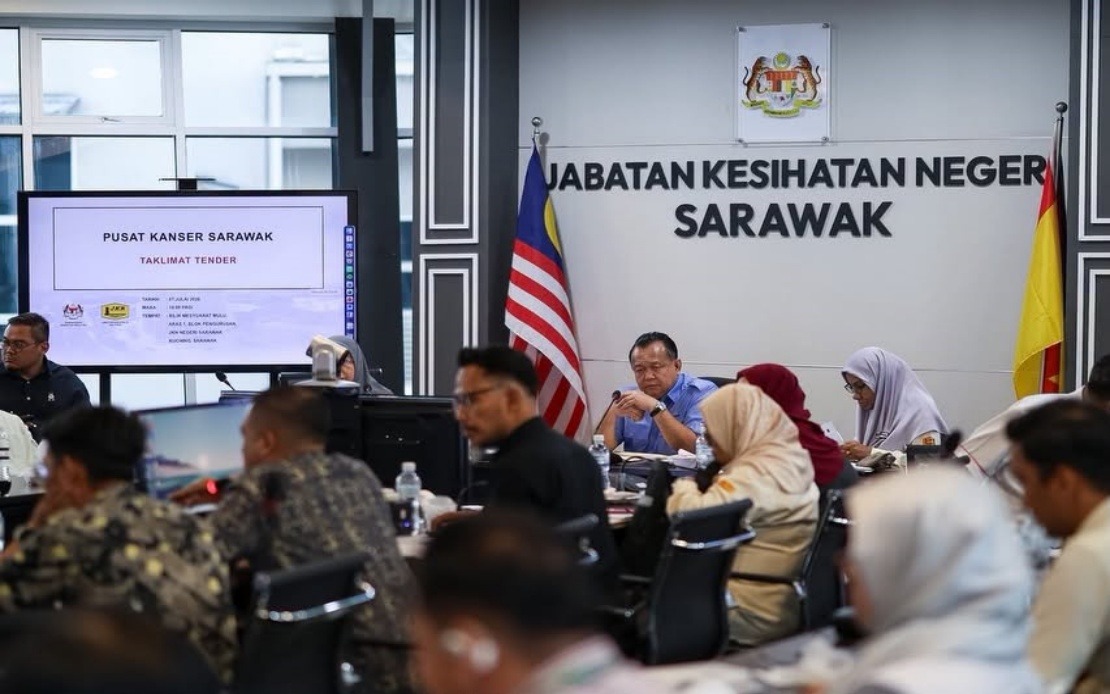
Construction of the Sarawak Cancer Centre in Kota Samarahan is on track to commence in January 2027, according to Works Minister Datuk Seri Alexander Nanta Linggi, marking a significant milestone in the state's long-term healthcare infrastructure development strategy. The timeline hinges on the successful contractor receiving the Letter of Acceptance early in the new year, following the completion of the tender evaluation process for this major health facility.
The project has already progressed substantially through its procurement phase. Ten contractors have successfully navigated the pre-qualification assessment and received detailed briefings outlining the full scope of work. These firms are currently in the proposal development stage, with approximately three months allocated to prepare comprehensive bids that address the technical, design, and construction requirements specified by the Works Ministry and Health Ministry.
Once proposals are submitted, a rigorous evaluation will determine the winning contractor. Upon completion of this assessment phase and issuance of the Letter of Acceptance in early January 2027, the design-and-build contract will formally commence. The successful bidder will then have 60 months—a five-year timeframe—to complete both the architectural design and full construction of the facility. Following practical completion, an additional two-year Defects Liability Period will provide oversight to address any construction or design deficiencies that emerge during initial operations.
The proposed Sarawak Cancer Centre represents a transformative addition to the state's oncology and healthcare capacity. Situated on a 10.9-hectare plot adjacent to the existing Sarawak Heart Centre, the facility will operate as a comprehensive cancer treatment and research hub. The development reflects Sarawak's commitment to consolidating specialized healthcare services in purpose-built, state-of-the-art venues equipped with modern diagnostic and therapeutic technologies.
Capacity and service delivery form critical components of the project design. The cancer centre will accommodate 310 beds, providing the dual capability to serve both outpatients seeking diagnostic consultations and treatments as well as inpatients requiring extended care and specialized management. This bed count positions the facility among the region's significant oncology centres, enabling Sarawak to retain cancer patients who might otherwise travel to Peninsular Malaysia or internationally for advanced treatment.
Design specifications must satisfy stringent requirements established by the Health Ministry to ensure the facility meets national medical standards and operational protocols. The architectural approach will incorporate contemporary design principles reflecting global best practices in cancer care facilities, balancing functional efficiency with patient-centered environments that support healing and dignity during treatment.
Financial arrangements demonstrate substantial government commitment to realizing this healthcare vision. The total project cost is anticipated to exceed RM1 billion, reflecting the complexity and technological sophistication required for a modern comprehensive cancer centre. The Sarawak state government has provided an initial allocation of RM1 billion for the undertaking, with the understanding that reimbursement will occur through mechanisms to be negotiated—likely involving federal health funding partnerships or development formulae that recognize oncology as a critical national priority area.
For Malaysian healthcare strategists, the Sarawak Cancer Centre carries regional significance beyond Sarawak's borders. The facility will alleviate pressure on existing regional cancer services concentrated in Kuala Lumpur and Petaling Jaya, enabling East Malaysian patients to access world-class oncology services without interstate travel. This decentralization of specialized healthcare represents policy progress toward achieving more equitable geographic distribution of advanced medical capacity across Malaysia's regions.
The project timeline assumes stable procurement processes and contractor capacity, factors that remain subject to supply chain dynamics and construction sector conditions. The five-year construction period beginning in 2027 projects operational commencement around 2032, contingent on no material schedule disruptions. For Sarawak's healthcare planning, this means the facility will come online during the latter part of the current development decade, providing urgent capacity upgrades as cancer incidence continues rising regionally due to demographic aging and lifestyle factors.
Integration with the adjacent Sarawak Heart Centre creates synergistic advantages for operational efficiency and patient pathway management. Shared support infrastructure, interdisciplinary collaboration, and consolidated specialty care in a single campus can enhance diagnostic accuracy and treatment coordination for patients with coinciding cardiovascular and oncological conditions—a growing clinical reality in aging populations.
The tender process currently underway will determine which contractor possesses the technical expertise, financial stability, and project management capability to deliver this complex facility. International standards for modern cancer centres demand specialized knowledge in radiotherapy infrastructure, pathology laboratory systems, medical imaging equipment integration, and oncology-specific infection control architecture—criteria that effectively filter the contractor pool to firms with proven capacity in healthcare construction.
Stakeholder management has already commenced, with the site visit by Minister Nanta Linggi indicating active oversight and public transparency around progress. Communication with contractors, health authorities, and the public regarding timelines and expectations helps manage the considerable planning horizons required for a facility of this magnitude and public health importance to Sarawak's population.

