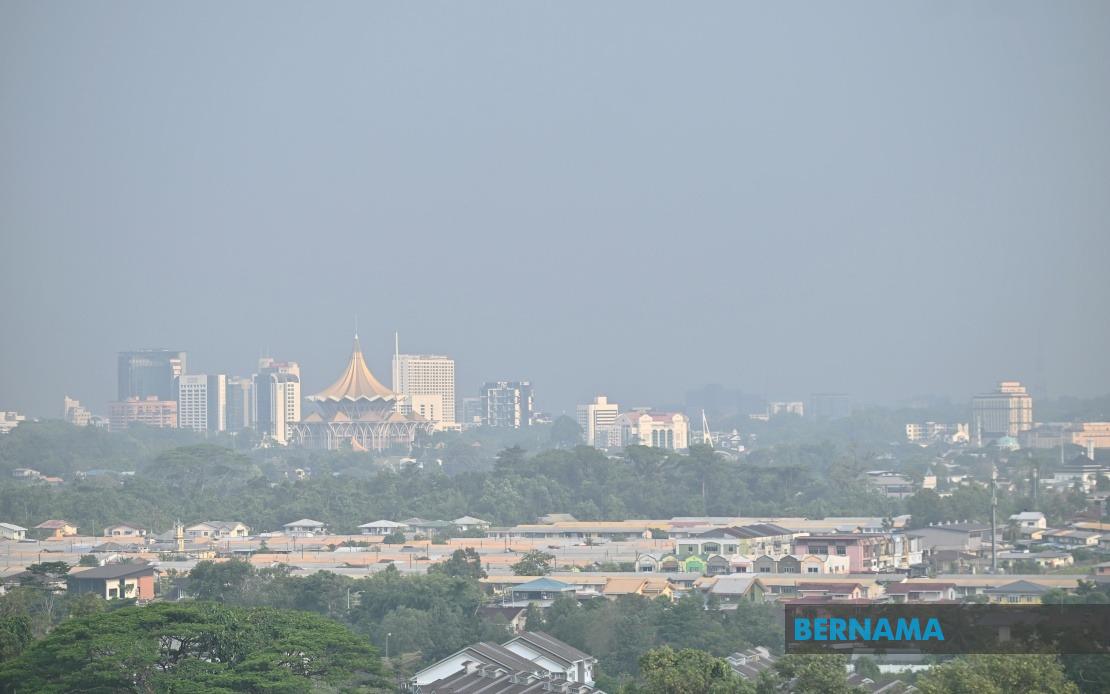
Malaysia's meteorological authority has flagged an extended period of intensely hot and relatively dry weather across Sarawak and parts of Borneo, with conditions expected to persist until Aug 20, creating mounting concerns over air quality deterioration and reduced visibility in the coming week. The Malaysian Meteorological Department attributed the prolonged heat spell to persistent southerly wind patterns combined with a substantial concentration of active hotspots scattered across the Borneo landmass, a combination that traditionally correlates with transboundary haze episodes affecting the broader Southeast Asian region.
The department's warning comes as air quality monitoring systems recorded widespread pollution across Malaysia on Wednesday morning, with ten locations nationwide registering unhealthy Air Pollutant Index levels as of 10 am. The geographic distribution of these readings underscored the severity of conditions in East Malaysia, with the overwhelming majority of affected areas concentrated in Sarawak, signalling that the state faces the most acute exposure to poor air quality during this weather pattern.
For Malaysian readers, the implications extend beyond immediate discomfort. The confluence of heat, dryness, and airborne pollutants typically exacerbates respiratory conditions, making this period particularly challenging for vulnerable populations including the elderly, children, and those with pre-existing lung or cardiovascular ailments. Sarawak's tourism and economic sectors may also experience disruption, as reduced visibility impacts aviation operations and outdoor activities that sustain local communities dependent on these industries.
The meteorological department's identification of southerly winds as the primary driver reflects broader climate patterns affecting mainland and insular Southeast Asia during this season. These wind systems, which originate from the Indian Ocean and southern latitudes, carry warm air masses that suppress cloud formation and precipitation, thereby intensifying surface heating and drying vegetation and accumulated organic matter. Combined with the elevated number of hotspots—likely stemming from agricultural clearing, plantation maintenance, or uncontrolled fires—the region faces a textbook scenario for haze generation and atmospheric stagnation.
Simultaneously, MetMalaysia issued a separate alert for thunderstorm and heavy rainfall spanning the entire northern peninsula and Federal Territory of Kuala Lumpur, extending through midday Wednesday. This warning encompassed Perlis, Kedah, and Penang in their entireties, alongside specific districts in Perak including Kerian, Selama, Larut Matang, Manjung, and Bagan Datuk. The alert further covered multiple Selangor zones: Sabak Bernam, Kuala Selangor, Klang, Petaling, Gombak, and Hulu Selangor, reflecting the dynamic nature of Malaysia's tropical weather systems and the sharp contrast between conditions developing across different regions simultaneously.
This dual-alert scenario illustrates the complexity of weather management across Malaysia's diverse geography. While Peninsular Malaysia contends with convective instability and torrential downpours typical of the southwest monsoon influence, Sarawak and eastern Borneo are ensnared in a separate thermodynamic pattern characterized by subsidence, light winds, and heat accumulation. Such regional disparities demand tailored public communication strategies and distinct preparedness measures, challenging both meteorologists and civil authorities tasked with issuing timely, location-specific guidance.
The public advisory issued by MetMalaysia encouraging citizens to monitor updates through the department's website, official social media accounts, and the myCuaca mobile application reflects modern best practices in weather alert dissemination. However, effectiveness depends critically on accessibility, digital literacy, and consistent message reinforcement—factors that vary significantly across Malaysia's urban and rural communities, and particularly in remote areas of Sarawak where internet connectivity remains variable.
From a regional perspective, the current situation underscores the ongoing challenge of transboundary haze affecting Malaysia and its neighbours. Sarawak's proximity to Indonesian Kalimantan means that hotspots originating across the border, combined with weather systems that transport smoke westward and southward, create shared atmospheric challenges requiring coordination between Malaysian and Indonesian authorities. Previous episodes have demonstrated the necessity of bilateral cooperation and information-sharing to manage what are inherently transnational environmental phenomena.
Looking ahead to the latter portion of August, the persistence of this weather pattern through Aug 20 suggests that residents and businesses in affected areas should prepare for extended exposure to heat stress and degraded air quality. Health facilities in Sarawak may anticipate increased cases of respiratory complaints, whilst agricultural and outdoor labour sectors should implement heightened occupational safety measures. The window for preventive action—such as securing water supplies, ensuring air quality monitoring devices are functional, and stocking essential medicines—remains open but narrow.
For Malaysian policymakers, this incident reinforces the importance of sustained investment in meteorological infrastructure, early warning systems, and regional environmental governance. The unpredictability and severity of weather extremes in the tropics demands continuous refinement of forecasting models, expansion of ground-based and satellite observational networks, and integrated disaster risk reduction planning across both Peninsular and East Malaysia.
Citizens are encouraged to remain vigilant and responsive to official guidance, particularly in Sarawak where conditions are expected to remain challenging through the third week of August. Minimising outdoor exposure during peak heating hours, maintaining adequate hydration, and following health advisories for sensitive groups constitute prudent personal risk management during this extended weather event.

