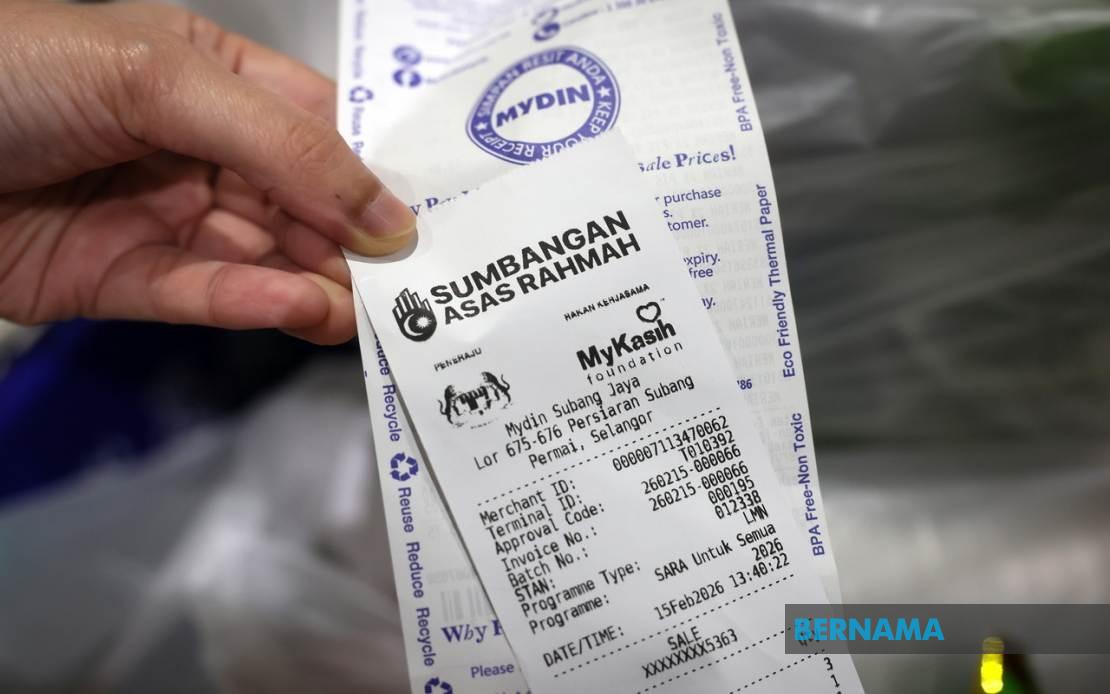
Malaysia's flagship Sumbangan Asas Rahmah (SARA) programme is delivering measurable results in supporting vulnerable households, with the Ministry of Finance revealing that the cashless assistance scheme has achieved a 99 per cent utilisation rate among its core beneficiaries. The strong take-up reflects widespread adoption of the initiative, which distributes aid to nearly nine million monthly Sumbangan Tunai Rahmah (STR) recipients across the nation, generating RM3.45 billion in actual market transactions during the year to date.
The programme's performance extends beyond mere distribution figures, with ministry data indicating that a broader cohort of 22 million people has engaged with SARA Untuk Semua, the universal variant of the scheme. This larger group, representing 87 per cent of all eligible recipients, has collectively generated over RM1.77 billion in transactions within the local economy, underscoring how targeted social assistance can stimulate grassroots economic activity. The distinction between the two figures—nine million for the core STR programme and 22 million for the broader initiative—reflects the government's tiered approach to reaching different segments of the population facing cost-of-living pressures.
At its core, SARA operates as a cashless system delivered through MyKad credits, a mechanism that fundamentally reshapes how government aid reaches beneficiaries. Rather than distributing cash, the system tethers assistance to registered SARA Rakan Niaga outlets where recipients can acquire goods from 15 essential categories. These categories encompass basic necessities including groceries and fresh food items, personal hygiene products, household cleaning supplies, medicines, and other staples that directly address daily survival needs for low- and middle-income households. This design creates a built-in accountability structure that allows policymakers to monitor where aid flows and ensures resources serve their intended purpose rather than being diverted or misused.
The Ministry of Finance framed the spending data as evidence that SARA effectively eases financial pressure on households already squeezed by inflationary pressures on essential goods and services. By tracking actual redemptions and transaction patterns, the government gains real-time visibility into programme effectiveness and can adjust delivery mechanisms if evidence suggests inefficiencies. This data-driven approach represents a departure from traditional cash transfer systems, which often lack transparency regarding how beneficiaries ultimately deploy their assistance. The ministry emphasised that sustained recipient engagement and spending performance serve as crucial indicators of how well the dual STR-SARA framework addresses economic hardship among vulnerable populations.
Economic multiplier effects constitute a secondary benefit that amplifies SARA's impact beyond direct household relief. When beneficiaries spend their SARA credits at local retailers registered within the network, money circulates through neighbourhood economies, supporting small and medium-sized business operators who serve as distribution points. This creates a stimulus effect where government spending on social assistance simultaneously strengthens local commercial ecosystems, particularly in areas where organised retail infrastructure remains limited. For Malaysian policymakers focused on inclusive development and poverty alleviation, such multiplier dynamics justify investment in well-designed assistance programmes that channel aid through local merchant networks rather than centralised distribution channels.
Parliamentary accountability shaped the release of this performance data. Datuk Aminolhuda Hassan, representing the Pakatan Harapan coalition constituency of Sri Gading, had specifically requested information about the government's key performance indicators for both STR and SARA. His inquiry reflected broader legislative interest in understanding how effectively flagship social programmes translate policy intentions into measurable household outcomes. The Ministry of Finance's detailed response, published on Parliament's official website, demonstrated commitment to transparency regarding social spending and programme performance metrics—information essential for parliamentarians evaluating whether resource allocation aligns with stated policy objectives.
The financial trajectory of these assistance programmes reflects shifting budgetary priorities within government spending. Total allocations for STR and SARA have expanded to RM15 billion in 2026, a significant 50 per cent increase from the RM10 billion committed in 2024. This escalation signals that the government views targeted social assistance as a strategic response to persistent cost-of-living challenges facing Malaysian households. Rising allocations also suggest policymakers recognise that previous assistance levels proved insufficient to fully offset inflationary pressures, particularly regarding food, fuel, and utility costs that disproportionately burden lower-income households. The trajectory indicates sustained political commitment to expanding the social safety net despite competing budgetary demands.
For Malaysian and regional observers, the SARA programme's strong performance metrics hold broader significance regarding government capability to design and implement social policy at scale. The 99 per cent utilisation rate among nine million beneficiaries demonstrates that when assistance schemes include user-friendly mechanics and address genuine need, uptake approaches theoretical maximums. This contrasts with some earlier government programmes that struggled with awareness gaps, bureaucratic friction, or beneficiary confusion that suppressed actual utilisation below enrolled populations. SARA's design—leveraging existing MyKad infrastructure and partnering with established retail networks—arguably reduced adoption barriers that plague more complex social schemes in developing economies.
The emphasis on tracking spending and monitoring aid distribution reflects growing adoption of evidence-based policymaking methodologies across Southeast Asian governments. Rather than distributing assistance and assuming it reaches intended purposes, the cashless SARA architecture embeds evaluation capacity within programme operations themselves. Every transaction generates data revealing who accesses aid, what categories receive greatest demand, and whether redemption patterns align with predicted necessity categories or suggest unexpected spending choices. This information loop enables mid-course programme adjustments and provides empirical foundation for policy debates about whether assistance levels adequately address cost-of-living pressures.
Persistent economic headwinds confronting Malaysian households provide context for understanding why the government continues expanding assistance budgets despite overall fiscal constraints. Import-dependent economies such as Malaysia face vulnerabilities to external commodity price shocks, currency fluctuations, and global inflationary cycles that directly translate into higher local prices for essentials. Middle-income households that previously maintained economic stability increasingly face budget pressures, expanding the eligible population for targeted assistance. Policy responses must calibrate assistance generously enough to materially improve household financial positions while remaining fiscally sustainable—a challenge that explains why policymakers closely monitor spending data showing whether assistance actually translates into improved purchasing power for recipients.
The Ministry of Finance pledged ongoing monitoring to ensure support continues reaching populations most vulnerable to rising living costs. This commitment acknowledges that social assistance programmes require constant recalibration as economic conditions evolve and new cohorts of households slip into financial difficulty. For Malaysia, where economic volatility occasionally disrupts employment and income flows, maintaining robust and responsive assistance infrastructure has become integral to political sustainability and social stability. The SARA programme's demonstrated capacity to efficiently reach millions of households and stimulate local economic activity positions it as a cornerstone tool for policymakers managing cost-of-living challenges throughout the coming years.

