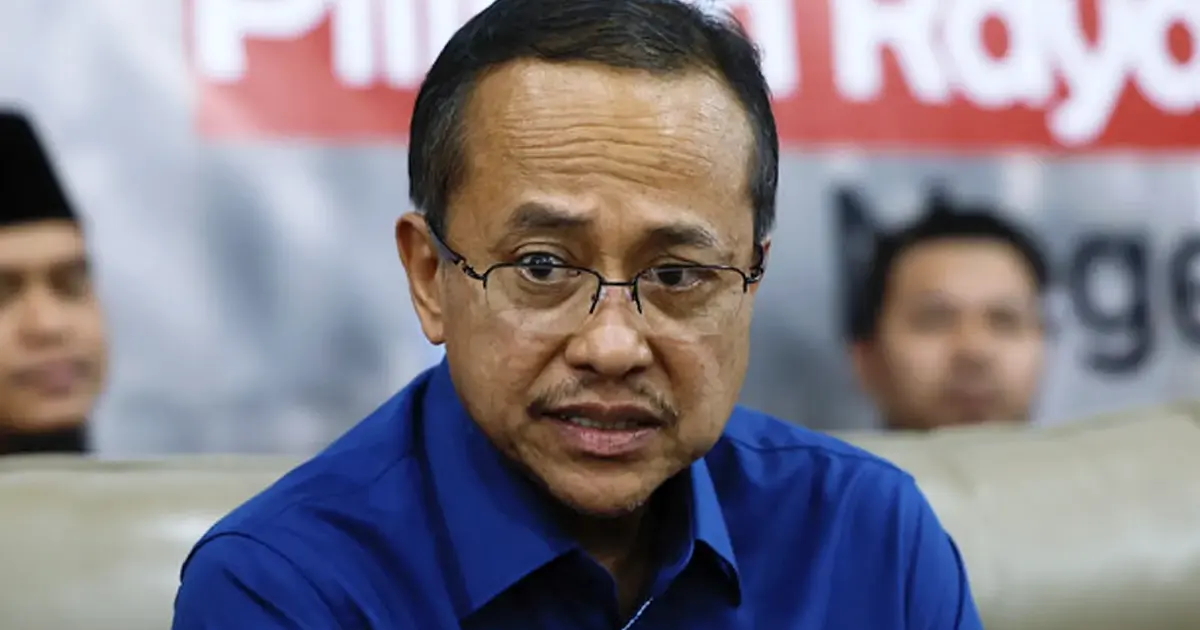
Perikatan Nasional coalition chairman Samsuri has sought to reassure party members and supporters that the shared use of the PN logo by both PAS and Bersatu will not generate confusion at the ballot box, given that the two parties have been allocated separate electoral seats under the coalition's seat-sharing arrangement.
The clarification comes as the coalition navigates the practical mechanics of its multi-party alliance, where multiple parties operate under a single visual identity. This arrangement, while designed to project unity and strengthen the coalition's electoral brand, has occasionally raised questions among grassroots members about how voters will distinguish between parties when all are represented by identical campaign symbols.
Samsuri's statement underscores a fundamental reality of coalition politics in Malaysia: while parties merge their resources, messaging, and branding under the PN umbrella, they maintain their distinct organizational structures, party membership systems, and legislative agendas. The use of a common logo is thus a strategic choice to consolidate the coalition's public image rather than a sign of organizational merger or loss of party autonomy.
The seat allocation system that has been agreed upon between PAS and Bersatu represents weeks of internal negotiation and compromise. Each party has been assigned specific constituencies where it will stand as the PN candidate, reducing the possibility of intra-coalition competition and the splitting of anti-establishment votes. This arrangement is critical for the coalition's electoral viability, particularly in the context of Malaysia's first-past-the-post electoral system, where vote fragmentation can easily hand seats to the governing coalition's candidates.
From a voter's perspective, the distinction between PAS and Bersatu candidates becomes clear once constituency-level information is examined. Campaign materials, local organizing efforts, and candidate selection processes remain firmly under the control of each individual party. PAS, being a Malay-Muslim organization with a specific theological orientation, maintains its own distinct approach to community engagement and policy priorities. Bersatu, meanwhile, has its own organizational base and leadership structure rooted in its formation story and political trajectory.
The broader context of Malaysian coalition politics reveals that such arrangements are not uncommon. Multi-party alliances frequently adopt unified logos and symbols to strengthen their brand recognition and to communicate solidarity to voters. However, the existence of a shared logo does not erase the reality that coalition partners retain their separate identities, internal party democracies, and distinct policy platforms on various issues.
For regional observers watching Malaysian political dynamics, this arrangement illustrates the delicate balance required to maintain coalition unity while preserving individual party credibility. The challenge lies in ensuring that supporters of each party understand why their preferred organization is allied with others, and how party-specific concerns will be advocated for at the federal and state levels after elections.
Samsuri's intervention also addresses a practical concern that party officials and grassroots activists have raised: the need for clarity in campaign materials and communications so that voters know which party's candidates they are electing. Clear labeling of candidate names, party affiliations, and local organizing structures ensures that the PN logo's presence does not obscure the identity of the actual aspirants seeking votes.
The stability of the PN coalition has been tested by various internal dynamics since its formation, including questions about resource allocation, representation in party leadership, and the priority given to each constituent party's policy agenda. Samsuri's statement can be read partly as an effort to reinforce that the coalition framework, while unified in electoral strategy, respects the organizational autonomy that each party requires to maintain the confidence of its own membership base.
Looking ahead, how successfully this arrangement functions will depend on multiple factors: the consistency with which both parties promote the PN message in their respective constituencies, the ability of local leadership to manage any ground-level confusion, and the willingness of supporters to embrace the coalition's strategic logic even while remaining emotionally invested in their chosen party.
The issue also carries implications for how Malaysian political coalitions will structure themselves in future electoral cycles. If the PN's experiment in logo-sharing proves successful—delivering clear electoral messaging while maintaining party distinction—other coalitions may adopt similar approaches. Conversely, if confusion or voter dissatisfaction emerges, it could push coalitions toward more differentiated branding strategies.
Ultimately, Samsuri's assurance reflects confidence that Malaysian voters are sufficiently sophisticated to distinguish between coalition brands and individual party identities, even when visual symbols overlap. This confidence will be tested when voters actually enter polling booths and cast their ballots, where the clarity of candidate information and local party organizing becomes paramount.

