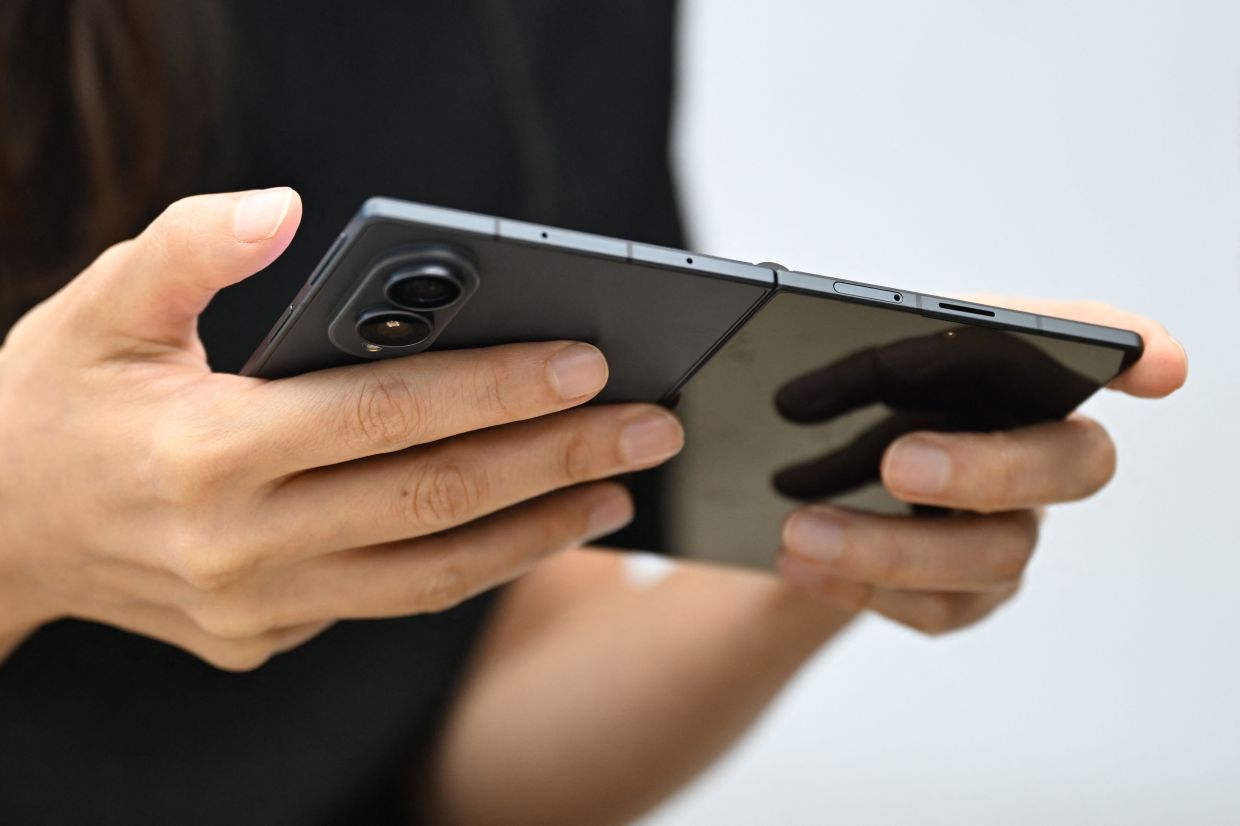
Samsung Electronics' latest foldable device, the Galaxy Z Fold 8, exemplifies an emerging design philosophy that prioritises a compact, wide form factor reminiscent of a passport rather than the tall, narrow configurations that dominated earlier foldable iterations. This shift in proportions delivers screen dimensions more conducive to video consumption and a more natural tablet experience when unfolded. The trend will gain substantial visibility in the coming weeks when Apple introduces its inaugural folding iPhone, marking a significant moment for mainstream adoption of this design language across the industry's two largest smartphone manufacturers.
While Samsung and Apple are not pioneers of this approach, their combined market influence will likely accelerate widespread consumer familiarity with the passport aesthetic. Alphabet's Google initially experimented with comparable proportions on its original Pixel Fold before reverting to a more elongated design, and manufacturers including Oppo and Huawei have deployed similar wide-format foldables across select markets. However, the convergence of Samsung's US$1,900 (starting from RM7,299 locally) Z Fold 8, which begins shipping August 7, with Apple's forthcoming foldable, will expose American consumers to this configuration at unprecedented scale and with unparalleled marketing reach.
Handling Samsung's new device reveals genuine innovation in the foldable category at a moment when incremental improvements have become the norm. The Z Fold 8 weighs a feathery 201 grams, and its unconventional proportions create an almost charming tactile experience that distinguishes it from the monotonous annual refresh cycles that have fatigued many consumer electronics enthusiasts. The 5.5-inch outer display accommodates single-handed navigation with minimal thumb strain, eliminating the ergonomic compromises that plague larger flagship devices like the Galaxy S26 Ultra and iPhone 17 Pro Max. Its compact height of approximately 4.9 inches substantially reduces the likelihood of grip failure, a persistent frustration for users juggling oversized smartphones during routine daily activities.
However, the passport form factor introduces practical limitations that warrant careful consideration. The positioning of the Z Fold 8's rear camera module generates a pronounced wobble when the device rests on a table, a destabilising quirk that persists without purpose-built protective casings. Samsung has adopted a conservative colour palette for the 2026 lineup, moving beyond the saturated blue offered with last year's Z Fold 7 in favour of muted tones, though the device nonetheless demonstrates meticulous construction quality and effortless unfold mechanics. A notable departure from predecessors involves the hinge mechanism, which springs open when transitioning to the expansive inner display, preventing the device from functioning as a tent-mode laptop alternative that earlier generations supported.
The most significant sacrifice inherent to this squat configuration manifests in information density constraints. Applications scaled to the cover screen's 10:16 aspect ratio forfeit vertical screen real estate, resulting in substantially reduced content visibility compared to conventional candy-bar smartphones. Gmail exemplifies this limitation: whereas an iPhone 17 Pro Max displays ten email subject lines simultaneously, the Z Fold 8 accommodates merely five before requiring scrolling intervention. App grids similarly experience restrictions, capped at four columns rather than the five-column layouts standard on other Samsung devices. Window previews within the multitasking switcher appear diminished, potentially frustrating users with vision impairments, and Instagram content frequently demands additional swiping to reveal complete images or videos in their entirety.
Productivity-focused consumers may find these constraints problematic given the reduced information landscape they encounter throughout routine device interactions. Slack conversations display abbreviated histories, and conventional productivity workflows suffer from truncated visibility without constant adjustment. While text size preferences within the Z Fold 8's settings provide partial mitigation, many users will neither discover nor implement these solutions. The superior approach involves unfolding the device and engaging its 7.6-inch inner display, particularly when rotated vertically, whereupon TikTok videos and Instagram feeds transition from cramped to genuinely immersive experiences, albeit with an initial adjustment period. This interior screen configuration delivers exceptional reading experiences that feel intuitively book-like compared to narrower alternatives, and its reduced weight eliminates the hand cramps previously associated with extended full-screen reading sessions.
An intriguing design choice involves the retention of an unsightly camera lens on the inner display, a redundancy given the existing selfie camera embedded in the cover screen where video calls predominantly occur. Photographic viewing and sharing represent another standout application for the interior screen, as smartphone cameras inherently capture 4:3 aspect ratio images that completely fill this display, creating an immersive gallery experience for sharing vacation photography with companions. The device's dual-camera configuration—featuring a primary lens and ultrawide alternative—omits telephoto capabilities that enable optical zoom functionality, a notable absence given Samsung's portfolio strength in portrait-mode processing that typically surpasses competitors like Apple and Google in subject separation and background bokeh rendering. Apple's forthcoming foldable will reportedly adopt an identical dual-camera strategy, rendering hardware upgrade decisions for zoom enthusiasts straightforward when next year's iteration arrives.
Video consumption, frequently promoted as a primary justification for the passport design, has not delivered the transformative differentiation Samsung suggests. While pinch-to-zoom functionality expands content beyond non-folding smartphone capabilities, contemporary films on the interior display do not appear substantially larger than equivalent content on a 17 Pro Max or S26 Ultra. The marginal advantage involves reduced black bars above and below streaming content, though this refinement hardly constitutes the revolutionary viewing paradigm marketers envision. Realising this design's entertainment potential genuinely demands larger iterations approximating Samsung's discontinued Galaxy Z TriFold, yet such expansion introduces handling challenges and pocket-ability trade-offs that fundamentally undermine portability benefits.
Samsung's strategic direction may ultimately favour bifurcating its foldable portfolio along dimensional lines rather than maintaining the current compact and "Ultra" configuration architecture. This recalibration would address distinct consumer segments: those prioritising versatile, pocketable devices like the Z Fold 8 alongside others demanding comprehensive productivity platforms. The company internally forecasts this design representing approximately one-third of its US foldable sales, reflecting substantial confidence in consumer acceptance. Apple's folding iPhone constitutes the second phase of a three-year flagship reinvention strategy, succeeding last year's overhauled Pro and Pro Max models and the newly introduced iPhone Air, with a separate 2027 redesign planned to commemorate the product's two-decade milestone.
Despite favourable momentum, neither foldable category will imminently displace conventional flagship devices, particularly larger variants. The passport configuration demands genuine compromises; users heavily dependent on email volume or social media consumption find superior value in the expansive screens and significantly lower prices of Galaxy S26 Ultra, iPhone 17 Pro Max, or iPhone Air alternatives. Yet the Z Fold 8 possesses an intangible quality that invigorates routine device interaction, arriving at precisely the cultural moment when smartphone maturation has rendered marginal camera improvements and artificial intelligence feature accumulation insufficient to generate genuine enthusiasm. Foldable iterations have frequently felt incrementally conservative, yet the Z Fold 8 achieves genuinely differentiated appeal within the American market context. Ultimately, consumer adoption will determine whether the passport aesthetic represents the categorical evolution the market required, but preliminary assessment suggests this design philosophy will resonate powerfully with individuals fatigued by predictable annual release cycles.

