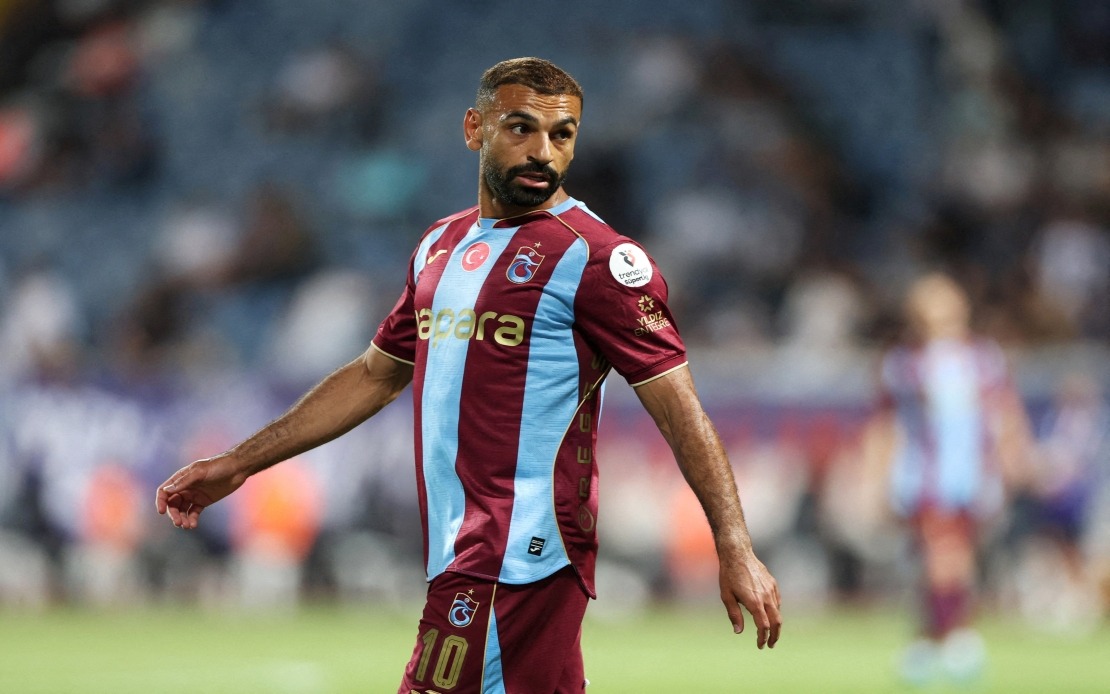
Within a fortnight of Mohamed Salah's signing with Turkish Super Lig club Trabzonspor, the Egyptian football icon's No. 10 jersey has become a fixture in the shop windows of Cairo's Khan el-Khalili bazaar, one of the Middle East's most iconic and visited trading hubs. Sports retailers throughout the historic market have swiftly stocked the claret-and-blue Trabzonspor kit, displaying it prominently alongside merchandise bearing Salah's Egypt national team colours, capitalising on the immediate surge in consumer interest following the superstar's departure from English football.
The commercial momentum reflects more than mere mercantile opportunity. Across Egypt and the broader Arab world, football enthusiasts have widely shared footage documenting the enthusiastic reception Salah encountered upon arriving in Türkiye, with social media amplifying expressions of national pride and optimism surrounding his relocation to Istanbul's storied club. This grassroots enthusiasm has translated rapidly into retail demand, with market traders reporting that the jersey commands a competitive price point of between 400 and 500 Egyptian pounds, equivalent to approximately 8 to 10 United States dollars.
Salah Abdulmecid, a longstanding Khan el-Khalili shopkeeper, articulated the perspective of local vendors regarding the transfer. He emphasised that the bazaar, which has recently hosted official visits from Egyptian President Abdel Fattah el-Sisi and French President Emmanuel Macron, remains among Cairo's preeminent destinations for both tourism and commerce. Abdulmecid's comments reflected genuine satisfaction at Salah's move, noting a cultural affinity between Egyptian and Turkish populations grounded in shared traditions and religious values, suggesting that the footballer's presence in Turkey would be welcomed warmly by Turkish supporters who regard him with similar reverence.
Anecdotal evidence from within the bazaar itself underscores the depth of popular enthusiasm. One supporter documented purchasing and donning a Trabzonspor jersey outside a retail establishment, offering an impromptu blessing for Salah's success in his new Turkish environment. Such spontaneous expressions of support illustrate how the transfer has captured the emotional investment of ordinary Egyptians, transcending the typical confines of sports journalism and merchandise sales to become a broader cultural moment.
Beyond the immediate commercial dynamics, Egyptian sociologists and cultural observers have begun interpreting Salah's transfer through a geopolitical lens. Said Sadik, a prominent Egyptian sociologist, characterised Salah as embodying what diplomatic analysts term "soft power," functioning as a tangible cultural bridge facilitating deeper connections between Egyptian and Turkish societies. Sadik emphasised that Salah transcends the conventional parameters of sports celebrity, commanding attention from Egyptians who maintain no regular engagement with football, a testament to his status as a unifying national figure whose achievements resonate across demographic and interest-based divides.
This analysis gains additional weight from diplomatic channels. Salah's name featured prominently during a high-level bilateral engagement between Turkish Foreign Minister Hakan Fidan and his Egyptian counterpart Badr Abdelatty during Fidan's official visit to Egypt on August 14. The inclusion of Salah within formal diplomatic discourse demonstrates that contemporary international relations increasingly acknowledge the tangible influence exerted by sports figures in cultivating people-to-people connections, particularly within regions where cultural and religious commonalities provide foundational alignment.
For Southeast Asian observers, Salah's transfer offers instructive parallels regarding the strategic importance of sports diplomacy and cultural exchange mechanisms. The phenomenon unfolding across Cairo's bazaars illustrates how individual athletes can function as unofficial ambassadors, generating goodwill and strengthening bilateral relationships through channels that formal governmental structures sometimes struggle to access. In an era of increasing geopolitical fragmentation, the capacity of figures like Salah to transcend borders and generate mutual admiration represents a valuable, if underutilised, asset for policymakers seeking to fortify regional relationships.
Sadik further observed that the Turkish public's enthusiastic reception of Salah upon his arrival in Istanbul provided compelling validation of these deepening societal connections. The warmth and scale of that welcome signalled not merely commercial calculation but genuine appreciation, suggesting that Turkish audiences perceive in Salah not simply a talented footballer but a symbol of broader cultural convergence between the two nations. This reciprocal admiration, when amplified through global sports media and social platforms, creates self-reinforcing cycles of positive sentiment that officials can leverage to advance shared strategic objectives.
The emergence of Trabzonspor merchandise alongside traditional Egypt national team jerseys in Khan el-Khalili symbolises a tangible shift in popular allegiances and consumption patterns. The rapidity with which retailers responded to Salah's transfer, capitalising on a market gap within weeks of his signing, indicates both commercial acuity and genuine demand rooted in authentic supporter enthusiasm. This convergence of commercial and emotional incentives creates a momentum that extends beyond the playing field.
Looking forward, the Salah phenomenon in Türkiye may establish patterns worth monitoring. Should the footballer sustain his performance standards and maintain high visibility within Turkish football discourse, the cultural resonance of Egyptian-Turkish relations could deepen substantially. His weekly televised performances will reach millions of households across both nations, reinforcing positive associations and creating normalised narratives of Egyptian-Turkish collaboration and mutual respect.
For Malaysia and the broader Southeast Asian region, the Khan el-Khalili bazaar scenes offer a reminder of sports' underestimated diplomatic utility. As nations across ASEAN seek to strengthen intra-regional bonds and project soft power influence, the capacity to cultivate sports figures as cultural ambassadors deserves greater strategic consideration. Whether through football, badminton, or other internationally significant sports, Southeast Asian nations might leverage their athletic talent pools more deliberately to advance diplomatic objectives and strengthen people-to-people connections with priority partners.

