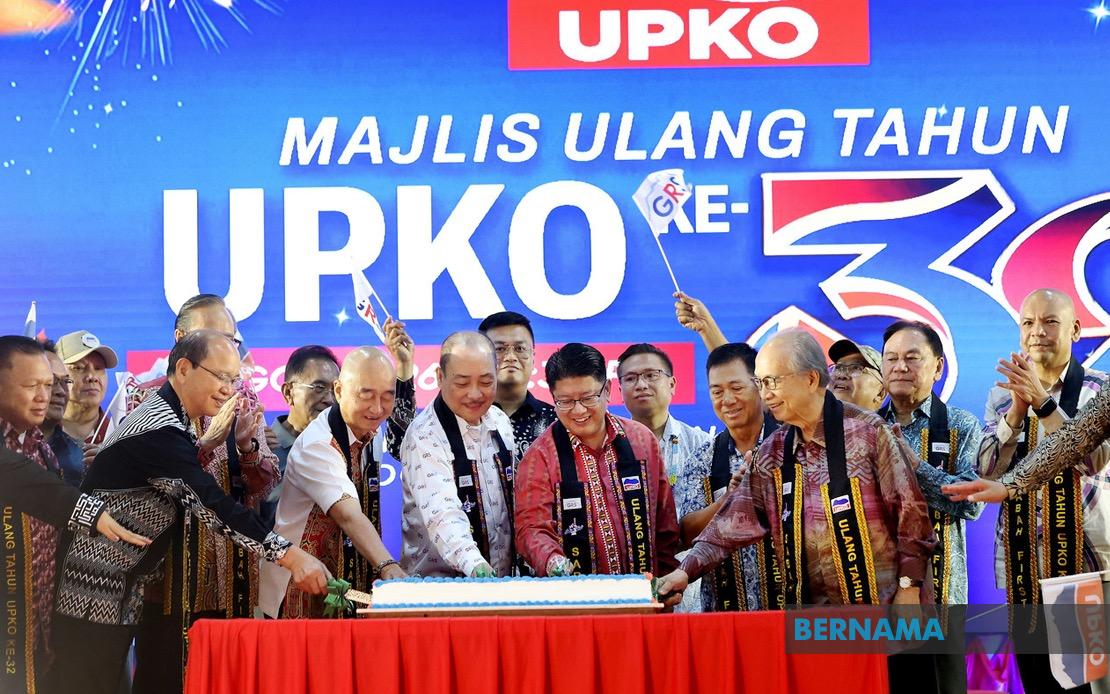
Sabah's Chief Minister Datuk Seri Hajiji Noor has reaffirmed the state government's commitment to redirecting all federal allocations directly towards improving the lives of ordinary Sabahans, pledging that every ringgit received from Putrajaya will be deployed through targeted incentive schemes, direct assistance programmes, and ground-level development projects across the state.
The assurance came as Hajiji highlighted the significance of Prime Minister Datuk Seri Anwar Ibrahim's decision to elevate the interim special grant payment to RM1.5 billion annually, a substantial increase that the Sabah administration intends to mobilise for comprehensive infrastructure expansion. This funding boost represents a meaningful injection into the state's development coffers, particularly crucial for a peripheral region working to close economic and infrastructure gaps with more developed parts of Malaysia.
Among the priority utilisation areas outlined by the Chief Minister are the construction of additional paved roads and reinforced concrete bridges serving rural and semi-urban communities, as well as systematic improvements to water and electricity distribution networks that currently suffer from patchy coverage across Sabah's geographically challenging terrain. These foundational infrastructure improvements are essential prerequisites for attracting investment and enabling economic diversification beyond the state's traditional reliance on commodity exports.
Beyond transport and utilities, Hajiji indicated that federal transfers would substantially fund the Rumah Mesra Sabah Maju Jaya (SMJ) housing initiative, which aims to provide affordable residential units for lower-income households, and the Sentuhan Kasih Rakyat (SYUKUR) welfare programme designed to deliver targeted support to vulnerable populations. These social safety net initiatives reflect an administration attuned to the cost-of-living pressures affecting ordinary Sabahans and the need for government intervention to ensure equitable access to basic services.
The Chief Minister made these remarks while addressing the 32nd anniversary celebration of the United Progressive Kinabalu Organisation (UPKO) and presiding over the opening of the party's 17th Triennial Delegates Conference in Kota Kinabalu. The venue provided an opportunity to articulate the government's development philosophy before a gathering of political stakeholders and party loyalists, underscoring the electoral significance of demonstrating tangible returns from federal-state financial arrangements.
Data presented by Hajiji revealed that Sabah had previously received RM600 million of the total RM1.5 billion interim special grant payment disbursed by the Federal Government on June 12, indicating a staggered disbursement schedule that requires careful planning to optimise project implementation timelines. This payment pattern necessitates disciplined financial management to avoid bottlenecks in project execution and ensure continuous workflow across planned initiatives.
Parallel to external federal support, the Sabah state government continues intensifying its own revenue mobilisation efforts, with annual collections having been sustained at RM7 billion since 2022 and projected to reach RM8 billion in the current fiscal year. This upward trajectory in internally generated revenue demonstrates improving state fiscal capacity and suggests a broadening tax base, critical factors for reducing federal dependency and enabling more autonomous policy implementation.
Hajiji's emphasis on financial performance reflects broader strategic imperatives facing resource-dependent states in Malaysia. By bolstering indigenous revenue streams alongside federal transfers, Sabah is working to enhance fiscal sustainability and build institutional capacity for long-term development planning independent of political fluctuations in federal disbursements. This dual approach provides greater stability for multi-year infrastructure and welfare commitments.
The Chief Minister characterised Sabah's economic position as fundamentally resilient despite exposure to multiple headwinds, encompassing domestic policy uncertainties and volatile international commodity markets. This assessment positions the state as an attractive proposition for prospective investors evaluating locations for manufacturing and services expansion, particularly as regional supply chain diversification accelerates in response to global geopolitical realignments.
The rhetoric deployed by Hajiji reflects a governing philosophy centred on translating resource access into demonstrable public benefit, a politically astute positioning that emphasises accountability and results-orientation. For Sabahans evaluating government performance, the commitment to redirect federal funds toward tangible improvements in roads, bridges, water supply, electricity access, housing, and welfare programmes provides concrete benchmarks against which to assess implementation effectiveness over coming months.
Looking forward, the successful execution of these federally-funded initiatives will critically depend on project management capacity, procurement efficiency, and coordination between state agencies and local authorities responsible for delivery. The proximity of Sabah's development needs and the substantial financial commitments now available create both opportunity and risk—opportunity to meaningfully narrow infrastructure deficits and improve living standards, risk of implementation delays or inefficient allocation that could undermine public confidence in government delivery.

