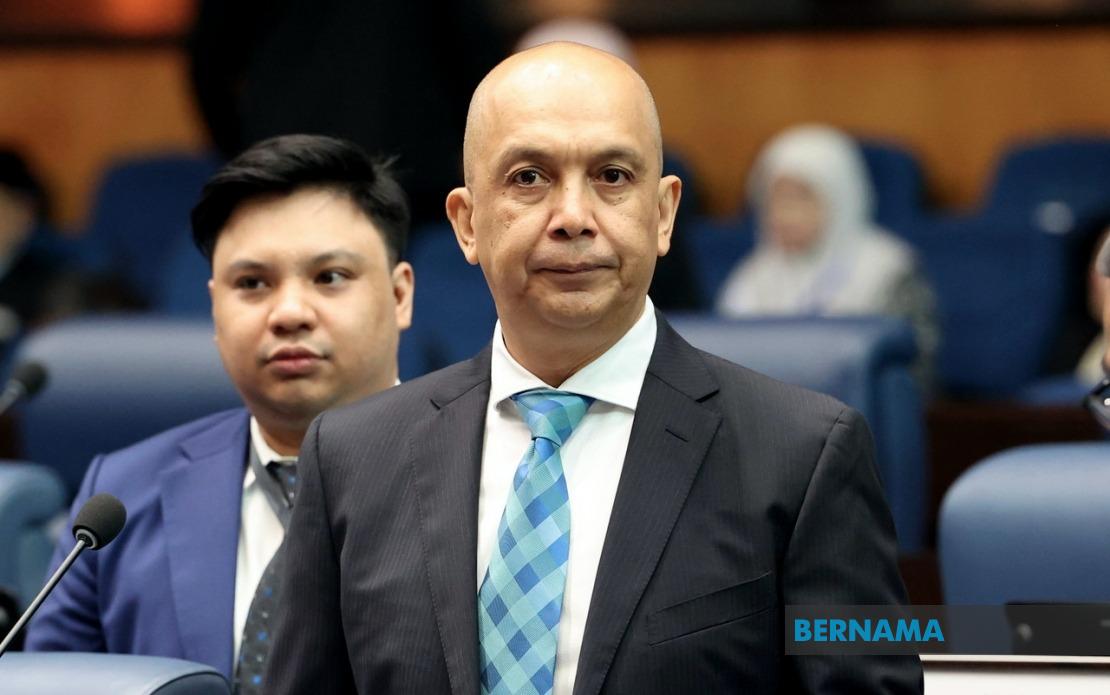
Sabah's state government has received RM600 million from a RM1.5 billion interim special grant announced by the federal government in May, with officials now demanding that the balance of RM900 million be paid out before year-end. The partial disbursement, which arrived on June 12, represents a significant but incomplete step toward addressing the resource-rich state's longstanding fiscal grievances, and Sabah's legislative representatives have made clear they view this as merely a down payment rather than final resolution of the state's entitlements under the Malaysian Constitution.
The interim nature of the payment carries particular weight in Sabah's ongoing negotiations with Kuala Lumpur. Datuk Mohd Ishak Ayub, the state's Assistant Finance Minister II, emphasised during parliamentary proceedings that accepting the RM600 million should not be interpreted as Sabah waiving or compromising its constitutional rights to the full amount it is legally owed. This careful distinction matters greatly, as it preserves the state's legal standing to pursue additional compensation based on the Federal Constitution's revenue-sharing provisions. The Sabah government made its position unambiguous: the interim settlement was accepted "without prejudice" to its claims under Articles 112C and 112D of the Federal Constitution, a technical but crucial caveat that keeps the door open for future claims.
Sabah's fundamental demand centres on what it terms the "40 per cent formula" enshrined in constitutional law. The state contends that it should receive 40 per cent of certain federal revenues as established when Sabah agreed to join the Malaysian federation. Mohd Ishak's statement that "the 40 per cent formula as provided under the Federal Constitution must be fully implemented" reflects the consistent position held across multiple administrations in the state, transcending party political lines. This demand has been a persistent friction point between Kuala Lumpur and Kota Kinabalu, with various Sabah governments arguing they have been systematically short-changed compared to other states.
The timeline leading to the interim grant reveals the political choreography behind the payment. Prime Minister Datuk Seri Anwar Ibrahim announced the increased interim allocation during the Kaamatan Festival celebration on May 30, a traditional harvest festival that provides a symbolic occasion for government announcements affecting indigenous Sabahans. Subsequent official correspondence between federal and state governments on June 9, 19, and 26 formalised the arrangement, suggesting that negotiations had been running in parallel to the public announcement. The decision to front-load RM600 million appears to represent a compromise position, acknowledging Sabah's grievances while extending the timeline for the complete transfer.
The political players in Sabah's legislature crossed party lines in raising these issues. Datuk Seri Wilfred Madius Tangau representing UPKO-Tamparuli, alongside Warisan-affiliated assemblymen Datuk Seri Mohd Shafie Apdal and Alias Sani, all pressed the state government on the grant and revenue entitlements. This multi-party alignment underscores that the revenue issue transcends factional interests and represents a consensus position within the state. For Malaysian readers in other states, this unified stance demonstrates how resource distribution grievances can unite otherwise competing political factions when state interests are at stake.
For Sabah, the broader significance extends beyond the current figure under negotiation. The state has historically argued that its natural resource wealth—particularly from petroleum and gas reserves—justifies a higher revenue share than it currently receives. The constitutional formula dates back to Malaysia's formation in 1963, and Sabah contends that the methodology for calculating its entitlement has been applied inconsistently or inadequately over the decades. Each partial payment or interim settlement thus becomes a negotiating moment where the state can reassert its claims without accepting a final settlement it views as inadequate.
Simultaneously, the Sabah government provided updates on welfare assistance, revealing how fiscal constraints shape social policy in the state. Datuk Rina Jainal, the state's Assistant Minister for Women, Health and People's Wellbeing, indicated that welfare assistance levels would remain between RM200 and RM350, with further increases dependent on the state's financial capacity improving. This represents a candid acknowledgment that even with the additional federal grant, Sabah faces limitations in expanding its welfare provision compared to federal initiatives. The state's welfare programme ceiling for household income eligibility recently expanded from RM1,198 in 2025 to RM1,236 in 2026, reflecting modest adjustments as poverty thresholds shift.
The welfare discussion highlights how Sabah's revenue disputes directly impact its ability to fund social programmes. When federal revenue shares are contested or delayed, downstream effects ripple through state-level welfare systems serving some of Malaysia's most vulnerable populations. The distinction Rina drew between state and federal welfare assistance underscores the complex layering of welfare provision across Malaysian federalism, where both levels maintain separate programmes with different criteria and funding sources. Federal increases announced in parliamentary budgets do not automatically flow to state governments' discretionary welfare spending.
For Southeast Asian observers tracking Malaysian federalism, Sabah's stance illustrates persistent tensions within the federation. Unlike some neighbouring Southeast Asian nations with more centralised governance structures, Malaysia's constitutional framework theoretically guarantees revenue shares to constituent states, yet disputes over implementation and calculation remain frequent. Sabah's insistence on the 40 per cent formula reflects deeper questions about whether constitutional frameworks deliver their intended protections for constituent territories, particularly resource-rich regions that might otherwise have alternatives to federation.
The September deadline implied by Sabah's request for the remaining RM900 million disbursement within the current calendar year will test whether federal commitment matches the May announcement rhetoric. From Sabah's perspective, timely delivery of the second tranche validates the seriousness of the federal government's acknowledgment of the state's grievances. Delayed or partial payment could easily reignite tensions and strengthen arguments from Sabah commentators who contend that Kuala Lumpur treats the state's legitimate constitutional claims as negotiable concessions rather than settled entitlements.
Looking forward, the interim grant represents both progress and incompleteness. Sabah has achieved recognition that its revenue position requires adjustment, but the structural question—whether the 40 per cent formula will actually be implemented in full—remains unresolved. The state's careful preservation of its constitutional rights in accepting the interim payment signals that this chapter remains open. Malaysian investors and policymakers monitoring state-federal relations should note that Sabah's economic grievances continue to shape political dynamics in East Malaysia, with implications for regional stability and development planning across the federation.

