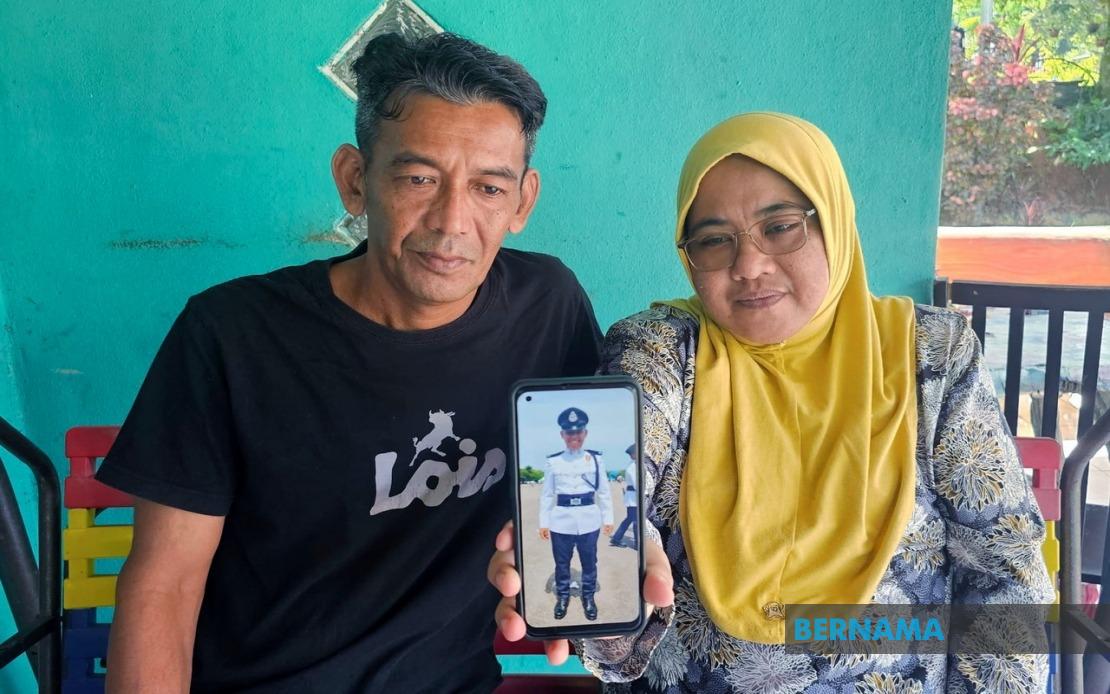
The joy that Ismarubee Ismail and his wife Nor Azila Zakaria anticipated in welcoming their son home for the school holidays this month transformed into profound grief when they learned of his death. Constable Muhammad Raimi Ismarubee, 26, a young policeman stationed at the Weston Police Station in Beaufort, Sabah, died on August 6 in what authorities believe was an electrocution incident while performing his duties. The family's plans to celebrate his homecoming have now become a funeral, marking a sudden and tragic end to the constable's promising life and career.
For the couple from Felda Kerteh 2 in Dungun, Terengganu, the news arrived unexpectedly through a phone call from their son's friend at 6 pm. The shock was compounded by the fact that just hours earlier, at 2 pm that same day, Muhammad Raimi had messaged his parents on WhatsApp with updates about a successful drug arrest operation. The abruptness of the tragedy left his parents struggling to process how their son could go from reporting his work accomplishments to being dead within hours.
The constable had been planning his leave since June, though he had not yet confirmed a specific date for his return. His hesitation stemmed from practical considerations—he was waiting to find affordable flight tickets from Sabah back to Peninsular Malaysia. This delay, which seemed trivial at the time, would mean that Muhammad Raimi never made it home for that anticipated reunion. His father recalled the conversation with visible pain, emphasising how the anticipation had kept the family optimistic about seeing him again soon.
Muhammad Raimi represented the second of three children in the family and had begun his police career relatively recently, joining the force only in September 2024. His last visit home had been in January, making his expected return this month particularly significant for the family. During his brief tenure in the police service, he had already established himself as a dedicated officer, evidenced by his involvement in drug enforcement operations that he shared proudly with his family.
Beyond his professional responsibilities, Muhammad Raimi had demonstrated a deep commitment to his family's wellbeing and future. His mother revealed that he harboured personal ambitions for the coming year, including plans to get engaged to a woman from Sabah, with marriage anticipated in 2025. However, he had made a conscious decision to postpone these personal milestones until his youngest sibling completed their Sijil Pelajaran Malaysia examination, prioritising family stability and educational support over his own romantic timeline.
The financial support he provided had made a tangible difference to his family's circumstances. His parents described how he would regularly send money home each month and had purchased essential items for his siblings' education, including a laptop. These contributions were not lavish displays of wealth but calculated decisions to strengthen his family's foundation, reflecting maturity and responsibility unusual for someone in their mid-twenties beginning a career in law enforcement.
The electrocution occurred under distressing circumstances that raise questions about workplace safety protocols. Muhammad Raimi and two colleagues—Corporal Chiu Teck Siong, 40, and Lance Corporal Mohamad Nur Hafiz Ibrahim, 29—were handling a metal pole used for coconut harvesting outside the Weston Police Station, located near Sekolah Kebangsaan Weston. All three officers perished in what appears to have been a sudden electrical contact with the metallic equipment. The incident highlights potential occupational hazards that may exist at police facilities, even during routine maintenance or operational tasks.
The circumstances surrounding why police personnel were engaged in coconut harvesting remain unclear, raising broader questions about workplace conditions and safety measures at the station. The involvement of three officers in what appears to be a non-traditional police duty suggests either an emergency situation or established practices at the facility that may warrant scrutiny. For police management and occupational safety authorities, the incident serves as a stark reminder of the need to review procedures and ensure adequate safeguards when officers handle potentially hazardous equipment or materials.
For the community in Beaufort, Sabah, and the broader Malaysian police force, this tragedy represents the loss of an officer who had only recently begun serving the public. Muhammad Raimi's family in Terengganu now faces the burden of grief while processing how a routine day at a police station became fatal. The body was returned to Felda Kerteh 2 for burial at the community's Muslim cemetery, bringing the constable's unfinished journey home in the most sorrowful manner imaginable.
The death of Muhammad Raimi, alongside his two colleagues, underscores the occupational hazards that law enforcement and other essential workers face daily. While policing is recognised as a profession carrying inherent risks, incidents such as this one—stemming from workplace conditions and equipment handling—often prove preventable through robust safety protocols and adequate training. The loss of three officers simultaneously represents a significant blow to the Beaufort police contingent and raises important discussions about how Malaysian institutions can better protect their personnel from avoidable tragedies.

