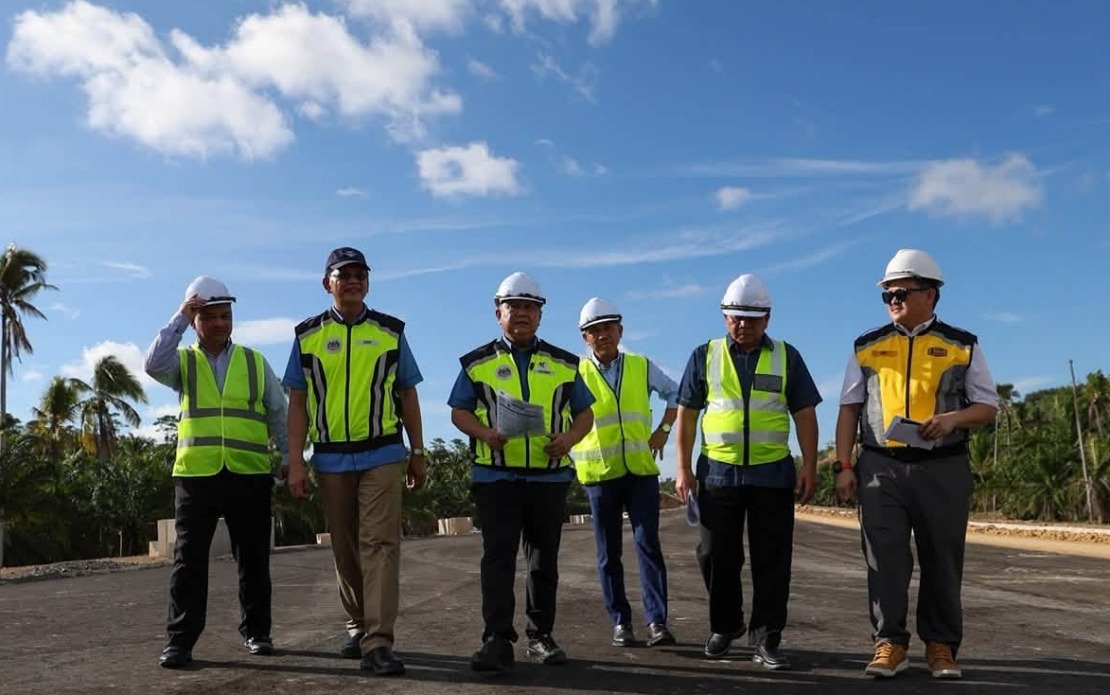
The contractor overseeing the construction of Sabah's Pan Borneo Highway Work Package 11 has formally submitted a recovery plan to rectify the significant delays that have accumulated during the project's implementation. According to Works Minister Datuk Seri Alexander Nanta Linggi, the document outlines strategic measures designed to ensure the RM167.48 million infrastructure initiative stays on track for its contractual completion deadline of September 29, 2026. This development comes as the project has already slipped 32 days behind schedule, a setback that threatens to derail one of Malaysia's most ambitious regional highway expansion initiatives.
The 7.3-kilometre alignment stretching from Rampayan Laut to Sarang had reached 61.76 per cent physical completion as of late June, according to ministry records. However, this progress marker simultaneously revealed a troubling discrepancy: the project was running 4.35 per cent behind its original construction timeline. This gap between actual progress and expected milestones underscores the complexity involved in delivering large-scale infrastructure projects in Sabah's challenging geographical and logistical environment. The numerical shortfall, while seemingly modest in percentage terms, translates into weeks of lost construction momentum at a stage when most projects would be accelerating toward their final phases.
The ministry has committed to an aggressive recovery strategy that aims to reduce the accumulated delay to just 14 days by August 2026. This intermediate target, falling nearly a year before the final deadline, suggests planners intend to frontload most corrective work in the coming months. The Works Ministry, collaborating closely with Sabah Public Works Department, project consultants, and the contractor, will maintain enhanced monitoring of implementation progress. This multi-stakeholder oversight approach reflects recognition that resolving bottlenecks requires coordinated action across multiple agencies rather than isolated contractor effort.
The root causes of construction delays reveal the intricate challenges facing infrastructure development in Sabah. Utility relocation has emerged as a primary obstacle, involving complex coordination between Sabah Electricity Sdn Bhd, the Sabah State Water Department, and Celcom Timur Sabah Sdn Bhd. Each utility provider must relocate their infrastructure to accommodate the new highway alignment, a process requiring extensive planning, technical expertise, and operational disruption management. Compounding these technical difficulties are land acquisition issues, which have historically complicated major infrastructure projects across Malaysian Borneo. Securing all necessary land rights within project timelines frequently requires protracted negotiations with multiple property stakeholders, government bodies, and indigenous communities.
The minister emphasised that enhanced coordination among all parties represents the pathway forward. Rather than accepting utility relocation as an external constraint, the ministry has signalled expectations that stakeholders must approach these challenges with greater integration and proactivity. This shift in emphasis from reactive problem-solving to coordinated planning reflects lessons learned from previous Pan Borneo projects and signals tougher accountability expectations going forward. The language around "integrated manner" suggests the ministry envisions a more unified project governance structure where utility providers, land authorities, and construction contractors operate as a single coherent team rather than separate entities pursuing parallel timelines.
Beyond the immediate construction challenges, Work Package 11 holds substantial strategic importance for Sabah's economic development trajectory. The completed alignment will deliver considerable time savings for travellers heading toward Simpang Mengayau or Kudat, reducing journey distances by as much as 30 kilometres. This translates to travel time reductions of 30 to 60 minutes depending on origin and destination—meaningful savings that accumulate significantly for residents, commercial transporters, and tourists regularly traversing these routes. For businesses and workers in northern Sabah, such efficiency gains compound to substantial annual time and fuel cost savings while improving quality of life through reduced commute burdens.
The highway serves as a critical connectivity node for Sabah's expanding tourism sector. The improved infrastructure directly supports the Northern Sabah Coastal Tourism Master Plan, a comprehensive initiative designed to position the region as a premium destination for international and domestic visitors. Enhanced accessibility removes one of the traditional barriers to tourism development in remote areas—difficult and time-consuming travel. By shortening journeys and improving road safety through modern highway standards, Work Package 11 facilitates more feasible day trips from major population centres and enables tourists to cover broader geographic territory during limited holiday periods. This expanded accessibility directly translates into expanded market reach for local tourism businesses and service providers.
The economic implications extend well beyond tourism. The minister highlighted that improved transportation infrastructure generates broader multiplier effects throughout local communities. Enhanced connectivity attracts investment by reducing operating costs and logistics challenges for businesses considering expansion into northern Sabah. Employment opportunities expand as tourism operations, supporting services, and logistics sectors grow in response to improved accessibility. For local communities, these indirect economic benefits often prove as significant as direct employment from construction itself, providing sustainable long-term livelihood opportunities as infrastructure generates ongoing activity and commerce.
The quality and safety standards referenced by the minister reflect broader policy objectives for Malaysian infrastructure development. Modern highway standards demand not only faster journey times but also safer travel conditions through improved sight lines, better road surfaces, and appropriate drainage systems. For a region like northern Sabah where challenging weather and terrain have historically contributed to accident rates, these safety improvements carry genuine human significance beyond mere technical specifications. The emphasis on "integrity" in infrastructure delivery also addresses public concerns about value for money and proper execution of publicly-funded projects.
Sabah's geographic position within the Pan Borneo Highway network makes Work Package 11 strategically significant for regional connectivity. As one component of a much larger integrated highway system, delays at individual work packages can create bottlenecks that compromise overall network efficiency. The coordination challenges evident in this project—utility relocation, land acquisition, weather-related construction difficulties—typify the broader complexities affecting infrastructure development across Malaysian Borneo. Successful recovery from this delay therefore carries implications beyond the specific WP11 alignment, demonstrating whether project management systems and stakeholder coordination mechanisms can effectively address the unique challenges Sabah and Sarawak present.
The submission of the recovery plan represents a critical juncture in the project lifecycle. The document's contents remain undisclosed publicly, but its acceptance by the ministry suggests contractors and planners believe the 32-day deficit is retrievable without fundamental redesign or massive additional expenditure. Whether the targeted 14-day residual delay by August 2026 proves achievable will depend substantially on utility providers and land authorities meeting their commitments during the crucial recovery period. For Sabah residents and businesses awaiting this infrastructure investment, the coming months will determine whether the pan-Borneo initiative continues delivering on its promise to transform connectivity and economic opportunity across the peninsula's eastern flank.

