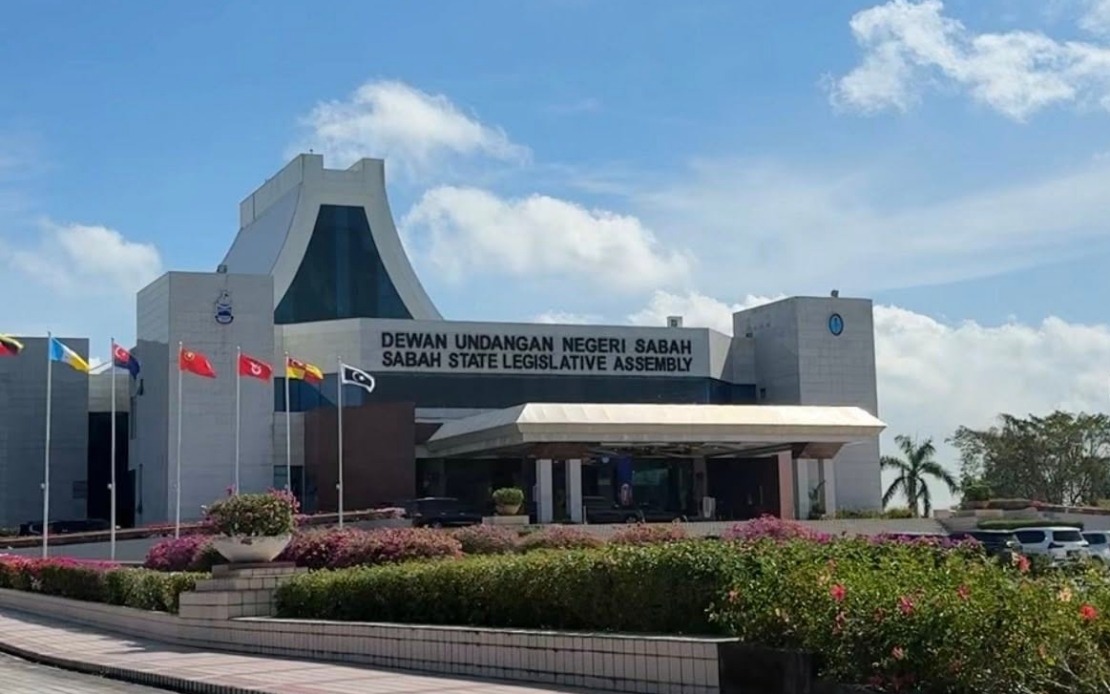
The Sabah Legislative Assembly has taken a significant legislative step by approving two cornerstone bills aimed at modernising both the state's Islamic affairs administration and its customary justice system. The passage of the Muslim Succession Bill 2026 and Native Courts Bill 2026 on July 22 represents a major shift in how Sabah will manage Muslim inheritances and native community disputes, with implications extending across Malaysia's federal framework for state-level Islamic jurisprudence.
Both measures were introduced by Datuk Dr Mohd Arifin Arif, who holds the portfolio of Sabah Local Government and Housing Minister while also overseeing Islamic Affairs. The Muslim Succession Bill underwent debate among five assemblymen before receiving approval from Speaker Datuk Seri M Kadzim Yahya, while the Native Courts Bill was discussed by twelve assemblymen and passed under Deputy Speaker Datuk Richard Wong We Kong. The breadth of parliamentary engagement signals the perceived importance of these measures within the Sabah government.
The Muslim Succession Bill 2026 marks a watershed moment for Malaysia's Islamic legal infrastructure. According to the minister, this represents the first legislation in the country specifically designed to govern the administration of Muslim estates within the exclusive jurisdiction and powers of the Syariah Courts. The framework rests on four foundational principles that collectively address longstanding gaps in estate management under Islamic law. The legislation seeks to establish systematic procedures that ensure clarity and consistency across inheritance matters, replacing what may have been piecemeal or inconsistent approaches previously used across different Syariah Courts in Malaysia.
A central concern addressed by the Bill concerns the protection of beneficiaries and other stakeholders with legitimate claims against estates. The minister emphasised that the framework will safeguard the rights and interests of all heirs and relevant parties, suggesting that current practices may have created vulnerabilities or ambiguities that disadvantaged some claimants. For Malaysian Muslims concerned about inheritance disputes—a frequent source of family conflict—the introduction of systematic procedures should provide greater predictability and fairness in estate distribution according to Islamic principles.
The legislation also tackles a critical enforcement problem: the misuse, concealment, or unauthorised disposal of estate assets. These concerns resonate across Malaysia, where complaints about dishonest executors or administrators of Muslim estates have occasionally surfaced. By strengthening compliance mechanisms and enforcement powers, the Bill aims to establish accountability safeguards that could serve as a model for other states considering similar reforms. The streamlining of deceased estate administration according to syariah principles suggests that the legislation will harmonise existing varied practices across Malaysia's multiple Syariah Court jurisdictions.
The Native Courts Bill 2026 addresses an equally significant modernisation challenge within Sabah's indigenous communities. The existing enactment has governed native customary justice since 1992—now approaching three decades in force—making comprehensive reform overdue. Datuk Dr Mohd Arifin articulated a delicate balance that the Bill attempts to achieve: updating the customary justice system to meet contemporary needs while preserving the cultural roots, identity, and distinctive character of Sabah's native customs. This tension between modernisation and cultural preservation reflects broader Southeast Asian struggles to adapt traditional legal systems to modern governance standards.
The Bill restructures the Native Courts hierarchy by establishing three tiers: the Native District Court, Native High Court, and Native Court of Appeal. This formalised structure introduces greater specialisation and clearer appellate pathways than may have existed previously, potentially reducing arbitrary decision-making and improving consistency in how customary disputes are resolved. For indigenous Sabahans seeking justice through their traditional systems, the hierarchical framework should enhance predictability and allow for meaningful review of lower court decisions.
A particularly significant innovation concerns judicial appointments to these native courts. The Bill introduces a Native Judicial Appointments Advisory Committee tasked with assessing and recommending appointments based on transparency, merit, qualifications, experience, knowledge of customary law, and integrity. Critically, this represents a departure from administrative appointment practices, ensuring that judges are selected based on actual capability to discharge judicial responsibilities rather than bureaucratic rank or tenure. This merit-based approach could fundamentally improve the quality and legitimacy of native customary justice in the eyes of Sabah's indigenous populations, who have sometimes viewed traditional courts as insufficiently rigorous or too influenced by political considerations.
The timing and substance of both bills reflect broader trends within Malaysian federalism regarding state-level legal innovation. Sabah, as a constituent state with significant autonomy in Islamic affairs and native affairs, possesses constitutional authority to pioneer legislative reforms that other states may subsequently adopt. The Muslim Succession Bill, in particular, could influence how other state governments approach Islamic estate administration, potentially leading to greater uniformity across Malaysia's diverse Syariah Court systems. Similarly, the Native Courts Bill might provide a template for Sarawak or peninsular states seeking to formalise and enhance their own customary justice systems.
For Malaysian business and property practitioners, the Muslim Succession Bill carries practical implications regarding estate planning and probate procedures for Muslim clients. The establishment of clearer, more systematic procedures should reduce litigation and uncertainty in Muslim estate matters, potentially lowering legal costs and expediting asset distribution. Financial institutions and estate trustees will need to familise themselves with the new procedures to ensure compliance and avoid liability under the strengthened enforcement provisions.
The Native Courts Bill similarly has practical ramifications for indigenous communities and non-indigenous individuals engaged in transactions or disputes involving native land or customary matters. The enhanced hierarchical structure and merit-based judicial appointments should improve dispute resolution efficiency and predictability, benefiting economic activity in indigenous areas and reducing transaction costs for parties uncertain about customary law application. Indigenous entrepreneurs and communities may find that improved customary justice systems facilitate commercial relationships by providing reliable mechanisms for resolving disputes rooted in customary practice.
Both bills underscore Sabah's continued evolution as a constitutional laboratory for Malaysian federalism. While the state has long maintained distinctive legal frameworks reflecting its historical agreements and indigenous composition, these 2026 bills demonstrate that modernisation of traditional legal systems need not entail their abandonment or dilution. By combining systematic legal frameworks with commitment to preserving cultural authenticity and indigenous voice in judicial governance, Sabah's approach may offer insights valuable to other jurisdictions wrestling with similar tensions between tradition and modernity, particularly across Southeast Asia's diverse indigenous populations seeking to assert legal sovereignty while meeting contemporary governance standards.

