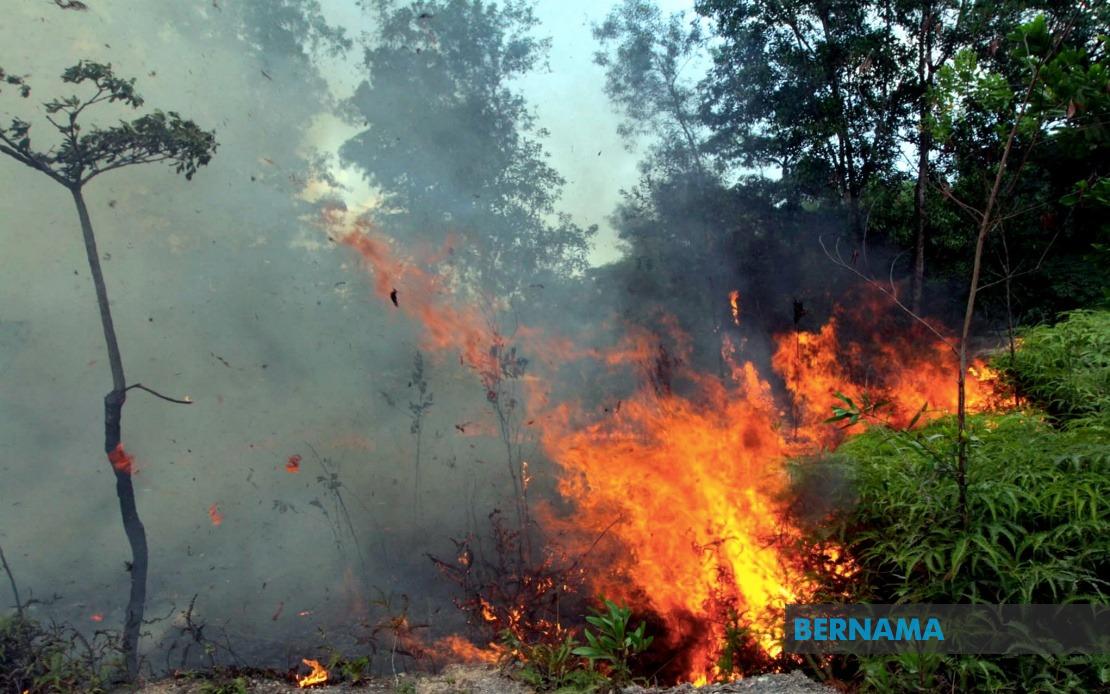
The Sabah Fire and Rescue Department has moved to restrict open burning activities across the state as transboundary haze originating from forest fires in Kalimantan, Indonesia, begins to degrade air quality in populated areas. Director Mohd Pisar Aziz warned that prevailing winds from the southern and central regions of Borneo are channeling thick smoke toward the northern portions of the island, creating hazardous atmospheric conditions that threaten visibility and respiratory health in several localities. The advisory comes as the state experiences weather patterns conducive to rapid fire spread, with temperatures and low humidity levels combining to elevate fire risk throughout the region.
Monitoring data from the Air Pollutant Index Management System recorded moderate pollution levels across Sabah at the time of the announcement. Kota Kinabalu registered the highest reading of 83, with Politeknik Kota Kinabalu following at 81 and Kimanis at 76, all falling within the moderate range where health impacts begin to manifest among susceptible populations. Despite these figures remaining below hazardous thresholds, authorities expressed concern that conditions could worsen without intervention, particularly given the continued smoke influx from across the border and forecasts of sustained dry weather over the coming weeks.
The restriction on open burning applies specifically to Keningau and Pitas, where meteorological records show seven consecutive days without meaningful rainfall through August 10. This criterion satisfies the established threshold for imposing burning bans, a measure designed to prevent additional smoke generation at a time when atmospheric conditions are already compromised by transboundary pollution. The prohibition encompasses the burning of household waste, dead vegetation, garden refuse, demolition debris, and other combustible materials that could amplify haze concentration. Residents violating the ban face enforcement action, as open burning constitutes a criminal offense under environmental protection legislation.
Mohd Pisar emphasized that certain population segments face elevated health risks despite the currently moderate air quality readings. Asthma sufferers, young children, and elderly residents require heightened vigilance and should consider limiting outdoor exposure during peak pollution hours. The department recommended that vulnerable groups take additional precautions beyond standard advice, including consulting healthcare providers about appropriate pharmaceutical prophylaxis and monitoring for respiratory symptoms that might indicate worsening air quality impact. The department's emphasis on at-risk demographics reflects documented epidemiological patterns whereby haze events precipitate increased hospital admissions and emergency department visits among these constituencies.
Public health guidance issued by the department prescribes several practical measures to minimize haze exposure. Residents should restrict outdoor activities during the period from 11 am to 4 pm, when atmospheric concentrations typically peak due to daytime heating and convective processes. Maintaining adequate hydration becomes particularly important during haze episodes, as increased particulate matter can irritate mucous membranes and respiratory tissues. The use of appropriately fitted face masks in heavily affected areas provides measurable protective benefit, though the department cautioned that masks offer varying levels of filtration depending on their specification and proper application. Beyond personal protection, households should conduct preventive electrical inspections to identify fire hazards that might be overlooked during periods of inattention or complacency.
The open burning ban represents a critical component of Sabah's immediate response strategy to transboundary haze. While authorities cannot directly address the source fires across the Indonesian border, eliminating local burning sources removes controllable contributors to atmospheric degradation. Previous haze events in the region have demonstrated that cumulative local burning, even in modest quantities, can significantly exacerbate overall pollution levels when combined with transboundary smoke inputs. The ban thus serves a dual purpose: protecting air quality by preventing incremental pollution contributions and preventing the ignition of uncontrolled fires that could spread given prevailing dry conditions.
Cigarette disposal practices received specific attention from Sabah authorities, with warnings against casual discarding of cigarette butts in outdoor environments. Improperly extinguished cigarettes constitute a significant fire ignition source, particularly during drought conditions when vegetation moisture content drops to critical thresholds. The accumulated risk from numerous small ignition sources can overwhelm fire suppression capacity, creating conditions favorable for the rapid spread of fires that would be readily controlled under normal moisture conditions. The department's public messaging around cigarette disposal reflects accumulated experience with fire causation patterns documented during previous dry seasons.
Reporting mechanisms for suspected fire activity and suspicious behavior have been emphasized as essential to early detection and suppression efforts. The emergency telephone number 999 provides round-the-clock access to dispatch services, enabling rapid response deployment when fires are detected in their nascent stages. Public vigilance and prompt reporting can mean the difference between a minor incident contained within minutes and a major conflagration requiring extensive suppression resources. The department's outreach messaging frames fire prevention as a collective responsibility requiring active community participation rather than passive reliance on official firefighting capacity.
The haze event underscores persistent transboundary air pollution challenges affecting Malaysia and other Southeast Asian nations sharing the Borneo island. Kalimantan's recurring forest fires, often associated with agricultural land clearing and industrial logging operations, have become a predictable seasonal phenomenon generating smoke that routinely crosses into Malaysian airspace. The annual cycle of haze episodes imposes cumulative health costs on populations throughout the region and highlights the limitations of national air quality management when pollution sources originate beyond political boundaries. International cooperation mechanisms remain underdeveloped relative to the scale of transboundary air quality impacts, constraining the effectiveness of unilateral national responses such as Sabah's burning restrictions.
Sabah's fire and rescue department has also underscored the interconnection between climate variability and fire risk intensification across Borneo. The combination of extended dry periods and high ambient temperatures creates conditions where even modest heat sources can trigger rapid fire spread through vegetation with depleted moisture content. Climate projection models suggest that such conditions may become increasingly frequent and severe in coming decades, potentially transforming seasonal haze events from occasional disruptions into more persistent atmospheric degradation. The department's preventive messaging thus operates within a context of medium-term environmental change that may require more comprehensive regional approaches than current arrangements provide.
The advisory represents a continuation of Sabah's established protocols for responding to transboundary haze episodes. Authorities have activated these mechanisms on multiple occasions in recent years as Kalimantan fire activity has generated recurring smoke impacts. The repetition of these warnings, while seemingly routine, reflects the persistent vulnerability of Sabah's population and environment to Indonesian fire-sourced air pollution. Unlike acute natural disasters that eventually resolve, transboundary haze creates ongoing exposure across extended time periods, potentially affecting thousands of individuals for weeks or months during major fire seasons. The department's sustained attention to the issue, while limited in direct impact on Indonesian fire sources, demonstrates recognition that proactive local measures and public education constitute the most accessible tools available for harm mitigation.

