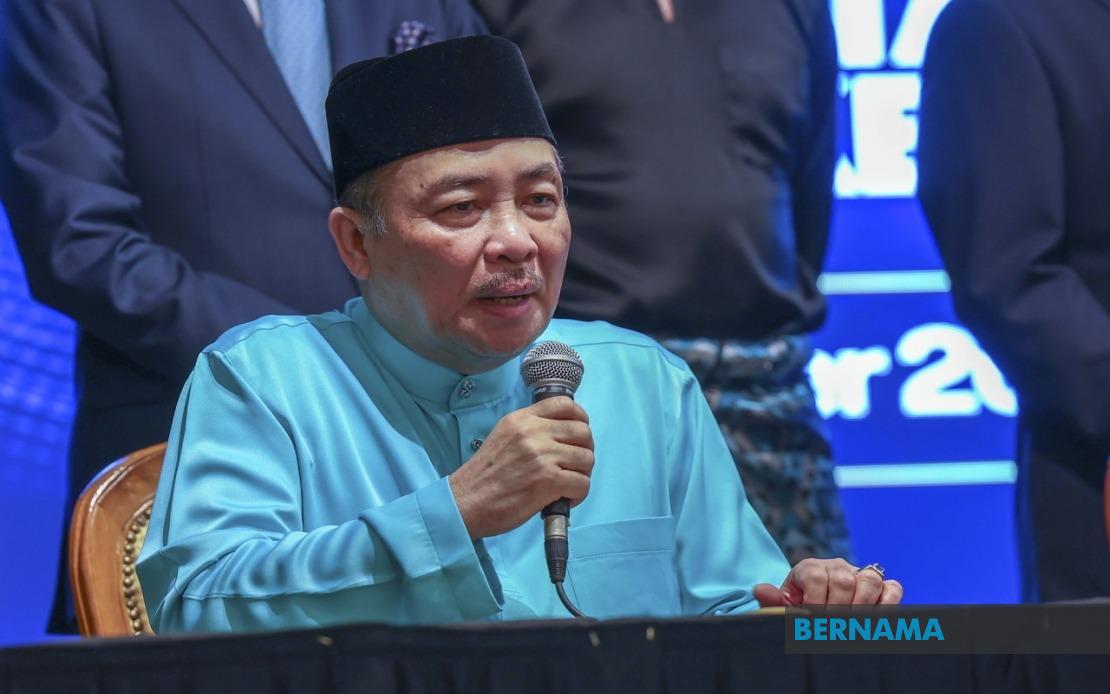
Sabah is deepening its investment in human capital development through an ambitious scholarship programme that reflects the state government's recognition of education as a cornerstone for regional competitiveness. Chief Minister Datuk Seri Hajiji Noor announced that the state has allocated more than RM100 million this year specifically for the Sabah State Government Scholarship (BKNS), representing a substantial commitment to nurturing the next generation of skilled professionals across the oil-rich state.
The funding initiative carries particular significance for Malaysian observers given Sabah's economic trajectory and its strategic importance to the federation. The scholarship programme has expanded considerably, with the total beneficiary pool now reaching 13,389 students across all educational levels. This year alone, the state government expects to onboard 2,182 new scholarship recipients, demonstrating a deliberate effort to broaden access to tertiary and specialist education among Sabahan youth who might otherwise face financial barriers.
The emphasis on Science, Technology, Engineering and Mathematics (STEM) disciplines reflects a pragmatic policy alignment with global economic trends and Sabah's own developmental priorities. Rather than spreading resources thinly across general education support, the state has strategically prioritised fields that promise higher returns on investment both for individual graduates and for the state economy. This targeted approach suggests sophisticated planning within the Sabah education ministry, though questions remain about whether current STEM capacity at institutions within the state can absorb increased demand.
Beyond the flagship BKNS programme, Sabah has constructed a comprehensive ecosystem of educational support mechanisms. Since 2021, the state government has introduced fourteen distinct assistance initiatives, each addressing specific pain points for students and families. The Special Examination Cash Assistance (BAKTI) tackles examination-related costs, while the Sabah Student Flight Ticket Assistance (GRS-SUBFLY) acknowledges the geographical reality that many Sabahan students must travel to peninsular Malaysia for specialised tertiary courses. This layered approach demonstrates recognition that financial obstacles to education operate at multiple points in a student's journey.
The Ihsan Computer Assistance (BAIK) programme and Higher Education Institution Registration Cash Assistance (BUDI) address the technological and administrative dimensions of modern higher education. Such provisions are particularly relevant for families in lower income brackets where affording a computer or managing registration fees could determine whether a child pursues further education. The State Higher Education Student Contribution (SENTOSA) similarly targets the direct costs of university study, acknowledging that scholarship amounts frequently fall short of actual expenses students incur.
The timing of this announcement reflects broader economic pressures facing Malaysian households. With cost-of-living increases outpacing wage growth across the peninsula and East Malaysia, education assistance has become a critical social safety net. Hajiji's explicit reference to helping families cope with rising living costs and education expenses positions the scholarship initiative not merely as an investment in future productivity but as immediate economic relief for vulnerable segments of Sabah's population.
Sabah's sector-specific priorities offer insight into the state government's development vision for the coming decade. The focus on oil, gas and energy sectors reflects Sabah's hydrocarbon endowments and the ongoing importance of these industries to state revenues, despite global energy transition pressures. Equally significant is the explicit emphasis on Technical and Vocational Education and Training (TVET), suggesting recognition that not all meaningful career pathways flow through university systems. This dual-track approach could help address persistent skills shortages in Sabah's labour market and create more direct pipelines from education to employment.
The inclusion of Artificial Intelligence as a strategic priority field reveals forward-thinking policy orientation. Unlike some regional governments that have overlooked emerging technology sectors, Sabah is explicitly encouraging students to develop expertise in AI—a domain that will reshape industries from manufacturing to services across the next two decades. For Malaysian observers, this signals that Sabah intends to position itself not as a resource-dependent economy, but as a knowledge-intensive competitor capable of capturing value in digital-era industries.
The scholarship investment also carries implications for regional brain drain patterns. Historically, talented Sabahan students have migrated permanently to Kuala Lumpur or international destinations after completing studies, representing a net loss of human capital for the state. By substantially increasing scholarship numbers and covering associated costs, Sabah increases the likelihood that recipients will feel reciprocal obligations to serve the state economy, potentially reversing or slowing outmigration trends. Success in this regard would strengthen Sabah's competitive position within the Malaysian federation.
Implementation challenges warrant consideration alongside these ambitious targets. Administering 13,389 active scholarships across diverse institutions requires robust systems for eligibility verification, progress monitoring, and compliance enforcement. The state government's ability to deliver on this scale will depend on institutional capacity within the education ministry and coordination with recipient institutions. Given Sabah's geographic dispersal and infrastructure challenges, efficient execution cannot be assumed.
The scholarship programme also merits evaluation against educational outcomes rather than merely input metrics. While allocating RM100 million demonstrates financial commitment, the real measure of success lies in graduation rates, employment outcomes, and whether scholarship recipients subsequently contribute to state economic development or migrate after completing studies. The state government should establish transparent metrics for programme evaluation.
For Malaysia's broader education policy debate, Sabah's approach offers a model of state-level initiative in addressing access and equity challenges. Where federal scholarship schemes sometimes feel distant and impersonal, state-directed programmes can be customised to local economic needs and cultural contexts. If Sabah's investment generates measurable improvements in human capital accumulation and retention, the model might inform how other states approach education financing.

