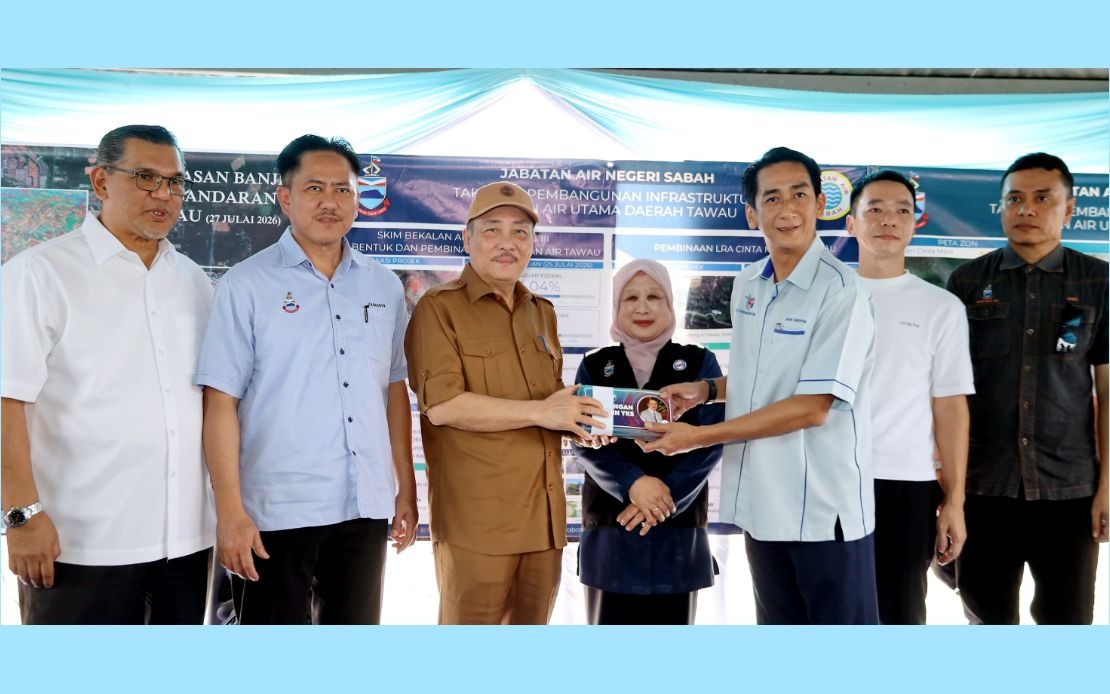
Sabah Chief Minister Datuk Seri Hajiji has overseen the distribution of RM30,600 in financial aid to residents of Tawau affected by destructive floods that swept through the eastern Sabah district in late July. The assistance, administered through Yayasan Kebajikan Sabah, represents a targeted effort to cushion the immediate financial impact on families whose homes and livelihoods were disrupted by the disaster. Hajiji presented the donation to Tawau Municipal Council president Mohd Shoffian Mohd Said, marking the state's formal acknowledgement of the community's plight in the aftermath of the calamity.
The relief package targets 102 heads of household across the affected areas, with each family receiving RM300 to address urgent needs and recovery costs. While modest in individual terms, the collective sum represents the state government's commitment to providing tangible support during the critical immediate recovery phase. For families already stretched by displacement, property damage, and temporary relocation, such targeted assistance serves as a buffer against compounding financial hardship in the weeks following the disaster.
The July 25 flooding event proved significant in its scale and community impact. Emergency responders evacuated 362 residents from inundated areas to Dewan Serbaguna Kompleks Sukan Tawau, where relief operations were coordinated. This concentration of evacuees required sustained logistical coordination and resource deployment, underscoring the magnitude of the disaster and the complexity of managing mass displacement in an urban setting.
Hajiji's statement acknowledged the multifaceted response that brought together several government agencies and disaster management bodies. The Civil Defence Force, Royal Malaysia Police, Fire and Rescue Department, and the Health Ministry each played distinct roles in the emergency response—from search and rescue operations to medical support and crowd management. Beyond federal agencies, local disaster management committees and community organisations mobilised resources to support evacuees and coordinate relief activities.
The Tawau disaster management committee, operating at the district level, served as the operational nerve centre where decisions about evacuation, shelter allocation, and aid distribution were coordinated. These local bodies, though less visible in national media narratives, are typically the first responders and primary planners during regional emergencies. Their effectiveness directly influences how quickly communities recover and how equitably assistance reaches vulnerable populations.
For Tawau and Sabah more broadly, the flood represents one of several environmental challenges faced by the state. Eastern Sabah, including Tawau district, lies in a region where seasonal flooding is a recurring risk. Climate variability, monsoon patterns, and localised drainage infrastructure limitations combine to create conditions where flooding becomes a regular stress on communities and local governments. This pattern places ongoing pressure on state authorities to invest in long-term mitigation infrastructure whilst simultaneously managing emergency responses to immediate disasters.
The timing of relief disbursement—occurring within days of the disaster—reflects improved coordination mechanisms developed from previous flood experiences in Sabah and Malaysia more generally. Early cash assistance programmes have gained traction across Southeast Asian disaster management frameworks, as evidence shows that rapid, targeted payments enable families to meet immediate needs more efficiently than in-kind distributions alone. The RM300 per household amount, while calibrated to the specific circumstances of Tawau's flooding, follows patterns seen in disaster response across comparable Malaysian states.
The recognition of multi-agency cooperation in Hajiji's statement carries significance beyond ceremonial acknowledgement. Effective disaster response depends on genuine coordination between federal and state authorities, between emergency services with different mandates, and between government bodies and local volunteer organisations. Where such cooperation breaks down, response capacity diminishes and community suffering extends. By publicly commending these agencies, the Chief Minister reinforces expectations for future collaborative efforts and establishes a record of institutional performance that can guide refinements to disaster management protocols.
Tawau's experience with flooding also reflects broader patterns of urbanisation and infrastructure pressure across Sabah's smaller cities. As populations concentrate in coastal urban centres like Tawau, the density of people, businesses, and economic activity in flood-prone areas increases proportionally. This dynamic creates a backdrop where periodic flooding becomes increasingly consequential in human and economic terms, even if the physical scale of water inundation remains relatively stable. Consequently, state and municipal governments face mounting pressure to upgrade drainage systems, implement watershed management improvements, and establish early warning networks that give residents sufficient time to secure property and seek shelter.
Moving forward, the RM30,600 disbursement, whilst addressing immediate household needs, underscores the inadequacy of relief-only responses to recurring flood disasters. Communities repeatedly affected by inundation require complementary investments in flood mitigation infrastructure, improved building codes in vulnerable areas, and community-based disaster preparedness programmes. The Tawau Municipal Council, working alongside state authorities, will need to translate this assistance experience into a longer-term resilience-building agenda that reduces the frequency and severity of future flooding events.
The donation also signals state government attentiveness to electoral and social constituencies in Tawau, a district of strategic political importance in Sabah's regional dynamics. Rapid, visible disaster relief demonstrates government responsiveness—a quality that resonates with voters in Malaysian political contexts. This political dimension neither diminishes the material value of assistance nor invalidates the genuine humanitarian motivations behind it; rather, it reflects the reality that disaster response and political accountability are often intertwined in democratic systems.

