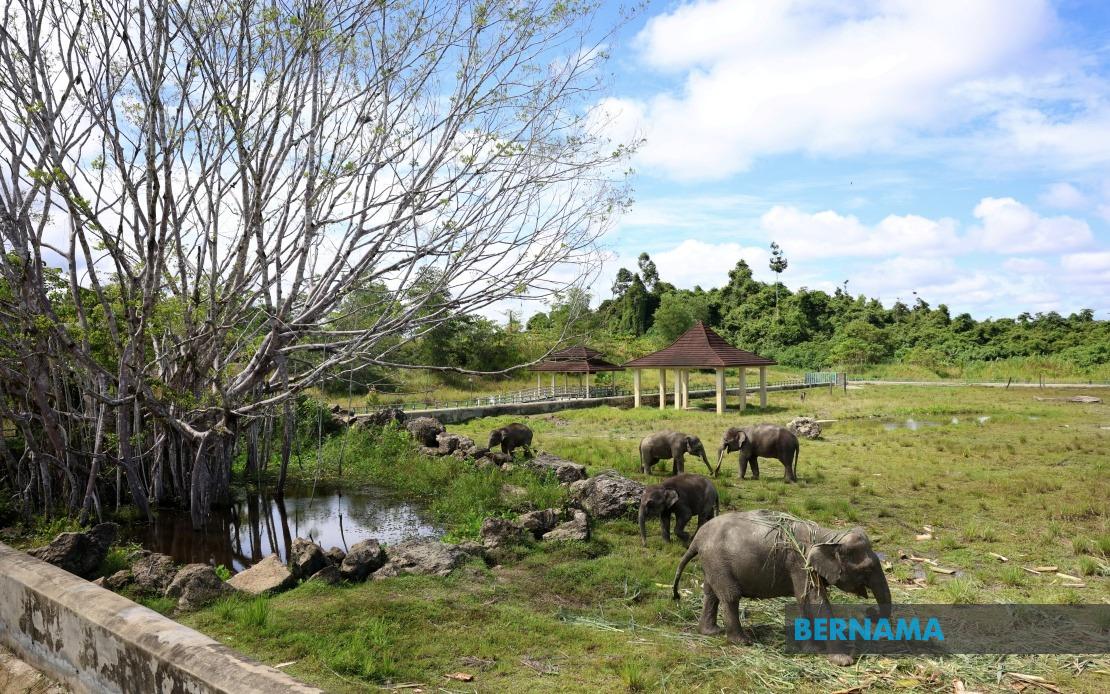
The Sabah state government is considering a phased rollout of an elephant sanctuary concept originating in Tawau, contingent upon its success in mitigating the persistent tensions between expanding human settlements and wildlife populations. Datuk Dr Andi Md Shamsureezal, the Sabah Assistant Minister of Tourism, Culture and Environment, revealed this strategy during a recent sitting of the State Legislative Assembly, indicating that a multi-stakeholder evaluation process is currently underway involving the Sabah Wildlife Department and other government agencies. The initiative reflects growing recognition that the state's wildlife management challenges demand innovative, location-specific solutions rather than one-size-fits-all approaches.
The proposed sanctuary framework represents a departure from traditional reactive wildlife management in Sabah, which has historically relied on reactive responses to specific incidents. Officials acknowledge that the Tawau pilot will serve as a testing ground for understanding how designated protected spaces can simultaneously serve conservation objectives and generate economic benefits through tourism development. This dual-purpose designation appeals to policymakers seeking to align environmental stewardship with rural economic development, particularly in districts where agricultural communities have borne the economic burden of wildlife-related crop destruction.
The sanctuary model carries particular significance for Sabah's Bornean elephant population, which faces mounting pressure from habitat fragmentation and agricultural expansion. These elephants, found nowhere else in the world, have increasingly ventured into agricultural zones in search of food, creating dangerous encounters with farming communities and resulting in substantial crop losses. By concentrating elephant populations within designated sanctuary areas with adequate vegetation and water resources, planners hope to reduce the frequency and severity of such incursions into cultivated lands.
Response to supplementary questions in the legislative assembly revealed that the government recognises the limitations of wildlife translocation as a standalone solution. Datuk Seri Mohd Shafie Apdal of Warisan had proposed the sanctuary concept specifically to address this gap, suggesting that a wildlife-designated area could function as both a conservation facility and tourist attraction. Andi acknowledged that simply capturing and relocating problematic animals merely displaces the underlying conflict to other areas, leaving root causes unaddressed—a candid admission that challenges conventional wildlife management practices that have predominated in Southeast Asia.
The Sabah Wildlife Department's comprehensive approach encompasses both immediate intervention tactics and longer-term strategic planning calibrated to each species' ecological requirements and behavioural patterns. In response to a query from Arunarnsin Taib regarding measures to protect farmers' livelihoods, officials outlined a layered strategy addressing the particular challenges posed by multiple species including Bornean elephants, wild boars, and primates. This differentiated approach reflects an understanding that generalist solutions prove ineffective when applied across diverse ecological contexts and species with vastly different habitat requirements and conflict triggers.
Community engagement emerges as a central pillar of the government's conflict mitigation framework. The establishment of elephant ranger teams drawn from local communities in affected areas demonstrates an attempt to shift management responsibility away from purely bureaucratic structures toward those living alongside wildlife. These ranger teams, composed of individuals familiar with local terrain and wildlife behaviour, can respond more rapidly to emerging threats while building local capacity for long-term wildlife stewardship. This devolution of authority and responsibility also addresses a critical gap in enforcement capacity that has historically hindered wildlife management effectiveness across the state.
Technological innovation plays an increasingly important role in the state's wildlife monitoring infrastructure. The deployment of satellite collars on selected elephants enables real-time tracking of movement patterns and generates early warning systems for at-risk farming communities. This technological advantage allows for proactive rather than reactive management, potentially preventing conflicts before they escalate. The system provides valuable data on elephant ranging behaviour, seasonal migration patterns, and habitat utilisation that can inform long-term sanctuary design and placement decisions.
The government's approach to managing primate populations through controlled population reduction in selected zones reflects a pragmatic calculus balancing public health concerns against conservation principles. The stated rationale—reduction of zoonotic disease transmission and safeguarding public safety—acknowledges the legitimate health anxieties of communities living in close proximity to wildlife. Similarly, wild boar management operations are being undertaken within a framework of legal compliance, risk assessment, and documented complaints, suggesting an attempt to ground wildlife control measures in evidence rather than indiscriminate culling.
For Malaysian and Southeast Asian policymakers grappling with escalating human-wildlife conflict, the Tawau sanctuary experiment carries valuable lessons about the potential for integrated conservation-development models. The recognition that habitat loss and human encroachment represent the fundamental drivers of wildlife conflict, rather than excessive animal populations per se, aligns with emerging scientific consensus across the region. If successfully implemented, the Tawau model could demonstrate that wildlife can coexist with human economic activity when provided with secure, adequately resourced spaces and when local communities are meaningfully engaged in stewardship rather than merely subjected to management decisions.

