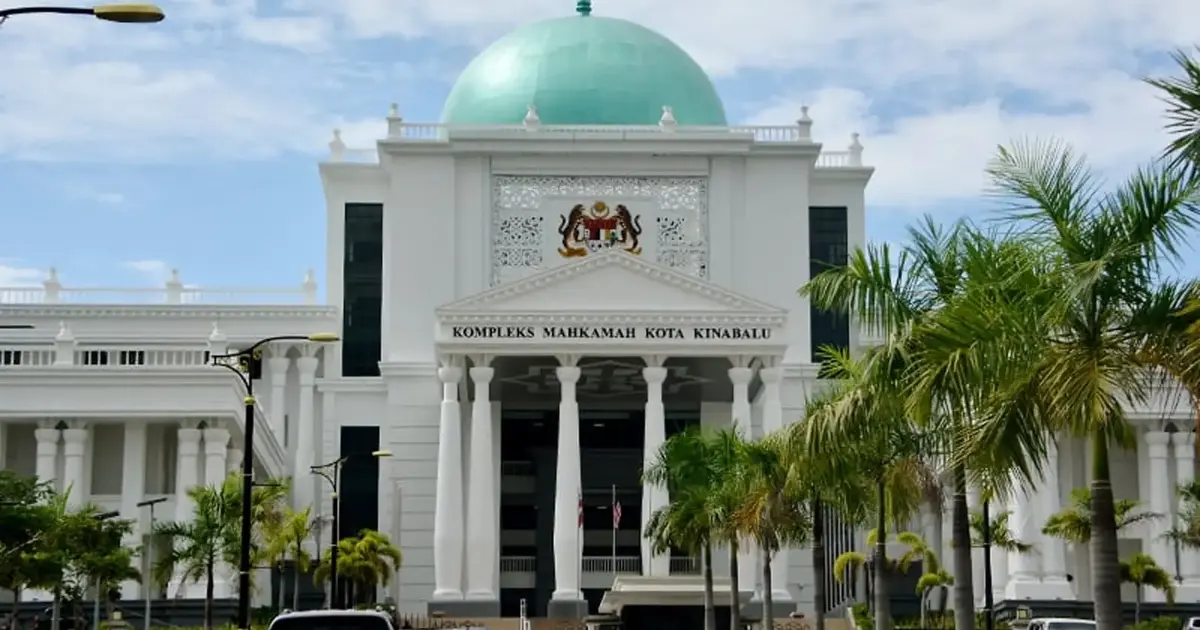
A Sessions court in Sabah has dealt a significant blow to Albert Tei's legal challenge against a state minerals company, rejecting his defamation claim in a judgment that hinges on how company statements should be interpreted. Judge Monica Linsua concluded that the disputed remarks, considered within their full context rather than in isolation, did not convey any suggestion that Tei had been embroiled in a political campaign.
The ruling represents an important development in Malaysia's defamation jurisprudence, particularly regarding how courts assess liability for corporate communications that touch on sensitive matters. The decision underscores the judiciary's approach to distinguishing between statements that might appear problematic when extracted from their surroundings and those that genuinely carry defamatory implications when assessed holistically. This distinction carries implications for how businesses, government agencies, and public figures must carefully calibrate their public communications.
The case illuminates ongoing tensions in Sabah's business and political landscape, where state-linked enterprises frequently find themselves at the intersection of commercial operations and political considerations. The minerals sector remains one of the most contested arenas in Malaysian politics, with questions of resource ownership, environmental stewardship, and political patronage regularly generating legal disputes. Tei's lawsuit appeared to probe whether the company had deliberately attempted to associate him with political machinations, a charge that the court ultimately found unsubstantiated on the evidence presented.
Judge Linsua's reasoning carries broader significance for public figures navigating Malaysia's increasingly complex media environment. The ruling suggests that courts will not readily infer defamatory intent from corporate statements unless the language clearly and unambiguously makes damaging assertions about an individual. This threshold offers some protection to organisations seeking to communicate their positions without excessive fear of litigation, while simultaneously placing responsibility on plaintiffs to demonstrate genuinely misleading or malicious messaging.
The dismissal also reflects the practical challenges courts face when interpreting corporate communications that may contain ambiguous language, technical terminology, or contextual references that require careful unpacking. Judge Linsua's approach prioritises comprehensive textual analysis over selective interpretation, a methodology that has gained traction in Malaysian jurisprudence but remains subject to debate among legal scholars who question whether such an approach adequately protects individuals from sophisticated forms of reputational harm.
For Sabah's business community, the decision offers reassurance that companies can issue statements addressing contentious matters without facing automatic legal jeopardy, provided they exercise reasonable care in their wording. However, this interpretation may simultaneously concern public interest advocates who worry that corporations might exploit the ruling's reasoning to make borderline allegations against critics while technically remaining within legal bounds. The balance between corporate communication freedom and individual reputation protection remains delicate.
The case emerges during a period of heightened scrutiny surrounding Sabah's resource extraction industries, environmental management, and the governance structures overseeing state-owned enterprises. These sectors have witnessed substantial litigation and political controversy in recent years, making the outcome of defamation cases involving prominent individuals and state companies matters of genuine public interest. The minerals industry particularly continues generating disputes about transparency, accountability, and the proper allocation of resource revenues.
Tei's unsuccessful lawsuit also demonstrates the evidentiary challenges plaintiffs face when pursuing defamation claims. To succeed, individuals must typically demonstrate not merely that statements were unflattering or inconvenient, but that they constituted false assertions made with knowledge of their falsity or reckless disregard for truth. The court's analysis suggests that Tei could not convincingly establish that the minerals company's remarks crossed this threshold, even when circumstances seemed potentially suspicious.
The dismissal may influence how other public figures in Sabah and across Malaysia approach defamation litigation, potentially making them more cautious about pursuing such claims unless they involve demonstrably false factual assertions. This development reflects broader patterns in Commonwealth legal systems, where courts have increasingly tightened standards for defamation liability while emphasising the importance of robust public debate and corporate communication rights.
Looking forward, the ruling raises questions about alternative legal mechanisms through which individuals might seek redress for reputational harm that falls short of formal defamation. Malaysian law offers various statutory protections and regulatory frameworks that might provide remedies in contexts where traditional defamation claims prove unsuccessful. The ruling therefore invites consideration of how comprehensive Malaysia's current legal infrastructure remains in protecting reputation while preserving legitimate freedom of expression.
For Southeast Asian jurisdictions examining their own defamation standards, the Sabah decision contributes to ongoing discussions about appropriate legal thresholds in an era of rapid corporate communication and social media engagement. The outcome demonstrates one approach to these questions, emphasising contextual analysis and evidentiary rigour. Whether this framework ultimately best serves public interest remains a question for broader legal and social debate within Malaysian society.

