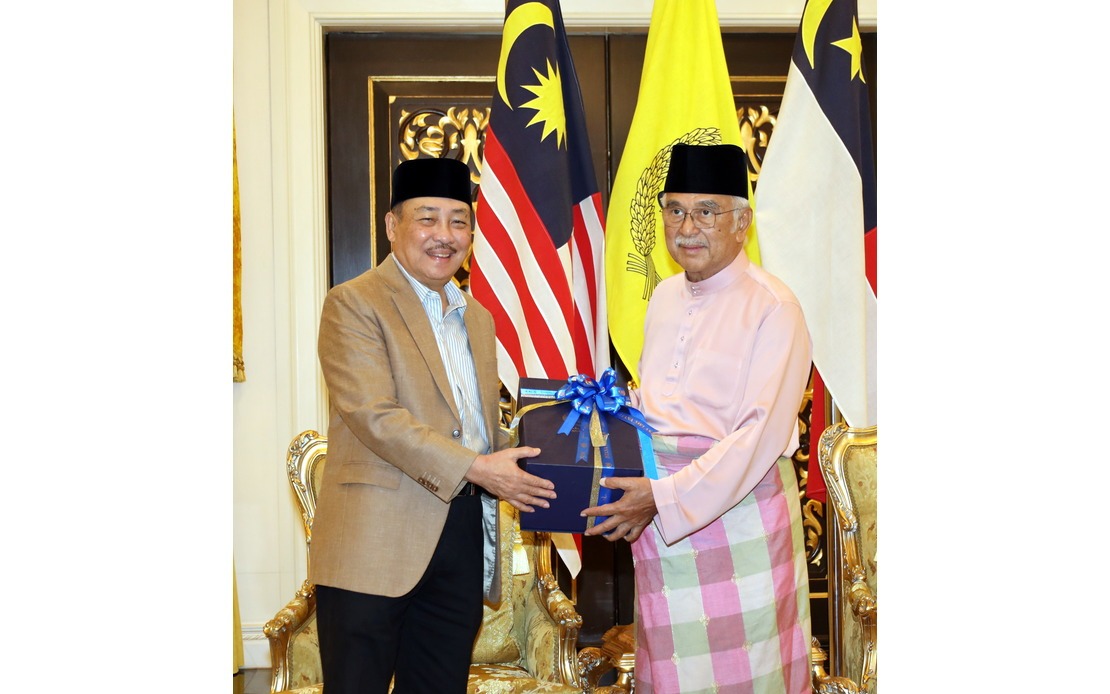
Sabah Chief Minister Datuk Seri Hajiji Noor has undertaken a courtesy visit to Melaka's Yang Dipertua Negeri Tun Dr Mohd Ali Mohd Rustam, marking another step in efforts to deepen bilateral ties between the two Malaysian states. The engagement, which took place at Istana Melaka in Bukit Beruang, underscores the importance both regional leaders place on maintaining constructive dialogue and exploring common ground on policy matters affecting their respective populations.
The delegation led by Hajiji arrived at the official residence at approximately 3.35 pm, where they were formally received by Tun Mohd Ali. This protocol-observed meeting reflected the formal nature of the engagement, signalling respect for constitutional positions and the significance attached to the diplomatic exchange. Such visits, while sometimes appearing ceremonial on the surface, serve as important conduits for relationship-building between senior state figures in Malaysia's federal system.
Accompanying the Sabah Chief Minister were three senior state officials who brought substantive expertise to the discussion. Datuk Rubin Balang, holding the Rural Development portfolio, Datuk Jamawi Jaafar, responsible for Agriculture, Fisheries and Food Industry matters, and Datuk Mohd Razali Mohd Razi, a Nominated Member of the Sabah State Legislative Assembly, formed a compact but strategically composed entourage. The inclusion of ministers overseeing rural development and agricultural sectors suggests that discussions likely touched upon economic cooperation and resource management issues of mutual relevance.
The talks covered various subjects of mutual interest to both Sabah and Melaka, though specific details of the substantive discussions remain undisclosed in official statements. In the Malaysian political context, such general phraseology often masks deeper conversations about trade opportunities, infrastructure development, and collaborative governance approaches. Both states, while geographically separated, share common challenges in rural development, agricultural productivity, and resource management that could benefit from shared experiences and coordinated strategies.
For Sabah, which has historically focused much of its external engagement on fellow East Malaysian state Sarawak and its relationship with federal authorities in Kuala Lumpur, such visits to Peninsular Malaysian states represent a broadening of diplomatic reach. This outreach is particularly noteworthy in Sabah's contemporary political context, where coalition-building and maintaining positive interstate relations contribute to overall political stability and access to federal development resources.
Melaka, as one of Malaysia's smaller states but with significant historical and cultural prominence, often hosts dignitaries from across the country. The Yang Dipertua Negeri's role, while primarily ceremonial under the constitution, carries considerable symbolic weight in state governance and international relations. Tun Dr Mohd Ali's reception of the Sabah delegation reflects Melaka's openness to strengthening horizontal relationships among Malaysian states beyond the customary vertical federal-state dynamic.
The meeting functioned as a platform for exchanging perspectives on matters affecting both regional administrations, according to the statement released by Hajiji's office. This framing suggests that beyond ceremonial courtesy, substantive policy dialogue occurred. Regional cooperation on issues such as economic development, human capital, and infrastructure could provide tangible benefits to citizens of both states while building a stronger collective voice in national discourse.
Interstate visits of this nature carry importance for Malaysia's federalism, as they help maintain constructive relations between state governments that operate under different political coalitions and configurations. In an era where federal-state relations sometimes become contentious, state-to-state engagement can provide alternative channels for problem-solving and cooperation on issues that transcend party politics.
The courtesy meeting concluded with afternoon tea hosted by Tun Mohd Ali, a traditional gesture that reinforced the collegial tone of the engagement. Such hospitality rituals, while seemingly minor, reflect and reinforce the goodwill between parties and create informal settings where candid discussion can occur away from formal protocols.
For Southeast Asian context, Malaysia's approach to interstate relations serves as a model for federal systems in the region. The willingness of state leaders to conduct bilateral visits and maintain dialogue, even across party lines, demonstrates the maturity of Malaysia's democratic institutions and the shared commitment to territorial unity despite political differences at the state and federal levels.
The visit reflects broader patterns of intensified state-level diplomacy in Malaysia, where chief ministers increasingly leverage personal relationships and direct engagement to advance their states' interests. In Sabah's case, such initiatives underscore efforts to position the state as an active player in national and regional affairs rather than a peripheral player primarily concerned with local issues.

