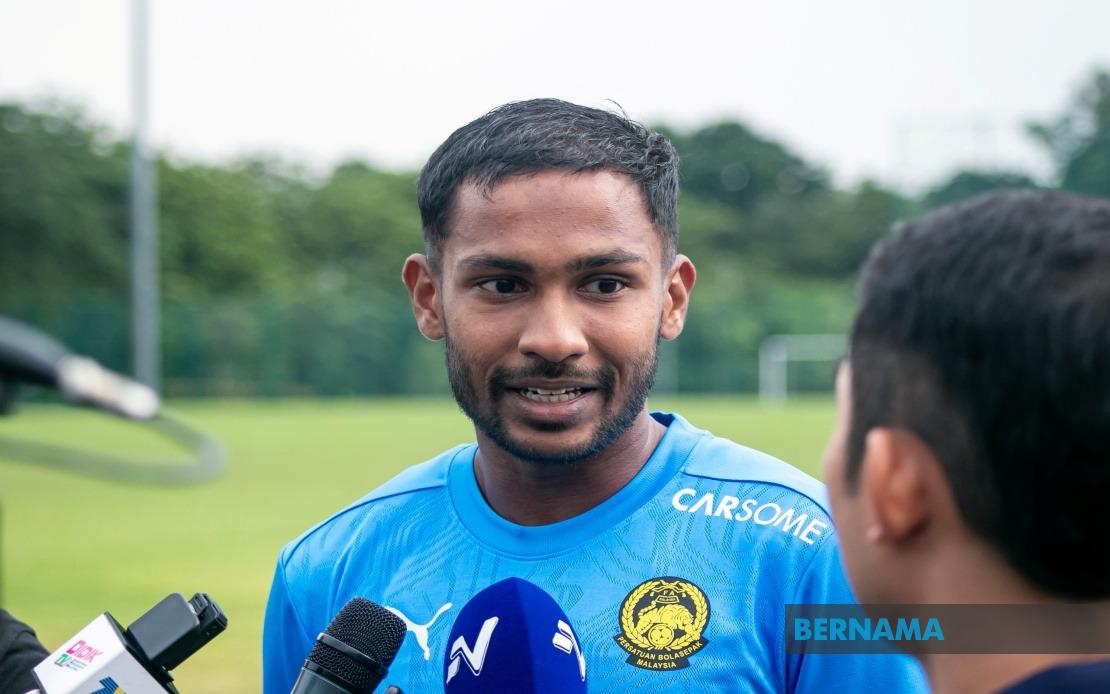
Malaysia's national football team is preparing for a critical campaign in the 2026 Hyundai ASEAN Cup, with veteran defender V. Ruventhiran making an impassioned call for supporters to rally behind the squad throughout the regional tournament. Speaking from the team's centralised training camp in Shah Alam, Ruventhiran emphasised that restoring the atmosphere in Malaysian stadiums will be essential to the team's success, framing fan engagement not as a luxury but as a fundamental component of national pride and sporting achievement.
Ruventhiran's appeal carries particular weight given Malaysia's mixed performances in recent regional competitions. The defender recognised that even though the tournament opens with an away match against Myanmar at Thuwunna Stadium on July 25, the presence of supporters—the so-called "12th man"—during the home fixtures will provide an invaluable psychological advantage. His message transcended the immediate tournament context, positioning football as a unifying national endeavour that requires collective commitment across players, officials, and the broader Malaysian public.
The national team's Group B schedule presents both opportunities and challenges that will test Harimau Malaya's mettle against competitive opponents. Following the opening fixture in Myanmar, Malaysia will host Laos at the Kuala Lumpur Football Stadium in Cheras on July 28 before travelling to Bangkok for a encounter with Thailand at the Rajamangala Stadium on August 1. The group stage concludes with a home match against the Philippines on August 8, also at the Cheras venue. This fixture list means that three of four group matches will be contested on Malaysian soil, making Ruventhiran's plea for fan attendance strategically sound and practically crucial.
The structure of the tournament itself reinforces the importance of domestic support. The top two finishers from each group will advance to two-legged semi-finals scheduled for mid-August, with the final matches set for August 22 and 26. This condensed schedule means that group-stage momentum will carry significant weight into the knockout rounds, and teams performing well before their home crowds often translate that confidence into the more pressurised semi-final environment.
While Ruventhiran focused on collective responsibility and national pride, midfielder Aliff Haiqal Lokman Hakim Lau viewed his selection differently—as a personal turning point after an injury-plagued season. The Penang FC player's inclusion in the squad represents both validation of his technical qualities and an opportunity to demonstrate his physical readiness for elite competition. His characterisation of the tournament as a "fresh start" reflects the psychological hurdle that injured players must overcome when returning to national team football.
Aliff Haiqal's narrative underscores a broader challenge facing Southeast Asian football: the vulnerability of squad depth when key players are sidelined by injury. His struggles during the previous campaign highlighted how domestic injuries can cascade into disruptions at the national team level. The fact that he has described the call-up as a "blessing" suggests that he will approach the tournament with hunger and determination, potentially translating physical rehabilitation into restored form at a crucial moment.
The player's comments about starting a new chapter both with the national team and with Penang FC indicate his awareness that consistent performance in the domestic league will underpin his international contributions. This interconnection between club and country is particularly pronounced in Malaysian football, where the topflight Malaysian Super League provides the primary staging ground for international selection decisions. Aliff Haiqal's determination to prove his fitness and regained capabilities will therefore have ripple effects throughout the domestic season.
Ruventhiran's emphasis on focusing on the badge rather than external distractions reflected broader institutional messaging from Harimau Malaya about maintaining concentration and professionalism. The defender's assertion that the team would embrace pressure as motivation rather than a burden suggested a psychological resilience that had been questioned following previous tournament campaigns. His framing of pressure as a positive force aligned with contemporary sports psychology principles about transforming anxiety into performance enhancement.
For Malaysian football fans and analysts, the 2026 Hyundai ASEAN Cup represents a critical juncture for evaluating whether Harimau Malaya has developed the consistency and depth necessary to compete regularly in regional tournaments. The tournament provides a measurable benchmark against established regional rivals including Thailand, Myanmar, and Laos. Malaysia's recent history in ASEAN Cup competitions has been mixed, with inconsistent performances suggesting that strengthening the squad's psychological unity and domestic support could yield tangible improvement.
The geographical distribution of matches, with three home fixtures at the Kuala Lumpur Football Stadium, provides Malaysia with distinct advantages if supporters respond to Ruventhiran's appeal. Southeast Asian football environments are notoriously volatile, with atmospheric conditions, travel fatigue, and crowd intensity frequently influencing outcomes. A hostile away environment in Yangon, combined with neutral or unfamiliar venues in Thailand and the Philippines, makes home advantage in Cheras potentially decisive across the group stage.
Beyond the immediate tournament context, Ruventhiran's intervention signals that Harimau Malaya's management recognises a perception problem regarding fan engagement and national team support. Public attendance at matches has declined in recent years, reflecting broader questions about marketing, scheduling, and the perceived quality of football on display. His direct appeal to Malaysian supporters constituted an acknowledgment that restoring the connection between the team and the broader public would require leadership from within the squad itself.
Aliff Haiqal's story of rehabilitation and redemption resonates with many Malaysian football followers who understand the psychological and physical demands of recovering from injury at the elite level. His optimism and framing of the tournament as an opportunity rather than a test suggested psychological maturity that could translate into improved performances. For younger Malaysian players recovering from similar setbacks, his approach provided a model for channelling disappointment into renewed determination.
As Malaysia prepares for the opening match against Myanmar, both players' messages—Ruventhiran's rallying cry for unified national support and Aliff Haiqal's personal journey toward restored form—encapsulated the broader narrative that Harimau Malaya will advance through the 2026 ASEAN Cup only if the team, supporters, and national sporting institutions align behind a shared commitment to excellence and representation.

