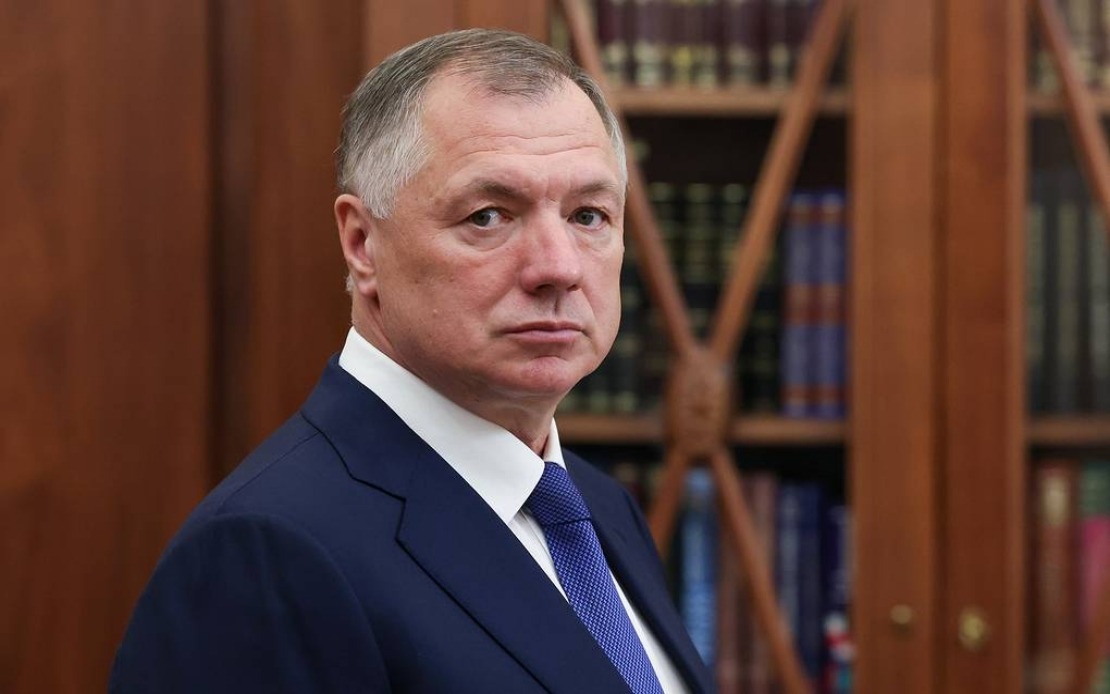
Russian Deputy Prime Minister Marat Khusnullin has outlined an ambitious infrastructure vision for his country, proposing the construction of a railway network extending to the Indian Ocean. Speaking to TASS news agency, Khusnullin framed the initiative as a strategic response to mounting vulnerabilities in international shipping, particularly the chokepoints that currently funnel global commerce through contested waters in the Middle East.
The proposed railway corridor would traverse some of Asia's most challenging terrain and politically complex regions. Rather than relying on the Bosphorus Strait in Turkey or the Strait of Hormuz between Oman and Iran—both critical but increasingly volatile maritime passages—the envisioned route would wind through Turkmenistan, Iran, Afghanistan, and Pakistan to establish direct land access for Russian goods destined for Indian Ocean markets. Khusnullin indicated that any pathway providing connectivity to India would be deemed viable, suggesting flexibility in the final route configuration as negotiations progress with transit nations.
The geopolitical backdrop lending urgency to this proposal is severe. Shipping through the Strait of Hormuz alone accounts for approximately 25 per cent of global oil trade and roughly 20 per cent of international liquefied natural gas shipments, making disruption in this narrow waterway a concern extending far beyond Moscow's immediate interests. The strait has become increasingly contentious following escalating tensions between Iran and Western powers, with the Islamic Revolutionary Guard Corps conducting large-scale retaliatory operations targeting facilities across the Middle East.
Iranian authorities have further complicated shipping prospects by announcing restrictions on vessels connected to the United States and Israel, or flagged under nations perceived as supporting military action against Tehran. Such blockade measures, whether fully implemented or merely threatened, introduce unpredictability into global supply chains and push trading nations to explore alternatives that circumvent these volatile maritime corridors. For Russia, already facing international sanctions and restricted access to traditional Western markets, such alternative routes assume even greater significance.
Beyond the immediate geopolitical calculation, Khusnullin has articulated an ambitious vision for Russia's domestic construction capacity. He contends that the nation's construction sector currently possesses the capability to absorb an additional one trillion rubles in annual investment. Present capacity limitations should not be mistaken for maximum potential, he suggested, arguing that multi-year financing commitments would enable the industry to expand operations substantially. With sustained funding secured over five years, the construction sector could dramatically scale up output and undertake even more extensive infrastructure projects.
This reveals an underlying economic dimension to the railway proposal. Russia's construction industry faces chronic underinvestment and capacity constraints that limit growth. By anchoring major infrastructure development to strategic necessity—establishing alternative supply routes for economic survival under sanctions—Khusnullin positions both the railway project and broader sectoral expansion as national imperatives rather than discretionary spending.
The practical challenges of executing such a railway initiative across Afghanistan and Iran are formidable. Afghanistan remains an unstable operating environment where insurgent activity and governance weaknesses complicate large-scale infrastructure projects. Iran, though more stable institutionally, operates under international sanctions that would complicate financing and technology transfer for the Russian-led initiative. Pakistan, conversely, possesses established infrastructure networks and greater political predictability, though its own security concerns in border regions and political dynamics merit consideration.
For Malaysian and Southeast Asian stakeholders, this Russian initiative carries several implications. First, it represents a broader reshaping of Asian connectivity patterns driven by geopolitical fragmentation. As major powers build alternatives to shared maritime chokepoints, regional trading nations face potential shifts in shipping routes and logistics costs. Second, the project signals Russia's deeper pivot toward Asian markets and integration into Asian infrastructure networks as Western sanctions close traditional pathways. This reorientation amplifies Russia's engagement across Central Asia, the Middle East, and South Asia—regions increasingly important to Southeast Asian trade and geopolitical calculations.
Third, successful implementation of alternative transport corridors between Europe and Asia would reduce pressure on maritime routes through Southeast Asia, potentially easing congestion while simultaneously creating new competitive dynamics for logistics hubs. The proposal also reflects how sanctions regimes, rather than simply constraining targeted nations, prompt creative infrastructure responses that can reshape regional connectivity for years to come.
The timeline and feasibility of Khusnullin's proposal remain uncertain. Previous megaprojects involving Central Asian infrastructure have faced funding shortages, engineering complications, and coordination difficulties across multiple sovereign nations. Nevertheless, the articulation of this vision demonstrates how regional instability and great power competition drive infrastructure innovation, even when execution proves elusive. Whether the railway materializes or not, its conception reflects fundamental shifts in how major powers perceive geographic risk and economic resilience in an increasingly multipolar, sanctions-laden international order.

