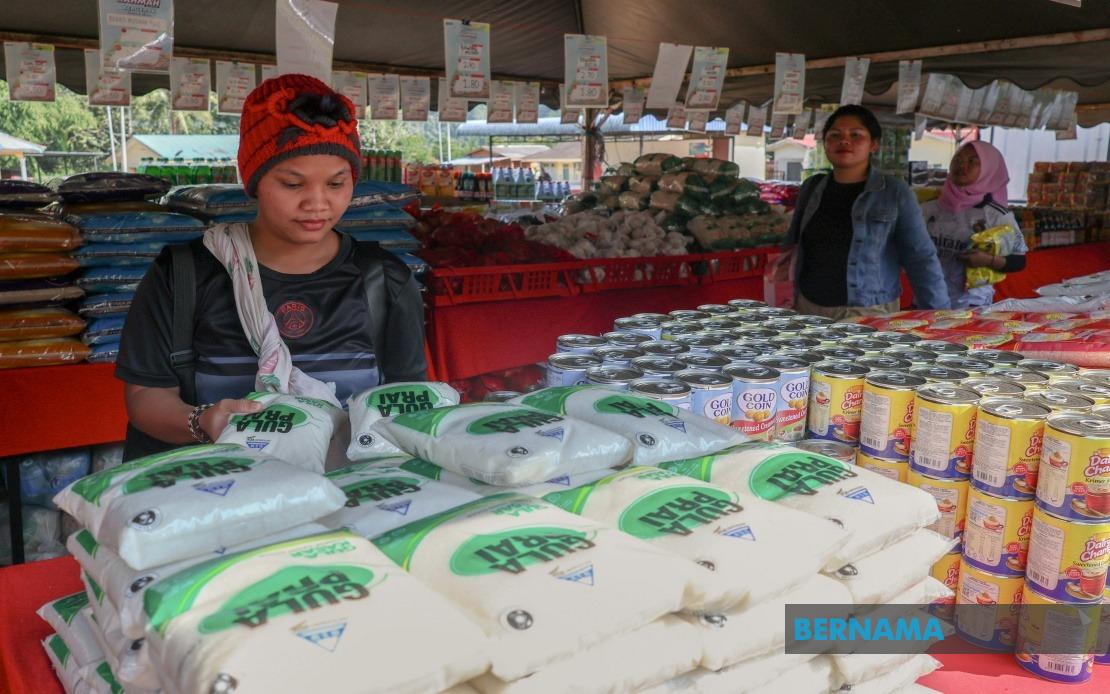
The Malaysian government's Essential Goods Distribution Programme is delivering tangible results in narrowing the price gap between urban centres and isolated rural communities, according to the Domestic Trade and Cost of Living Ministry. The initiative, which provides subsidised access to seven essential items across Malaysia's most underserved regions, represents a concerted effort to address one of the country's persistent economic inequalities: the premium prices rural residents pay simply due to geographic remoteness and supply chain limitations.
Historically, residents living in Sabah, Sarawak and the rural peripheries of Peninsular Malaysia have borne substantially elevated costs for basic necessities. Transportation expenses, limited competition among retailers, and the absence of efficient distribution networks have created a two-tier pricing system where isolated communities subsidise their own geographic disadvantage. Before this programme launched, a liquefied petroleum gas cylinder in Pulau Libaran, Sabah cost RM39—a 47 per cent premium over the controlled price of RM26.60. Similarly, packets of cooking oil were retailing at RM3.50 when the standardised price stood at RM2.50, representing a 40 per cent markup. These disparities accumulate rapidly for households already stretched financially, forcing families to choose between purchasing fuel for cooking or investing in other essentials.
The intervention operates at considerable scale. This financial year, the government has committed RM250 million to the programme, establishing infrastructure across 212 distribution zones, 828 separate distribution areas, and 1,532 retail points throughout six target states. The beneficiary population exceeds 1.03 million residents, predominantly concentrated in Sabah and Sarawak where geographic isolation is most acute. Within Sabah alone, the allocation reaches RM107.3 million, touching 492,566 people across 587 retail outlets. The programme extends into smaller administrative areas; Libaran specifically receives RM1.76 million to serve 17,061 residents through nine retail points and eight distribution areas, illustrating how government resources filter down to constituency level.
The breadth of items covered—sugar, wheat flour, cooking oil, white rice, liquefied petroleum gas, RON95 petrol, and diesel—reflects careful selection of goods whose price stability directly impacts household food security and transportation capacity. These seven commodities form the backbone of rural household budgets and represent unavoidable expenditures that cannot easily be substituted or forgone. By controlling their prices, the government creates a stability floor beneath rural purchasing power, preventing cost volatility from cascading through family economies.
Implementation requires institutional discipline and coordination. To prevent programme leakage and ensure subsidies reach intended beneficiaries rather than being arbitraged by middlemen, the ministry has established standardised operating procedures governing delivery logistics and established oversight committees at both ministry and state administrative levels. This governance architecture acknowledges that distribution programmes frequently fail when accountability becomes diffused across numerous actors without clear operational guidelines. The explicit mention of Programme Monitoring and Coordination Committees signals ministerial awareness that subsidies can evaporate into black markets or be captured by retailers who pocket the difference between controlled and market prices.
Independent evaluation provides some external validation. The Programme Outcome Evaluation Committee surveyed target populations and found majority agreement that the initiative meaningfully reduced living cost pressures. Critically, respondents expressed desire for programme continuation, suggesting the intervention addresses a genuine need rather than creating dependency on artificially priced goods. This distinction matters: subsidies that generate demand for indefinite support risk becoming fiscal anchors, whereas programmes addressing demonstrable hardship and meeting sunset objectives deserve renewal and potential expansion.
The programme's geographic focus carries strategic implications. Sabah and Sarawak, representing Malaysia's most economically peripheral regions with dispersed populations and expensive logistics, receive disproportionate resource allocation. Terengganu, Kelantan, and Pahang—Peninsular Malaysia's rural heartland where urban agglomeration has concentrated economic activity along the west coast—also benefit substantially. Kedah's inclusion reflects acknowledgment that even relatively developed states contain pockets of isolation and poverty. This distribution pattern suggests the programme targets objective hardship rather than political patronage, though the concentration in states with significant BN support warrants monitoring for potential realignment if political calculations shift.
For Malaysian policymakers, the programme presents a case study in targeted subsidy design. Rather than attempting economy-wide price controls that distort production and create black markets, this approach confines intervention to geographically isolated populations where market mechanisms fail most acutely. The limitation to essential goods rather than comprehensive baskets maintains fiscal sustainability while addressing genuine necessity. The explicit beneficiary count—1.03 million people—provides measurable scope rather than nebulous universal schemes.
Regionally, Malaysia's approach differs markedly from neighbouring countries. While Indonesia implements broader general subsidies and Thailand maintains more extensive price controls, Malaysia's targeted geographic approach may offer insights for other Southeast Asian nations grappling with rural-urban inequality. As urbanisation accelerates across the region, remote populations increasingly lag in accessing affordable essentials, making this programme's methodology potentially exportable.
Longer-term sustainability questions linger. The RM250 million annual commitment represents meaningful fiscal outlay, sustainable presently but vulnerable to budgetary pressure if commodity costs spike or beneficiary populations expand. The programme's success may generate demands for extension to additional states or additional commodity categories, creeping its fiscal footprint upward. Conversely, improved transportation infrastructure and digital commerce may eventually erode the geographic isolation that justifies these subsidies, allowing the programme to phase out as market mechanisms improve access.
The immediate policy outcome remains unambiguous: essential goods distribution has measurably narrowed rural-urban price disparities and improved cost-of-living conditions for over a million Malaysians. Whether this represents permanent structural reform or temporary palliative for deeper geographic inequality will become clearer as programme outcomes accumulate and competing fiscal priorities emerge in subsequent budget cycles.

