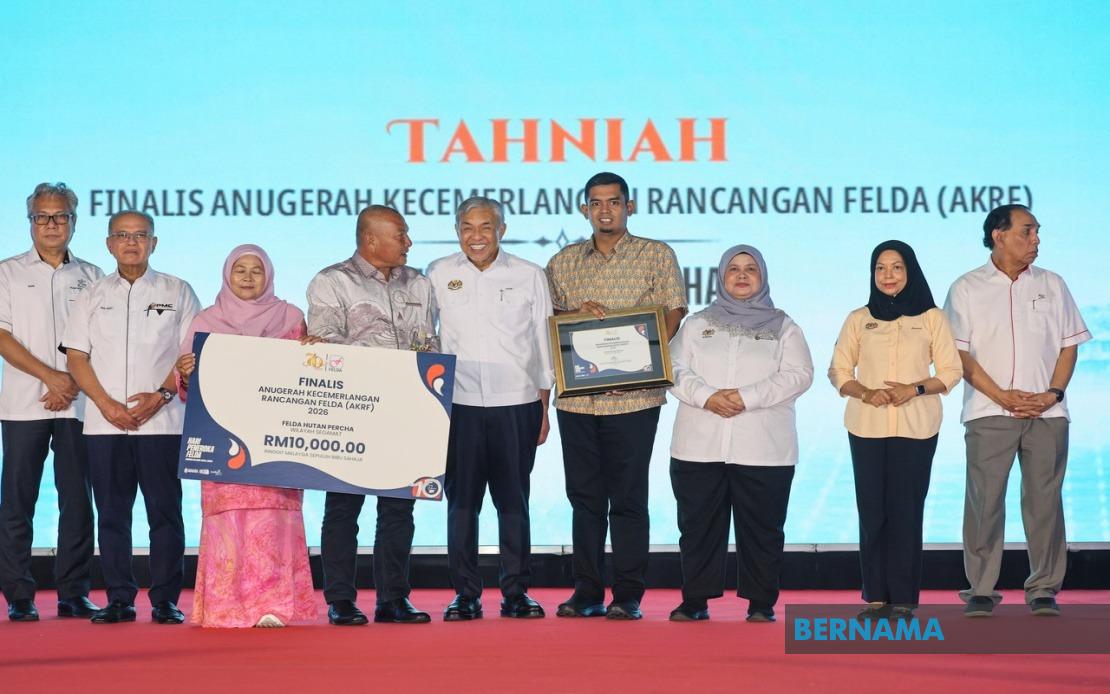
At the World Rural Development Day 2026 celebration in Maran, Deputy Prime Minister Datuk Seri Dr Ahmad Zahid Hamidi articulated a transformative vision for Malaysian rural development, arguing that the sector must evolve beyond traditional domestic frameworks and position itself as a competitive player in regional and international markets. Speaking in his capacity as Rural and Regional Development Minister, Ahmad Zahid contended that contemporary rural policy cannot remain insulated within national boundaries if Malaysia seeks to maximise economic potential and create sustainable prosperity in its countryside.
The Deputy Prime Minister's remarks signalled a strategic pivot within government thinking about rural economic development. Rather than concentrating solely on infrastructure provision or social welfare programmes within Malaysia, Ahmad Zahid advocated for empowering rural entrepreneurs to venture into larger commercial ecosystems, particularly within the Association of Southeast Asian Nations and the expanding global halal economy. This reorientation reflects recognition that Malaysian rural products and services possess competitive advantages that remain underdeveloped in international markets, and that unlocking this potential requires deliberate policy encouragement and institutional support systems.
Central to Ahmad Zahid's framework is the newly articulated National Rural Economy Agenda, which the ministry envisions as a comprehensive strategic blueprint guiding the country's rural development trajectory through the coming years. This agenda departs from earlier paradigms emphasising infrastructure as the primary lever for rural advancement, instead prioritising the cultivation of rural enterprises capable of competing on quality, innovation, and market differentiation. The philosophical shift reflects lessons learned from both domestic and international rural development experiences, where physical infrastructure alone proves insufficient without corresponding attention to human capital, business acumen, and market linkages.
In substantiating his vision, Ahmad Zahid pointed to measurable outcomes from initiatives introduced over the preceding three years. Two flagship programmes—RisSMart and IkonDesa—have been instrumental in facilitating market access for rural producers. These schemes have contributed to the development of more than 7,000 new rural entrepreneurs, a figure that underscores the latent entrepreneurial capacity existing within Malaysia's rural populations when appropriate institutional scaffolding is provided. The economic spin-offs prove equally impressive: these ventures have generated approximately 15,000 employment opportunities, injecting economic dynamism into communities that historically experienced limited job creation and youth outmigration to urban centres.
The sales figures merit particular attention for Malaysian policymakers and regional observers. In generating revenues exceeding RM1.77 billion, these rural enterprises have demonstrated genuine commercial viability rather than mere subsistence activity. This achievement suggests that Malaysian rural products, when properly supported and marketed, can achieve scale and profitability comparable to enterprises operating in more urbanised or developed regions. The implication for Southeast Asia is instructive: rural economic transformation remains achievable through targeted interventions that combine entrepreneurial support with market facilitation, offering a potential template for other regional economies grappling with rural-urban development asymmetries.
Beyond economic metrics, Ahmad Zahid highlighted progress in human capital development as foundational to sustainable rural advancement. The admission of nearly 500 Orang Asli students to universities represents a historic achievement and signifies expanding educational opportunities for indigenous populations historically marginalised from higher education access. This commitment to education underscores recognition that rural development ultimately depends upon equipping populations with sophisticated knowledge and skills relevant to contemporary economies.
Infrastructure modernisation continues as a necessary complement to entrepreneurial development. During the 12th Malaysia Plan period, the ministry oversaw the upgrading of nearly 5,000 kilometres of rural roads, directly improving connectivity and reducing transaction costs for rural producers seeking market access. Simultaneously, electricity supply was extended to more than 7,000 households, while clean water provision reached over 10,000 rural residences. Such investments remain foundational: telecommunications and utility infrastructure constitute prerequisites for market integration and quality of life improvements that reduce incentives for rural-urban migration.
The housing dimension of the development programme has been substantial, with nearly 10,000 homes either constructed or rehabilitated under the ministry's auspices. These interventions have benefited approximately 40,000 rural residents and reflect understanding that rural prosperity encompasses habitable living conditions beyond economic activity alone. Housing infrastructure attracts and retains skilled workers in rural areas, supports family stability, and contributes to dignified living standards essential for human development.
The timing of Malaysia's formal observance of World Rural Development Day carries symbolic and practical significance. The United Nations General Assembly proclaimed the occasion on September 6, 2024, designating July 6 as its annual observance date to commemorate the establishment of the Centre on Integrated Rural Development for Asia and the Pacific. Malaysia's adoption of this commemorative day from 2026 onwards, following the first global celebration in 2025, reflects the nation's commitment to rural development as a priority and positions Malaysia within international conversations about agrarian and rural policy.
For Malaysian readers, Ahmad Zahid's message carries immediate relevance as rural communities constitute significant portions of the national population and electoral base. The Deputy Prime Minister's emphasis on market-driven rural development rather than welfare dependency suggests policy trajectory favouring competitive, growth-oriented approaches to rural prosperity. For Southeast Asian observers, the Malaysian experience offers lessons about integrating rural economies into regional and global value chains while maintaining social commitments to indigenous populations and infrastructure provision.
The gathering in Maran, attended by Pahang Menteri Besar Datuk Seri Wan Rosdy Wan Ismail and Rural and Regional Development Deputy Minister Datuk Rubiah Wang, underscored multi-level commitment to rural advancement. This coordination between federal and state authorities proves essential given that rural development encompasses dimensions spanning national policy, state implementation, and local community engagement.
Looking forward, Ahmad Zahid's articulation of rural development as intrinsically linked to regional and global economic participation suggests continuing emphasis on market facilitation and entrepreneurial support. The trajectory indicates movement beyond viewing rural Malaysia as primarily extractive or subsistence-oriented, instead positioning countryside communities as potential sources of valued products and services commanding international recognition. Whether policy implementation and resource allocation adequately support this ambitious reorientation remains subject to ongoing assessment.

