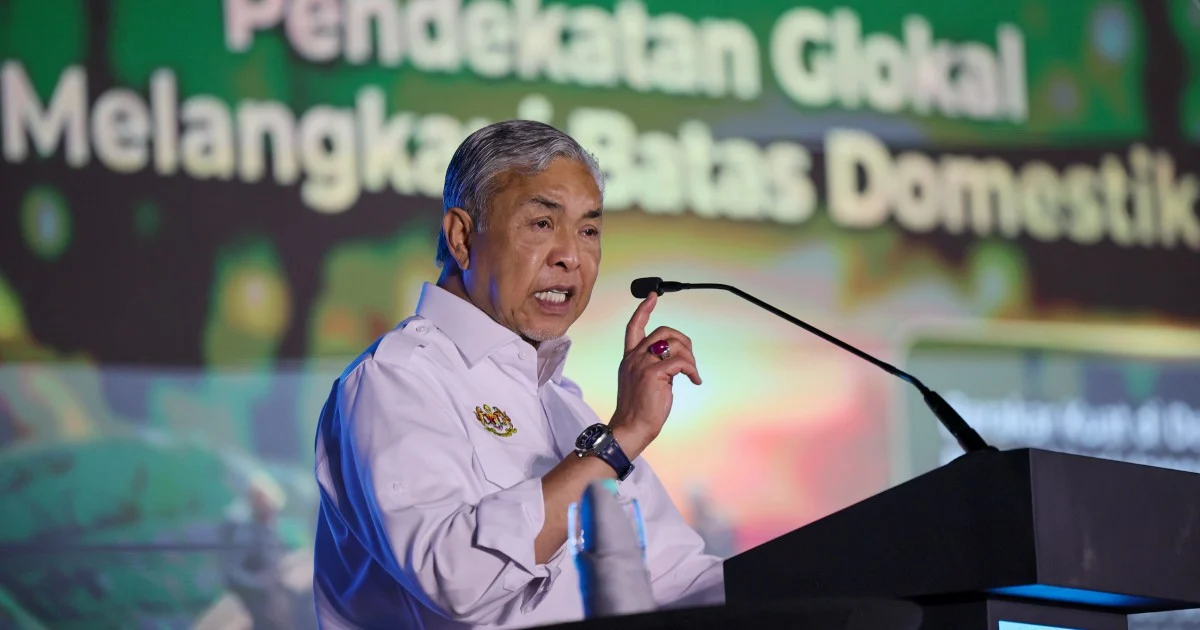
Deputy Prime Minister Datuk Seri Dr Ahmad Zahid Hamidi has underscored the necessity for Malaysia's rural development trajectory to move in lockstep with emerging global priorities, positioning the National Rural Economic Agenda as a foundational framework to chart a transformed course for countryside growth. Speaking in Maran, Zahid emphasised that this agenda represents far more than a compilation of regional policies—it embodies a comprehensive blueprint intended to propel rural economies into a new developmental phase while ensuring they remain globally competitive and responsive to international economic trends.
The timing of Zahid's remarks reflects growing recognition within Malaysia's policy establishment that rural areas cannot develop in isolation from worldwide economic shifts. As Southeast Asian nations grapple with digitalisation, climate transition, and supply chain restructuring, rural communities face both unprecedented opportunities and significant pressures. The Deputy Prime Minister's framing of the National Rural Economic Agenda as a mechanism to synchronise domestic rural advancement with these global currents suggests a shift toward more integrated planning that acknowledges rural economies as integral components of Malaysia's international economic positioning rather than peripheral concerns.
The concept of rural development moving in tandem with global agendas carries particular weight in the Malaysian context. The country's rural sector encompasses approximately one-third of the population yet historically has lagged in infrastructure, services, and income levels compared to urban centres. Without deliberate alignment with international economic realities—including trade frameworks, technology adoption, and environmental standards—rural areas risk further marginalisation as global commerce accelerates. Zahid's statement signals that policymakers recognise this risk and are attempting to construct rural development strategies that simultaneously address local needs and international competitiveness.
The National Rural Economic Agenda itself reflects this dual orientation. Rather than treating rural development as primarily about poverty alleviation or subsistence agriculture support, the framework appears designed to position rural Malaysia as an active participant in modern economic structures. This could involve encouraging agribusiness expansion, supporting digital infrastructure rollout, facilitating access to international markets for rural products, and ensuring rural workers possess skills aligned with global employment standards. Such an approach requires coordinating across multiple sectors and governance levels—from agriculture and telecommunications to education and trade policy.
Global agendas that influence rural development strategy span numerous domains. Climate commitments under international agreements necessitate that rural agricultural practices evolve toward sustainability. Trade agreements like the Regional Comprehensive Economic Partnership shape how rural produce reaches regional markets. Digital transformation agendas push for connectivity even in remote areas. Labour mobility frameworks affect migration patterns from rural regions. For Malaysia, balancing these external pressures with internal rural priorities demands sophisticated policy architecture.
The Maran location of Zahid's remarks holds symbolic significance. Maran is a constituency in Pahang that embodies many characteristics of Malaysia's interior rural regions—reliant on agriculture and primary industries, facing infrastructure challenges, and experiencing youth outmigration toward urban centres. Positioning such a location as the venue for articulating a new rural development vision suggests an intent to ground policy statements in the lived realities of these communities rather than issuing pronouncements from urban centres.
Implementing a rural agenda that simultaneously addresses local development needs and global economic integration presents formidable challenges. Resource allocation becomes contested—investments in export-oriented agribusiness may differ from investments in smallholder food security. Technological adoption, while essential for global competitiveness, can displace traditional rural livelihoods if not managed carefully. Environmental standards aligned with international expectations may impose costs on local producers unfamiliar with compliance requirements. Successfully navigating these tensions requires sustained engagement with rural communities, transparent dialogue about trade-offs, and flexible implementation that permits regional customisation.
For Southeast Asia more broadly, Zahid's emphasis on synchronising rural development with global agendas reflects a regional pattern. Vietnam, Indonesia, and Thailand similarly grapple with ensuring countryside areas benefit from broader economic participation rather than becoming development backwaters. The challenge intensifies as global supply chains fragment, climate pressures intensify, and demographic shifts accelerate. Countries that successfully integrate rural economies into modern frameworks may gain competitive advantages; those that fail risk deepening rural-urban divides with attendant social and political consequences.
The statement also carries implications for Malaysia's diplomatic positioning. As the country negotiates trade relationships, participates in regional forums, and shapes international economic policies, demonstrating commitment to inclusive development—including rural areas—enhances its standing. Developed nations and international organisations increasingly scrutinise whether growth benefits extend broadly throughout populations. A National Rural Economic Agenda positioned as aligned with global standards and priorities signals Malaysia's commitment to equitable development patterns.
Moving forward, success will depend on translating rhetorical commitment into concrete mechanisms. Budgetary allocations, institutional capacity, coordination across government levels, and engagement with rural stakeholders will determine whether the National Rural Economic Agenda becomes a genuine transformational tool or remains largely aspirational. Zahid's emphasis on aligning rural development with global agendas establishes an important principle, but realisation requires sustained political will and resources.
The Deputy Prime Minister's remarks ultimately reflect an emerging consensus that rural development cannot remain quarantined from global economic currents. Malaysia's countryside must evolve, innovate, and compete in international markets whilst maintaining social cohesion and addressing local priorities. Achieving this balance through frameworks like the National Rural Economic Agenda represents both an intellectual challenge and a practical governance test that will shape Malaysia's development trajectory for years ahead.

