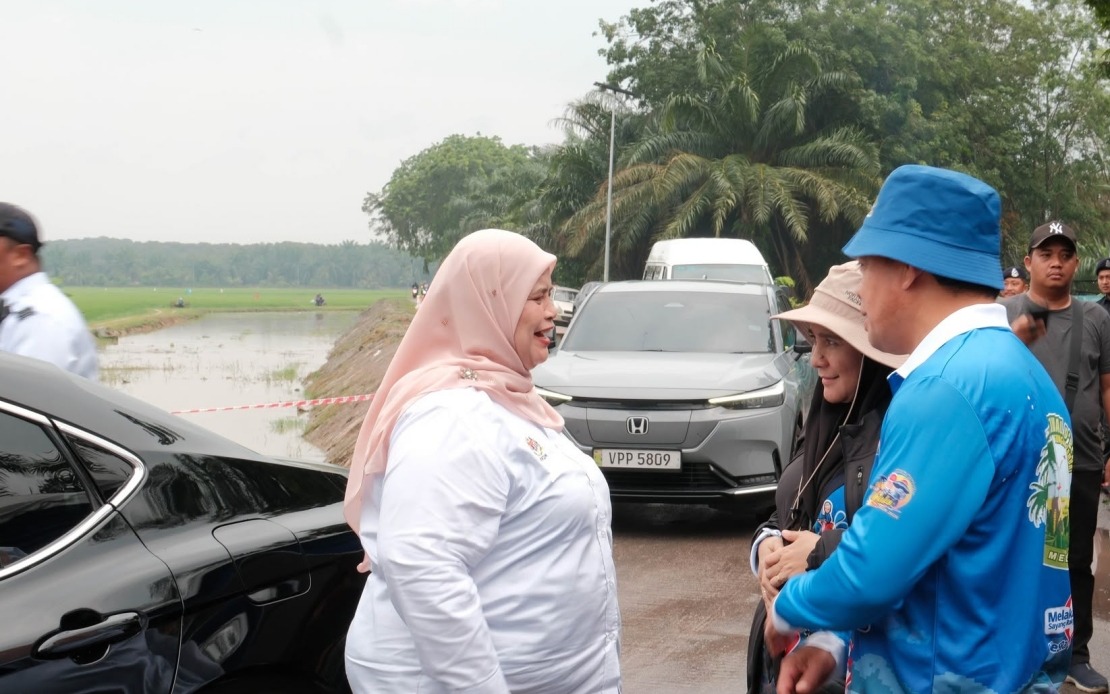
The Ministry of Rural and Regional Development (KKDW) is channelling RM1.911 million into comprehensive infrastructure improvements across Sungai Rambai, with works scheduled to span from 2021 through 2026. The investment represents a substantial commitment to addressing rural development priorities in Melaka's agricultural heartland, where connectivity and amenities have traditionally lagged behind urban centres. Deputy Minister Datuk Rubiah Wang outlined the scope of the initiative while attending the closing ceremony of the D'Bendang Melaka Festival, emphasising the ministry's focus on creating tangible improvements to residents' quality of life.
The allocation divides into two strategic components targeting different aspects of rural wellbeing. The Social Amenities Programme (PAMS) has received RM1.001 million, directed toward eleven distinct projects designed to enhance public facilities throughout the area. These initiatives acknowledge that rural development extends beyond physical infrastructure to encompass spaces where communities gather, socialise, and conduct local business. The programme reflects broader government recognition that liveable rural environments require investments in public spaces alongside traditional utility provision.
Complementing the amenities programme, thirteen Rural Connectivity Road (JPD) projects have been implemented using RM910,000 from the overall allocation. These road upgrades address a perennial challenge in rural Malaysia, where inadequate transportation networks constrain economic opportunity and limit access to services. Improved connectivity translates directly into practical benefits: farmers can transport produce to markets more efficiently, students access educational institutions with greater ease, and emergency services reach remote communities faster. For Sungai Rambai specifically, enhanced road infrastructure promises to stimulate agricultural commerce and reduce transport costs for both residents and businesses.
The investment arrives at a strategic moment for rural tourism development in Malaysia. The D'Bendang Melaka Festival, now in its fourth iteration, has matured into a comprehensive platform integrating multiple dimensions of rural economic activity. What began as a localised celebration has evolved into a showcase for agrotourism potential, drawing both domestic and international visitors seeking authentic experiences connected to Malaysia's agricultural heritage and rural culture. The festival's expansion reflects growing consumer interest in experiential tourism, where visitors seek connection with authentic communities and traditional practices rather than standardised attractions.
The economic multiplier effects of the festival extend considerably beyond direct visitor spending. More than sixty local entrepreneurs participate as vendors, marketing small and medium enterprise products, handicrafts, and agricultural produce directly to festival attendees. This marketplace opportunity strengthens rural entrepreneurship by providing established platforms for SME visibility and sales, reducing traditional barriers small businesses face in reaching customers beyond their immediate localities. The concentration of buyers at a dedicated event significantly improves cost efficiency for merchants compared to dispersed marketing efforts.
Beyond commercial metrics, the festival strengthens social and cultural dimensions of rural life. Traditional activities integrated throughout the event serve as platforms for intergenerational knowledge transfer, ensuring that rural cultural practices remain vibrant and valued by younger generations. When tourism demand creates economic incentive for cultural preservation, communities gain both material benefit and social validation for maintaining heritage practices. This alignment between economic sustainability and cultural continuity represents sophisticated rural development strategy.
The homestay and rural tourism sectors have expanded notably around the festival, creating employment and income diversification opportunities for farming households. Rather than relying exclusively on agricultural production vulnerable to commodity price fluctuations and climate variability, households can generate revenue through tourism services. This economic diversification provides crucial resilience, particularly important given increasing agricultural volatility in Southeast Asia linked to climate change and market globalisation.
The timing of these investments and festival development aligns strategically with Visit Malaysia Year 2026, the nation's major tourism promotion initiative. Positioning Sungai Rambai and surrounding regions as premium agrotourism destinations supports this broader campaign while distributing tourism benefits beyond conventional urban centres. International visitors increasingly seek rural and cultural experiences, and Malaysia's agrotourism offerings compete directly with similar products across Southeast Asia. Strong domestic positioning through events like D'Bendang creates foundation for international marketing.
Melaka's emergence as an agrotourism destination has broader implications for rural development policy across Malaysia. Success in Sungai Rambai demonstrates feasibility of integrated approaches combining infrastructure investment, amenities improvement, and tourism development. Other rural regions facing similar challenges—inadequate roads, limited public services, agricultural commodity dependency—can reference this model when advocating for development resources. The blueprint suggests that strategic coordination between multiple ministries and programmes, combined with cultural celebration and entrepreneurial opportunities, generates sustainable rural revitalisation.
For Malaysian policymakers, the Sungai Rambai initiative offers evidence that rural development need not mean urban-style growth or environmental compromise. The approach preserves padi field landscapes and cultural heritage while generating economic benefit, addressing concerns that modernisation inevitably erodes rural character. This compatibility between development and preservation appeals to both residents valuing traditional lifestyles and environmentally conscious consumers and investors.
The RM1.911 million investment, while substantial in local context, represents modest cost for achieving multiple policy objectives simultaneously. Improved roads reduce transportation costs for agricultural commerce indefinitely. Enhanced public facilities serve residents across years of use. Cultural tourism creates ongoing employment. The cost-benefit ratio improves further when accounting for reduced youth outmigration, improved health outcomes from better facility access, and strengthened social cohesion from community-focused development. From this perspective, rural infrastructure investment functions as preventive policy, addressing rural decline before it necessitates costlier urban absorption of displaced populations.

