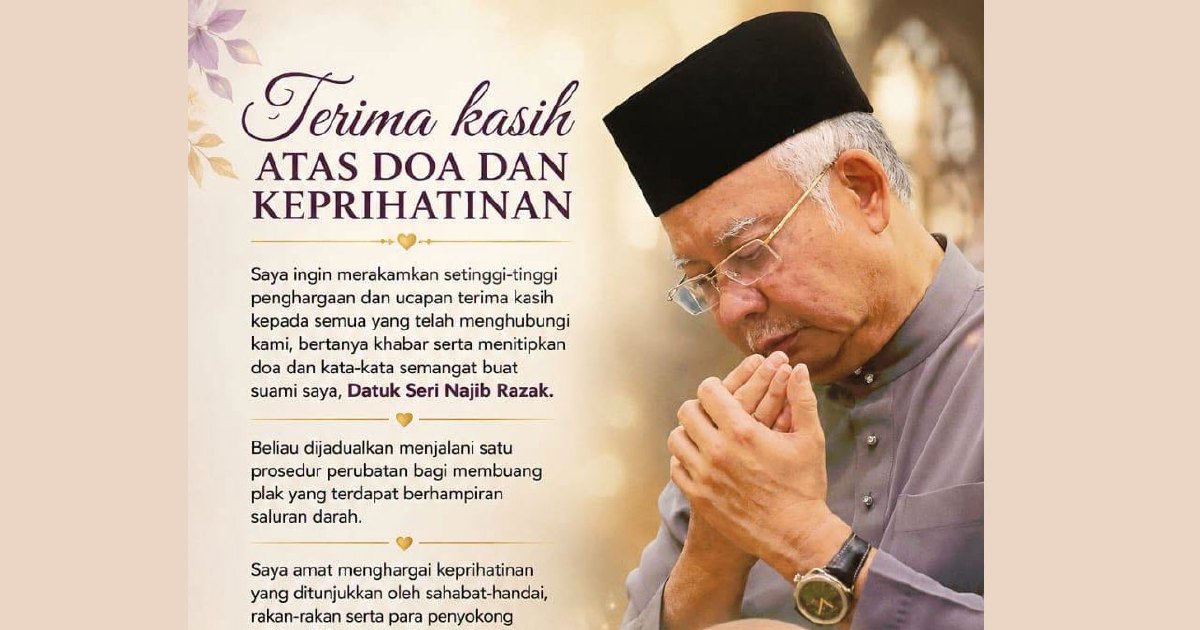
The wife of Malaysia's former prime minister has appealed to supporters and the general public to offer prayers as Datuk Seri Najib Razak prepares to undergo a cardiac procedure. Datin Seri Rosmah Mansor issued the request ahead of the scheduled treatment, which aims to address plaque buildup adjacent to a blood vessel. The former first lady thanked those who have already shown their support during this period, reflecting the significant public interest in the health of a figure who continues to maintain a prominent presence in Malaysian public discourse despite his political circumstances.
The procedure Najib is scheduled to undergo addresses a common cardiovascular concern involving arterial plaque accumulation, a condition that affects blood flow through key vessels. Such interventions typically involve either angioplasty or similar minimally invasive techniques designed to restore proper circulation. The fact that this treatment has been publicly disclosed suggests the former premier's medical team considered it important for public knowledge, possibly to manage expectations regarding his public appearances and engagements during the recovery period.
Najib's health becomes particularly noteworthy given his ongoing involvement in Malaysia's political narrative. Despite stepping down as prime minister in 2018 and facing various legal challenges in subsequent years, he has maintained an active public profile through social media and selective media appearances. Any significant health event affecting a former leader of his stature naturally draws attention from both his supporters and the broader Malaysian populace who remain engaged with his political journey.
Rosmah's public appeal for prayers represents a cultural norm in Malaysia, where religious observance and community support during medical crises form an important social fabric. The invocation of public prayers transcends simple well-wishes; it reflects deeply rooted values in Malaysian society where faith-based support is considered integral to healing and recovery. Her gratitude to existing supporters simultaneously acknowledges the network of individuals who have maintained their association with Najib's family through years of significant political and personal upheaval.
The timing of the disclosure surrounding Najib's medical procedure comes as Malaysia continues to navigate complex political dynamics. The former premier remains a significant figure in the country's political landscape, with his actions and movements continuing to generate considerable media coverage and public discussion. His health status therefore carries implications beyond purely personal or family concerns, potentially affecting political calculations and public perceptions surrounding his future role in Malaysian politics.
Cardiovascular procedures of this nature have become increasingly routine in modern medical practice, with high success rates and relatively short recovery periods for most patients. The advancement of minimally invasive techniques means that such interventions typically involve smaller incisions, reduced hospital stays, and faster return to normal activities compared to more traditional surgical approaches. Nevertheless, the recovery process still requires proper rest and lifestyle adjustments to ensure optimal outcomes and prevent recurrence of arterial blockages.
For Malaysian readers, the case of a prominent public figure undergoing such treatment also serves as a reminder of the importance of cardiovascular health monitoring and preventive care. Age-related arterial conditions affect many Malaysians, and the public disclosure of Najib's medical needs indirectly highlights the prevalence of such health concerns across all demographic groups. The treatment pathway he is pursuing represents standard contemporary medical practice available to those with access to quality healthcare facilities.
The broader family context surrounding Najib's medical procedure adds another dimension to public interest in this development. Rosmah has been a visible and vocal figure in her own right, frequently appearing in media statements and maintaining her own public communications. Her role as a supportive spouse during a health crisis resonates with many Malaysians who understand the importance of family support during medical challenges. The couple's relationship, scrutinised extensively during various phases of Najib's political career, continues to attract public attention as they navigate this latest development.
Looking forward, the success of Najib's procedure and his recovery trajectory will likely receive continued media attention, particularly given the interest surrounding his political movements and public statements. The extent to which he resumes his previous level of activity will be observed as an indicator of recovery progress and may influence his future public engagements and political involvement. For supporters and observers alike, this medical development represents a significant moment in the ongoing narrative that characterises Malaysia's contemporary political discourse and the lives of those who have occupied positions of highest national prominence.

