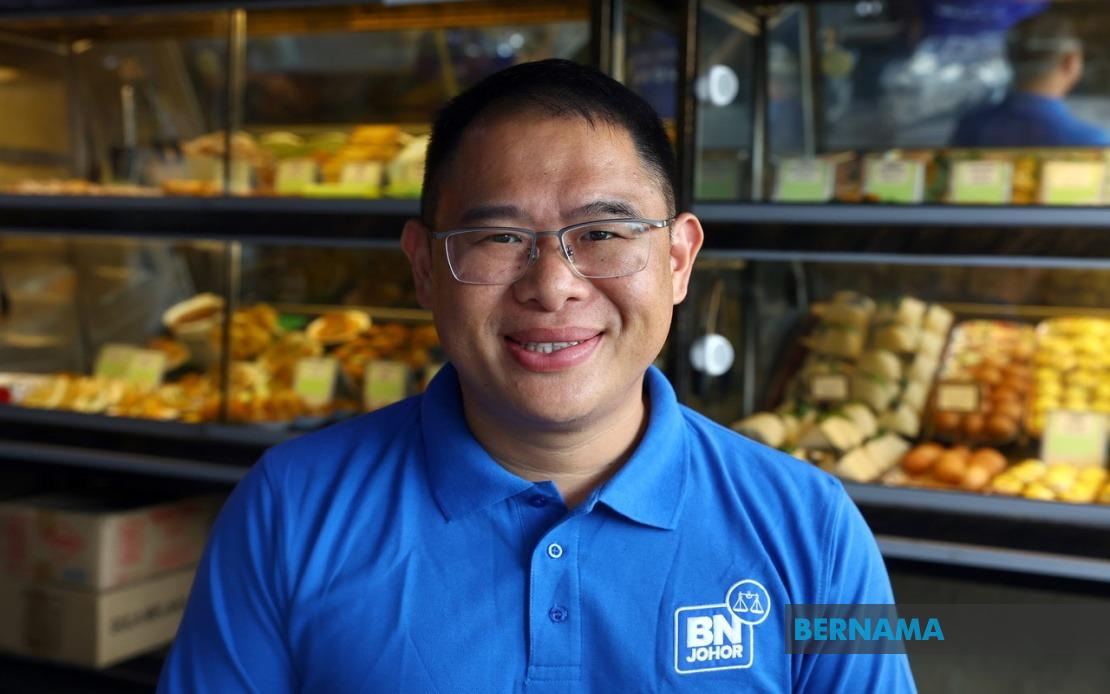
The transformation of a once-notorious potholed thoroughfare has become central to the political strategy of Yong Peng state assemblyman Ling Tian Soon, colloquially known as Ah Soon, as he prepares to defend his seat in the forthcoming Johor state election. What residents previously derided as 'Jalan Koyok'—a playful reference to its heavily patched and deteriorating surface—has undergone significant rehabilitation, emerging as the flagship infrastructure project of Ling's first term in office since his 2022 election.
The 42-year-old legislator, who previously served as the state's Health and Environment Committee chairman, framed his infrastructure-first approach as foundational to broader economic revitalisation. Speaking recently in Batu Pahat, Ling explained that upon assuming office, he identified long-neglected basic infrastructure as the primary impediment to local development. Over the subsequent three years, he channelled approximately RM23 million in development allocation towards rehabilitating the stretch connecting Ayer Hitam through to the Segamat boundary, demonstrating a commitment to capital expenditure on transportation networks.
This investment reflects a strategic understanding of economic dynamics familiar across Southeast Asia: road quality directly influences business location decisions and operational efficiency. Ling articulated this principle through a Chinese aphorism suggesting that quality infrastructure catalyses economic movement—a philosophy increasingly validated by emerging trends in Yong Peng's commercial landscape. The assemblyman's narrative positions infrastructure development not as symbolic gesture politics but as instrumental policy designed to overcome geographic disadvantage and attract investment.
The practical consequences of this strategy are already manifesting. Major logistics and courier enterprises have begun establishing operational bases in Yong Peng, a township situated roughly 100 kilometres south of Johor Bahru's commercial district. More significantly, a prominent e-commerce platform is advancing plans for its largest distribution facility in the area, promising employment generation for the district's youth demographic. These developments represent tangible validation of the infrastructure-investment hypothesis that anchors Ling's political positioning.
Yong Peng's geographic attributes substantially reinforce this economic logic. The township occupies a strategically central position within Johor, with accessibility to Port Tanjung Pelepas achievable within approximately one hour's travel. This proximity to Malaysia's premier international transhipment gateway presents considerable appeal to logistics operators and manufacturing enterprises seeking supply-chain optimisation. Ling has leveraged this geographic positioning as part of a broader narrative casting Yong Peng as an emerging industrial corridor, capitalising on land acquisition patterns that increasingly favour industrial development.
In articulating his renewed mandate, Ling has structured a three-pillar campaign platform emphasising infrastructure consolidation, expansion of social safety provisions, and economic stimulation through tourism sector activation. Beyond these macro-level policy commitments, his manifesto—scheduled for formal launch—incorporates targeted provisions addressing specific demographic segments: enhanced facilities for senior citizens, young families, and newly married couples. These initiatives reflect recognition that demographic retention constitutes a prerequisite for sustained economic growth, particularly given youth outmigration pressures affecting many smaller Malaysian towns.
Ling's political positioning heavily emphasises grassroots relationality and sustained community engagement. He has cultivated a public persona as 'YB Kedai Kopi'—a reference to his practice of frequenting coffee shops, food stalls, and mamak establishments on an almost daily basis to interact with constituents. This methodology, cultivated over sixteen years of involvement in the constituency, predates his 2022 assembly election and traces to his earlier work in parliamentary affairs under Ayer Hitam Member of Parliament and MCA president Datuk Seri Dr Wee Ka Siong. Such groundwork arguably establishes relational networks less transactional and more familial in character than conventional electoral relationships.
The assemblyman's confidence in retaining the Yong Peng seat, contested against Pakatan Harapan candidate Yong Hui Yi in a direct contest, rests substantially on this accumulated social capital combined with demonstrable infrastructure achievements. Ling explicitly frames the electoral outcome as a voter assessment of his performance record, positioning himself as a candidate whose four-year tenure has generated measurable development outcomes and sustained community presence. His rhetorical approach emphasises continuity and proven delivery rather than transformative promises, a strategic positioning appropriate for an incumbent confronting challenger dynamics.
For Malaysian political observers, the Yong Peng contest exemplifies broader competitive patterns within Johor state elections, where infrastructure delivery increasingly constitutes a central electoral vocabulary. The emphasis on road quality, logistical positioning, and industrial attraction reflects how governance discourse has shifted toward measurable economic outcomes and investment magnetism rather than purely ideological or patronage-based appeals. Ling's campaign articulates this shift, positioning himself as a development-oriented administrator capable of attracting private investment and generating employment opportunities—narratives likely to resonate across multiple electoral constituencies confronting economic stagnation.

