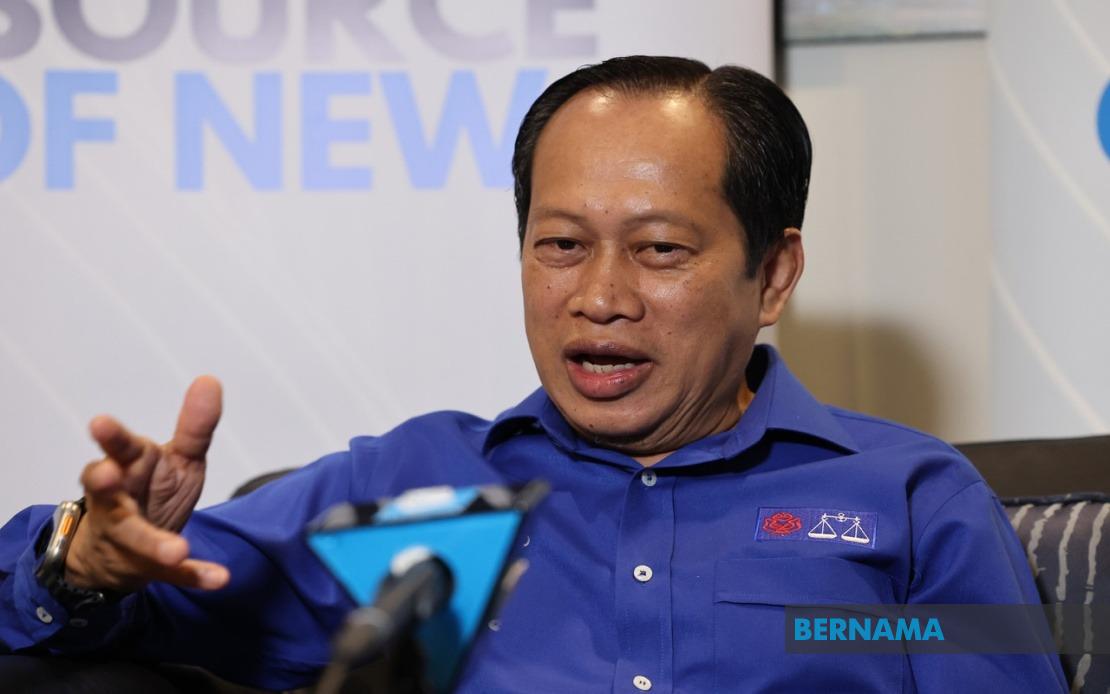
Effective road maintenance across Malaysia cannot succeed without the active participation and commitment of all stakeholders involved, according to Deputy Works Minister Datuk Seri Dr Ahmad Maslan, who has moved to accelerate repairs on damaged roads throughout the nation. Speaking in Johor Bahru on July 2, Ahmad highlighted that responsibility for keeping roads in serviceable condition extends beyond the Public Works Department and must encompass elected representatives at state and federal levels as well as municipal authorities working within their jurisdictions.
The Deputy Minister's remarks reflect a recognition that road deterioration—a persistent complaint among Malaysian motorists—requires a collaborative approach rather than relying on a single agency. Ahmad disclosed that he has issued directives to the Public Works Department (JKR) to prioritise the expedited repair of defective roads, signalling his intent to address the backlog of maintenance work that accumulates when coordination falters. His emphasis on speed reflects growing public frustration with potholes and uneven surfaces that damage vehicles and create safety hazards.
Ahmad articulated a clear division of responsibilities in the maintenance ecosystem, noting that when road defects are identified, state assemblypersons, Members of Parliament, and relevant municipal bodies must act decisively to initiate the correction process. This distribution of accountability is intended to prevent the common scenario where damaged roads persist because of unclear lines of responsibility or communication gaps between different tiers of government. By explicitly assigning roles to each stakeholder group, Ahmad seeks to eliminate the deflection and inaction that often characterise the response to road complaints.
To strengthen implementation capacity, Ahmad revealed that he has conducted site visits to all ten district JKR offices operating within Johor state, the nation's second-largest state by population. During these visits, he received comprehensive briefings on infrastructure development priorities and reiterated the importance of swift action whenever roads require maintenance or repair. These visits underscore a hands-on approach to oversight, suggesting that the Deputy Minister views regular engagement with operational staff as essential to maintaining momentum on road repairs.
His comments emerged in response to recent actions by Dr Maszlee Malik, the Pakatan Harapan candidate for the Puteri Wangsa state seat in Johor, who conducted a high-profile road inspection along Jalan Tebrau on June 29. Maszlee piloted a Perodua Myvi from Kampung Melayu Majidi to Ulu Tiram after receiving persistent complaints through social media channels concerning both the physical state of the road surface and chronic traffic congestion affecting commuters along this corridor. The candidate's decision to document road conditions himself and subsequently publicise his findings exemplifies how opposition figures are leveraging grassroots concerns to demonstrate engagement with constituent issues.
Maszlee's firsthand account painted a vivid picture of the user experience on Johor's roads, noting that his compact vehicle jolted repeatedly across multiple stretches due to surface irregularities and uneven asphalt, while peak-hour traffic added to the travel difficulties. Such anecdotal evidence from political figures carries weight because it translates abstract complaints into concrete, relatable experiences that resonate with voters who encounter similar conditions regularly. By positioning himself as someone willing to experience the same frustrations as ordinary commuters, Maszlee effectively highlights gaps in maintenance that the government has not adequately addressed.
Ahmad clarified the procedural pathway through which road maintenance allocations are processed and directed. Funding for the upkeep of federal roads, expressways, and bridge infrastructure flows through the State Economic Planning Unit (UPEN) and the state executive council, institutional bodies responsible for evaluating maintenance applications and determining priorities before conferring approval. This layered approval structure ensures that limited resources are concentrated on the most critical infrastructure needs, though it also introduces potential delays and bureaucratic friction that can slow response times to reported road problems.
The existence of multiple approval gateways highlights a structural challenge in Malaysian road maintenance: even when funds are available, the assessment and prioritisation process can extend timelines, leaving roads in poor condition longer than necessary. For commuters and small business operators whose livelihoods depend on road reliability, such delays translate into concrete costs through vehicle damage, lost productivity, and increased transport expenses. The tension between rational resource allocation and rapid response to deteriorating conditions remains unresolved in Ahmad's explanation.
The Deputy Minister's call for unified cooperation reflects an implicit acknowledgment that road maintenance in Malaysia has previously suffered from fragmented accountability and insufficient coordination between the various agencies nominally responsible for infrastructure upkeep. By publicly insisting that elected representatives at all levels must actively engage with maintenance issues rather than leaving everything to JKR, Ahmad is attempting to redistribute responsibility and increase pressure on local authorities to address complaints from their constituents. This reallocation of accountability aims to prevent situations where roads deteriorate while authorities debate whose responsibility they represent.
For Malaysian motorists and businesses reliant on road transport, Ahmad's statements represent both a commitment and a test case. The actual pace at which repairs proceed on Johor roads and other problem areas will determine whether the Deputy Minister's emphasis on coordination translates into meaningful improvements. Public expectations are already elevated by Maszlee's publicised road inspection and Ahmad's strong rhetoric, creating pressure to demonstrate rapid progress or risk accusations of empty promises. The coming months will reveal whether institutional coordination can overcome the inertia that has allowed Malaysian roads to deteriorate despite multiple layers of oversight and funding mechanisms.

