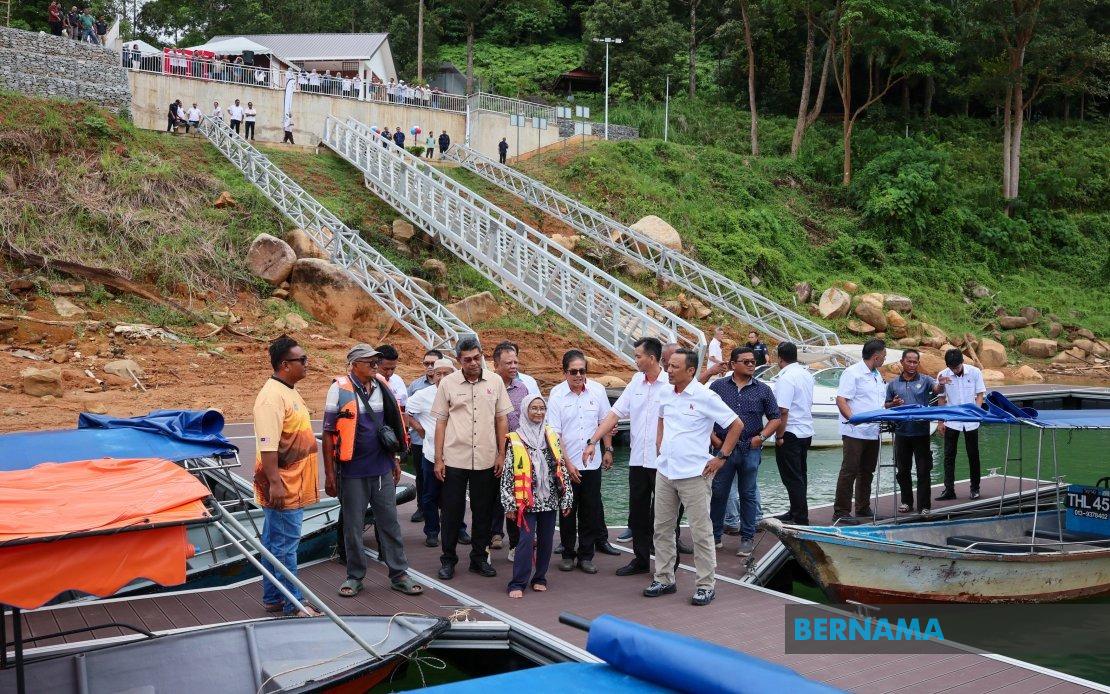
Tasik Kenyir, one of Southeast Asia's most distinctive man-made lake destinations, has taken a significant step towards modernisation with the completion of a RM8.7 million jetty development project that opened this July. The facility represents a substantial infrastructure investment designed to transform how visitors and operators experience the sprawling 26,000-hectare lake in Terengganu, marking a strategic shift towards professionalising the region's tourism operations.
The Terengganu Tengah Development Authority (KETENGAH) oversaw the two-year project, which commenced in 2023 under the Third Rolling Plan of Malaysia's 11th Malaysia Plan (RMK-11). According to KETENGAH chairman Datuk Rozi Mamat, the initiative addresses longstanding operational challenges that had hindered the destination's ability to compete on an international platform. The unorganised berthing arrangements previously scattered around Pengkalan Gawi had created inefficiencies that contradicted the lake's natural appeal and pristine positioning.
The completed jetty complex accommodates more than 80 houseboats and speedboats within a carefully designed infrastructure framework that prioritises both visitor experience and operational functionality. Beyond the primary berthing facilities, the project incorporates comprehensive amenities that elevate the entire precinct. A 600-metre pedestrian walkway facilitates safe circulation, whilst 86 parking bays address the chronic congestion that previously characterized visitor arrival points. The facility includes public toilets, electrical substations, a dedicated guard post for security, a pump house for water management, and waste disposal infrastructure that supports environmentally responsible operations.
For houseboat and speedboat operators, the new jetty represents a transformative operational environment. Modern berthing stations feature integrated electricity and water supply systems, eliminating the ad-hoc arrangements that characterised earlier tourism seasons. These enhancements directly translate into improved service quality for visitors, who can now access contemporary hospitality standards previously unavailable at the destination. The investment acknowledges that competitive ecotourism requires infrastructure parity with international counterparts.
Datuk Rozi emphasised that Tasik Kenyir possesses exceptional ecotourism credentials rooted in its natural characteristics and biodiversity. However, these inherent advantages had been undermined by inadequate physical infrastructure and organisational structures. The new jetty addresses this critical gap, providing the modern, secure, and strategically planned facilities necessary for transforming visitor expectations and satisfaction metrics. The chairman's confidence that the facility will gradually resolve berthing disorder reflects realistic expectations about systemic change timelines in tourism operations.
The project sits within a broader developmental context for the Terengganu Tengah region, which encompasses three districts: Dungun, Hulu Terengganu, and Kemaman. KETENGAH received RM48.36 million in development allocations for the current year, distributed across 28 programmes and projects spanning these jurisdictions. This financial commitment demonstrates sustained governmental focus on infrastructure development within the state's interior and tourism-dependent areas.
Tasik Kenyir itself commands particular attention within KETENGAH's portfolio, with six simultaneous projects reshaping the destination's tourism infrastructure. Beyond the jetty development, initiatives include upgrading works at the Sungai Petang Kelah Sanctuary Complex, which protects the iconic golden mahseer fish species, repairs to slope infrastructure at various scenic viewpoints, comprehensive redevelopment of tourism facilities at Pulau Petang, construction of a public mini park at Gawi Point, and renovation of the Herbal Park facilities. This multipronged approach reflects recognition that competitive destination development requires coordinated investment across diverse attractions and operational nodes.
For Malaysian tourism stakeholders and regional policymakers, the Tasik Kenyir jetty represents a model for upgrading secondary destinations competing within Asia's intensely competitive tourism market. The initiative demonstrates that strategic infrastructure investment, when targeted at operational bottlenecks, can enhance destination competitiveness without requiring wholesale environmental transformation. The jetty's capacity to organise and systematise existing activities rather than expanding visitor volume reflects sustainable tourism principles increasingly important to international markets.
The completion also carries implications for Terengganu's broader economic diversification strategy. As a state historically dependent on petroleum and primary industries, expanding and professionalising nature-based tourism offers economic alternatives that engage local communities and provide sustainable employment opportunities. The jetty project directly employs operators and creates indirect employment in hospitality, catering, and transportation sectors that depend on visitor flows.
Looking forward, the facility's success will depend substantially on complementary investments in marketing and operator development. Modern infrastructure alone cannot guarantee increased visitation without effective destination promotion in key source markets throughout Malaysia, Singapore, and increasingly, China and India. KETENGAH and state tourism authorities must now shift focus toward ensuring the jetty's operational excellence translates into enhanced visitor volumes and extended length-of-stay metrics that maximise economic benefits.
The Tasik Kenyir jetty exemplifies how strategic capital allocation toward operational infrastructure can unlock latent tourism potential in regional destinations. As Malaysia positions itself within increasingly competitive regional tourism hierarchies, projects addressing fundamental operational constraints represent intelligent investments with multiplier effects across local economies. The initiative's completion marks not an endpoint but rather the commencement of a new phase in Tasik Kenyir's evolution toward becoming a world-class ecotourism destination.

