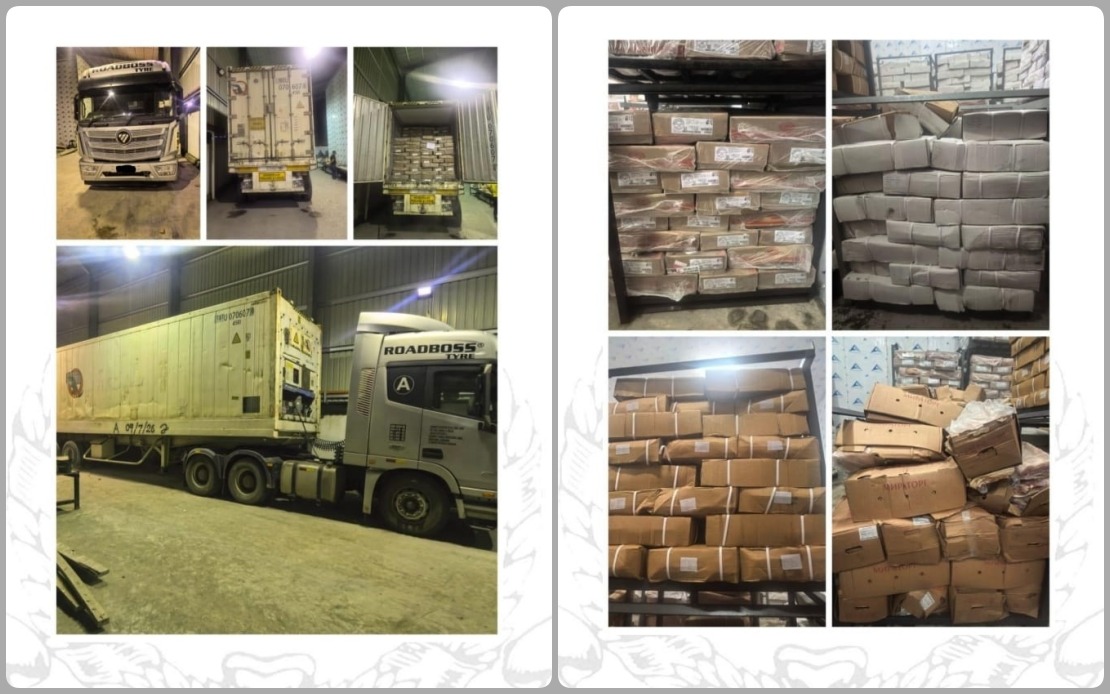
Police have arrested a 26-year-old man and confiscated RM6.19 million in frozen pork products during a major enforcement operation at a warehouse in Miri, Sarawak, after discovering the merchandise had been imported without the required valid permits. The operation, designated Op Taring Chiller, took place on the evening of July 9, with the suspect apprehended at 8 pm. According to Datuk Seri Mohd Yusri Hassan Basri, director of the Internal Security and Public Order Department (JKDNKA), the raid represents part of a broader police strategy to combat the unauthorised storage and distribution of frozen foods with questionable or unverified halal status across the country.
The scale of the seizure underscores the significance of the warehouse operation. Officers discovered approximately 30,000 kilogrammes of frozen cooked pork large intestines stored at the premises, alongside 18,000 kilogrammes of pork loin distributed across 15 pallets. Additional findings included 750 kilogrammes of pork occupying a single pallet, numerous pallets containing bone-in pork bellies with rind intact, and frozen pork shoulder in substantial quantities. The sheer volume of merchandise suggests an operation geared towards large-scale distribution rather than personal consumption, raising questions about the intended supply chain and which retailers or food service establishments might have been the ultimate recipients.
The enforcement action involved coordination between multiple authorities, reflecting a multi-agency approach to food security and border control. The Wildlife Crime Bureau and Special Investigation Intelligence unit (WCB/PSK) led the operation, supported by personnel from the Miri district police headquarters and the Miri Division of the Sarawak Veterinary Services Department. This collaborative framework demonstrates how Malaysian authorities have structured their response to smuggling and illegal importation challenges, particularly in Sarawak where porous borders and the state's geographical characteristics present ongoing enforcement difficulties.
The legal framework applied to the case invokes the Veterinary Public Health Ordinance 1999, with investigations proceeding under Sections 9(1) and 9(3). Beyond the arrest, authorities issued a RM25,000 compound notice against the suspect under the same ordinance, establishing both criminal and administrative consequences. The choice of charge reflects a regulatory emphasis on veterinary compliance and food safety standards, areas where Malaysia maintains strict protocols to protect public health and maintain halal certification integrity—a matter of particular concern in a Muslim-majority nation where unauthorised pork products represent both a regulatory violation and a potential breach of religious standards.
This seizure forms part of a demonstrably intensive enforcement campaign across the country. Between January 1 and July 10, the WCB/PSK unit executed 201 raids nationwide, resulting in 375 individual arrests and cumulative seizures valued at RM264.86 million. The portfolio of violations addressed through these operations spans smuggling of non-duty-paid goods, unauthorised leakage of controlled and subsidised items, frozen food contraband, wildlife trafficking, and electronic waste. The breadth of this enforcement spectrum illustrates how Malaysian law enforcement increasingly addresses smuggling not as a single-vector problem but as part of wider organised criminal enterprise.
For Malaysian consumers and retailers, the implications of such seizures deserve careful consideration. The confiscation of such large quantities of undocumented frozen pork raises questions about how these products entered the supply chain initially and whether smaller, undetected shipments may have already reached market. The enforcement operation also highlights the vulnerabilities in Malaysia's import verification systems, particularly in Sarawak where geographic isolation and less densely monitored borders create opportunities for circumventing documentation requirements. Consumers purchasing frozen pork products should verify that vendors maintain proper import documentation and halal certification, standards increasingly important as smuggling operations become more sophisticated.
The significance of halal certification in this context extends beyond religious observance to encompass food safety and traceability. Products imported without valid permits lack the oversight mechanisms designed to verify storage conditions, transportation hygiene, and processing standards. The Miri warehouse raid revealed products including cooked items and various cuts stored together without apparent segregation, raising food safety concerns independent of halal considerations. For businesses in the hospitality and food service sector, the raid serves as a stark reminder of the reputational and legal risks associated with sourcing from unverified suppliers, however cost-competitive their offerings might appear.
From a regional perspective, the Miri operation reflects broader Southeast Asian challenges with transnational smuggling networks. Sarawak's position on the border with Indonesia and its maritime access create natural conduits for illicit trade. The scale of confiscation—RM6.19 million—suggests organised operations with capital resources and distribution networks spanning multiple states. Malaysian authorities' success in detecting and interdicting this shipment likely represents only a fraction of attempted smuggling operations, as criminal enterprises continuously adapt methods and routes to evade detection. The intensity of enforcement, with 201 raids in a six-month period, indicates that authorities recognise smuggling as a persistent challenge requiring sustained commitment.
Looking forward, the police statement emphasising continued efforts to intensify intelligence gathering and monitoring suggests recognition that enforcement alone cannot solve the smuggling problem. Intelligence development—identifying networks, funding sources, and distribution connections—becomes increasingly crucial for disrupting operations at their source. The coordination demonstrated in the Miri raid, involving federal and state agencies, suggests institutional learning and better integration of enforcement resources. For Malaysia's food security and regulatory integrity, sustained pressure on illegal importation networks remains essential, both to protect domestic producers and to ensure that consumers can trust the safety and compliance standards of products they purchase.

