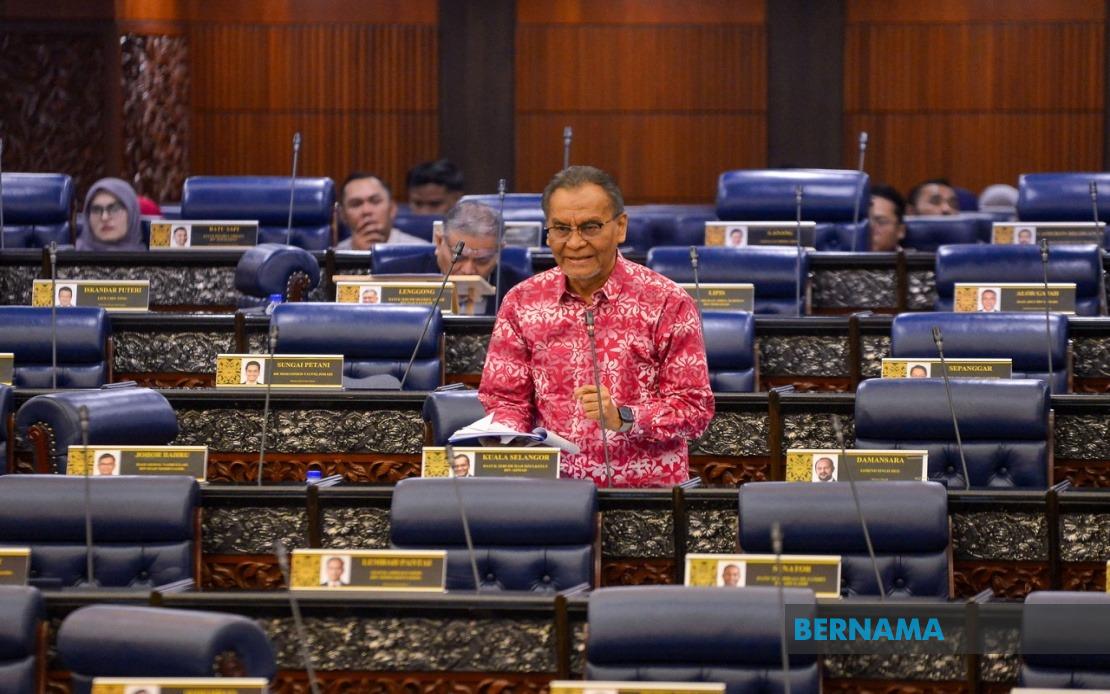
Health Minister Datuk Seri Dr Dzulkefly Ahmad has moved to calm concerns about the impact of a RM500 million expenditure restriction imposed on the Ministry of Health, characterising the measure as a routine technical adjustment that poses no threat to the delivery of healthcare services across the nation. Speaking during parliamentary question-and-answer proceedings on July 2, Dzulkefly clarified that the restriction warrant, issued by the Finance Ministry on June 5, stems from surplus allocations earmarked for vacant positions that cannot be filled, allowing the government to reallocate funds without undermining the ministry's operational capacity.
The minister's statement addresses mounting apprehension among lawmakers and the public about whether fiscal constraints could compromise healthcare delivery, particularly in rural and underserved regions. Dzulkefly emphasised that the RM500 million reduction—representing approximately 1.07 per cent of the MOH's total annual allocation of nearly RM46.52 billion—does not cut into funds designated for actual operations, infrastructure development, staff compensation, training initiatives, or the procurement of medical equipment. Instead, the adjustment reflects a strategic reallocation achieved through prudent financial planning that prioritises essential service continuity.
The core of Dzulkefly's explanation rests on a fundamental constraint facing the health service: the ministry has been approved for 18,641 positions by the Public Service Department but struggles to recruit sufficient qualified personnel to fill these roles. Rather than retaining unused budget allocations intended for unfilled posts, the government has redirected those surplus funds. This approach reflects a pragmatic response to persistent workforce shortages that plague the Malaysian health system, particularly in specialist roles and rural postings where recruitment and retention remain challenging despite ongoing efforts.
During the parliamentary session, Dzulkefly fielded inquiries from Datuk Shahelmey Yahya of Putatan and Abdul Latiff Abdul Rahman of Kuala Krai, both expressing concerns that the fiscal adjustment could degrade services at public hospitals, especially those operating in remote communities. The minister countered these apprehensions directly, asserting that hospital operations at all levels and ongoing health development projects will proceed without interruption. This reassurance carries particular significance for rural Malaysia, where government health facilities often serve as the primary—and sometimes only—source of accessible medical care for millions of citizens.
The situation underscores a persistent challenge within Malaysia's public health infrastructure: the tension between budgetary limitations and workforce capacity. While the MOH commands substantial annual funding, the inability to deploy the full complement of approved positions reflects systemic recruitment difficulties and the competitive market for healthcare professionals. Many qualified doctors, nurses, and specialists either migrate to private practice or seek opportunities abroad, creating chronic vacancies that, paradoxically, generate surplus budget allocations. Dzulkefly's explanation reframes this constraint as an opportunity for fiscal discipline rather than a capitulation to resource scarcity.
Beyond the immediate budget discussion, Dzulkefly outlined broader initiatives aimed at addressing cost pressures within Malaysia's healthcare ecosystem. The Ministry of Health has announced plans to introduce the Base Medical and Health Insurance/Takaful (MHIT), a basic health protection scheme designed to make private healthcare more accessible and affordable. This initiative, developed through the Joint Committee on Private Healthcare Costs, will commence with a pilot phase at selected hospitals during July 2024, preceding a nationwide rollout scheduled for January 2027. The programme responds to escalating private healthcare premiums and out-of-pocket expenses that increasingly burden Malaysian families seeking treatment beyond the public system.
Complementing the insurance initiative, the government is implementing a Diagnosis Related Groups payment system intended to standardise hospital billing across public, private, university, and military institutions nationwide. This benchmarking approach aims to create transparency in healthcare pricing and reduce variations in charges for identical procedures across different provider types. Such standardisation could significantly impact middle and lower-income Malaysians who currently navigate a fragmented landscape where identical treatments carry vastly different price tags depending on institutional ownership and location. The DRG system represents an attempt to inject market discipline and consumer protection into a healthcare market where information asymmetry traditionally favours providers over patients.
The RM500 million adjustment must be contextualised within broader fiscal pressures confronting the Malaysian government. Following inflation and elevated interest rates, federal budgets have faced competing demands across defence, infrastructure, education, and social welfare. The MOH's substantial allocation reflects healthcare's recognised importance, yet even within this envelope, efficiency gains and reallocation become necessary when spending intentions exceed operational reality. Dzulkefly's framing suggests that the Finance Ministry's restriction warrant reflects not policy retrenchment but rather a correction mechanism ensuring allocated funds align with actual deployment capacity.
For Southeast Asian observers, Malaysia's approach to managing health budget constraints offers instructive contrasts to neighbouring countries. Unlike some regional peers that have experienced more dramatic cuts to healthcare spending during fiscal crises, Malaysia's adjustment appears calibrated to preserve service delivery while acknowledging workforce absorption limits. The simultaneous rollout of insurance and payment standardisation schemes suggests a government seeking to address healthcare access and affordability through structural reform rather than spending cuts alone, a strategy that may prove more sustainable than austerity measures that directly reduce service provision.
The parliamentary clarification also reflects evolving political dynamics around healthcare policy. With multiple parliamentary factions expressing concern about budget adjustments—spanning Barisan Nasional and Perikatan Nasional members—health issues command cross-party attention. This coalition of concern may incentivise the government to demonstrate concrete progress on accessibility and affordability initiatives, particularly the MHIT rollout and DRG implementation. Success with these reforms could validate the government's assertion that technical budget adjustments need not compromise service quality, while failure could fuel renewed criticism about prioritising fiscal consolidation over healthcare investment.
Looking forward, the effectiveness of Dzulkefly's assurances will be measured through patient experience metrics, healthcare worker morale, facility maintenance standards, and wait times across public hospitals and clinics. Rural health facilities warrant particular monitoring, given historical disparities in resource availability between urban and remote areas. Should the RM500 million reduction prove entirely theoretical—truly avoiding any operational impact—the episode demonstrates sophisticated budget management. Should problems emerge in subsequent months, critics will point to the adjustment as the culprit, making the coming months crucial for validating the minister's technical adjustment characterisation.

