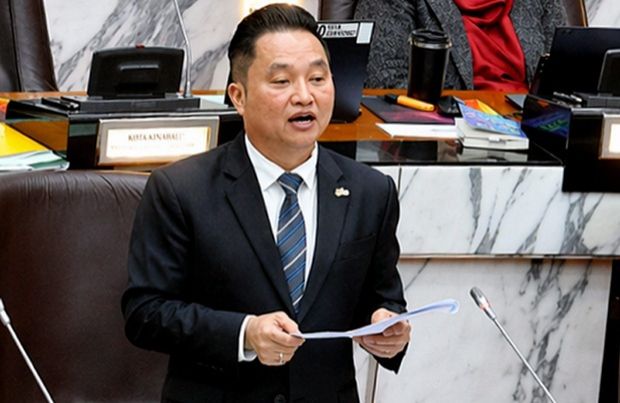
Petaling Jaya is set to gain a new recreation park after Selangor's local government and tourism committee greenlit a RM400,000 development project for an underutilised open space along Jalan PJS1/30 in the Taman Medan area. Datuk Ng Suee Lim, the committee chairman, disclosed during the state assembly sitting in Shah Alam that construction is anticipated to commence next year, contingent upon the municipal council's budget allocation and spending priorities.
Beyond simply converting vacant land into a public amenity, the initiative is designed to address longstanding safety and usability concerns that have plagued the site. Officials envision the space evolving into a welcoming neighbourhood destination where residents can gather, exercise, and connect with the natural environment. The transformation aligns with broader municipal objectives to enhance urban livability and foster community engagement through well-designed public infrastructure.
The park development carries significance for sustainability goals embraced by both the state and local authorities. Ng emphasised that the project will contribute to landscape enhancement, environmental quality, and the city's transition towards low-carbon development—themes that have gained prominence across Malaysian urban planning discourse as municipalities grapple with rapid urbanisation and climate considerations.
This initiative emerged from a comprehensive strategic framework. Petaling Jaya City Council developed the Damansara Damai People's Park Landscape Masterplan to operationalise the aspirations contained within the Petaling Jaya Strategic Plan 2030. The masterplan represents systematic thinking about how public spaces should be distributed, designed, and managed across the municipality over the coming decade. Rather than treating park development as ad-hoc projects, planners have adopted an integrated approach that considers ecosystem services, community needs, and environmental conservation together.
According to the masterplan, five distinct urban parks will be progressively established across Petaling Jaya, each with specialised functions and design elements. The Taman Medan project is one component within this larger portfolio. Priority considerations for all parks include recreational value, environmental protection, biodiversity support, active community participation, and alignment with low-carbon city development principles. This multi-faceted approach reflects contemporary urban planning best practices that recognise parks as multifunctional infrastructure serving ecological, social, and economic purposes simultaneously.
The Taman Damai Belantara initiative, designated as Urban Park 3, exemplifies the educational orientation of certain facilities within the masterplan. Scheduled to launch development next year in successive phases, this park will emphasise nature-based learning through features including urban farming areas, an amphitheatre for community events and outdoor programmes, and an information gallery dedicated to environmental education. Such facilities position parks as extensions of formal and informal educational infrastructure, particularly valuable for urban residents with limited exposure to agricultural and ecological systems.
Simultaneously, Taman Damai Setia—classified as Urban Park 1—is already undergoing enhancement works initiated this year, with continuation anticipated through phases in the following year. The upgrades encompass family-oriented recreational zones, multipurpose facilities accommodating various community activities, bioswale infrastructure for sustainable stormwater management, composting facilities promoting circular economy principles, and commercial stall sites supporting local livelihoods. This combination of recreational, environmental, and economic functions demonstrates sophisticated municipal thinking about park design.
A particularly ambitious component involves transforming sections of the Sungai Klang riverbank into a linear park network. Drawing from the Petaling Jaya Landscape Masterplan, authorities plan to convert portions of the river reserve zones around Sungai Klang and Sungai Penchala into continuous green corridors linking recreation spaces with surrounding commercial and residential precincts. Infrastructure investments will include pedestrian walkways, cycling paths, and connectivity features that integrate riverbank spaces into the broader urban fabric rather than leaving them isolated or neglected.
This riverbank activation strategy addresses a common urban planning challenge across Southeast Asia: underutilised waterfront reserves that could serve public benefit. By creating accessible, well-maintained green corridors along watercourses, municipalities can simultaneously improve public health outcomes through increased physical activity opportunities, enhance ecological health by protecting riparian vegetation, and generate social benefits through improved community gathering spaces. The Petaling Jaya initiative suggests recognition of these multifaceted advantages.
Implementation timelines remain flexible, with Ng acknowledging that project realisation depends upon MBPJ's budgetary capacity and resource allocation priorities. This pragmatic acknowledgement reflects municipal governance realities; while long-term strategic vision provides direction, day-to-day implementation must navigate competing demands on limited funds. For residents and community observers, this means park development will likely proceed gradually rather than comprehensively, with completion sequences determined by available resources and political will.
For the broader Selangor region, these Petaling Jaya initiatives represent a municipal commitment to green infrastructure investment during a period when such projects face scrutiny regarding cost-effectiveness. By embedding park development within comprehensive masterplans rather than pursuing isolated projects, authorities demonstrate systematic approaches that should yield more cohesive public realm improvements. The emphasis on biodiversity, community engagement, and low-carbon development principles also reflects evolving governance priorities increasingly common across Malaysian cities attempting to balance urbanisation pressures with livability and sustainability concerns.

