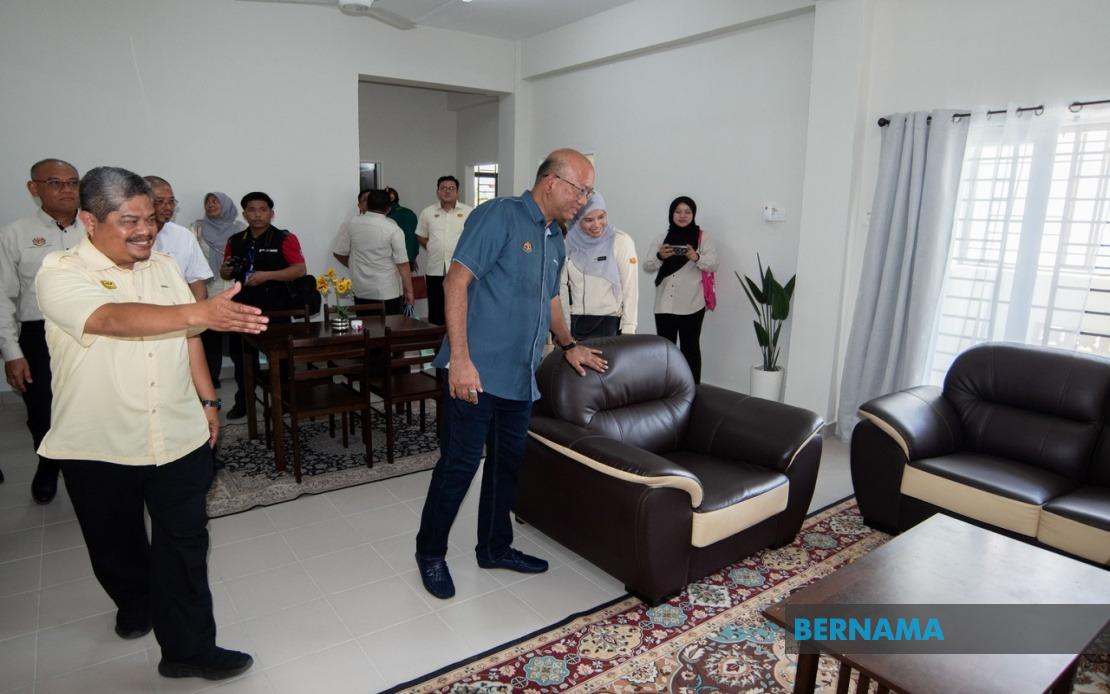
A RM25.8 million residential development at ADTEC Labuan has reached completion, with authorities formally handing over the facility to the Industrial Training Institute on schedule despite the inherent complexities of constructing on the island. The Labuan Public Works Department (JKR) presented the keys to the newly constructed staff quarters to ADTEC Labuan's leadership on July 14, marking a significant infrastructure achievement for the federal territory's human capital development agenda.
The project represents a substantial investment in accommodation infrastructure for the campus, which serves as a regional hub for vocational and technical education across eastern Malaysia. The development comprises two four-storey residential blocks housing 32 units in total, designed to accommodate faculty and staff members requiring on-campus living arrangements. Beyond the residential structures themselves, the development includes complementary facilities such as recreational fields and playgrounds, reflecting a comprehensive approach to campus living that extends beyond basic accommodation.
Construction on an island location typically introduces logistical complications absent from mainland projects. Materials must be transported across water, weather conditions can impose unpredictable delays, and workforce coordination becomes more challenging when personnel cannot easily commute. Despite these environmental and geographical constraints, JKR director Mohd Faizul Mohd Ali Hanapiah emphasised that the project adhered strictly to its original timeline while maintaining compliance with all specified technical standards and safety protocols. The achievement underscores the department's capacity to manage complex infrastructure delivery in Malaysia's more remote jurisdictions.
Quality assurance formed a cornerstone of the project's execution strategy. JKR teams maintained continuous oversight throughout the construction period to verify compliance with design specifications, building codes, and occupational safety requirements. The project accomplished what officials termed a "three-in-one achievement"—the simultaneous submission of the Certificate of Practical Completion, as-built drawings, and SOFA (Scope of Facilities Agreement) documentation. This coordinated documentation handover streamlines the transition to operational status and demonstrates meticulous project management practices.
Safety performance emerges as a particularly noteworthy accomplishment. The entire construction period recorded zero accidents and zero lost-time injuries among workers, a challenging benchmark to achieve in any construction environment, let alone on an island where emergency response capabilities may be constrained. This safety record suggests robust implementation of occupational health and safety protocols and effective worker training. The project also achieved effective management of variation orders—the changes to original specifications that frequently inflate costs and extend timelines on major construction works.
Mohd Faizul highlighted that the new quarters provide modern, climate-controlled accommodation within a safe environment, addressing fundamental resident needs whilst creating an organised living ecosystem at the campus. For ADTEC Labuan, which positions itself as a centre of excellence for technical skills development, quality residential facilities serve as a competitive advantage in attracting and retaining qualified instructors and support personnel. The facility's design reflects contemporary standards for institutional housing, moving away from utilitarian approaches toward accommodation that supports resident wellbeing and morale.
The implications for ADTEC Labuan's operational capacity extend beyond housing supply. As Malaysia intensifies its focus on technical and vocational education as a pathway for workforce development, campuses must offer comprehensive facilities that support learning outcomes. Comfortable, modern accommodation facilities contribute indirectly to educational effectiveness by reducing stress factors and creating an environment conducive to professional development. The Human Resources Ministry's presence at the handover ceremony, represented by secretary-general Datuk Azman Mohd Yusof, signals the federal government's recognition of this project's alignment with national human capital priorities.
Labuan's position as a federal territory with dedicated development resources places it in an advantageous position for infrastructure investment. However, the federal territory also functions as a financial centre and educational hub serving wider East Malaysian constituencies. The staff quarters project therefore carries significance beyond Labuan's immediate boundaries, supporting the territorial government's broader objective of establishing institutional capacity that serves regional populations. For students and professionals from Sabah and Sarawak, reliable accommodation options at quality training facilities reduce barriers to accessing technical education previously concentrated on peninsula Malaysia.
The project achievements—on-time delivery, zero safety incidents, effective cost control through variation order management, and comprehensive documentation—provide a benchmark for future government construction initiatives in Malaysia's island and remote jurisdictions. As the country pursues broader infrastructure goals, replicating this performance standard across comparable projects could substantially improve the return on investment and delivery reliability that taxpayers expect from public spending. The JKR's demonstrated capacity to manage complexity suggests confidence in the department's ability to oversee the diverse infrastructure portfolio that Malaysia's geographic and economic diversity demands.
Moving forward, the completed quarters will serve as a permanent asset supporting ADTEC Labuan's institutional mission. The facility creation reflects a long-term commitment to positioning Labuan as a destination for technical skills acquisition, potentially attracting higher enrolments and enabling the campus to expand its programme offerings. For Malaysian policymakers observing patterns in technical education delivery, this project demonstrates how thoughtfully designed residential infrastructure can become a strategic asset in competing for students and faculty in an increasingly competitive regional education market.

