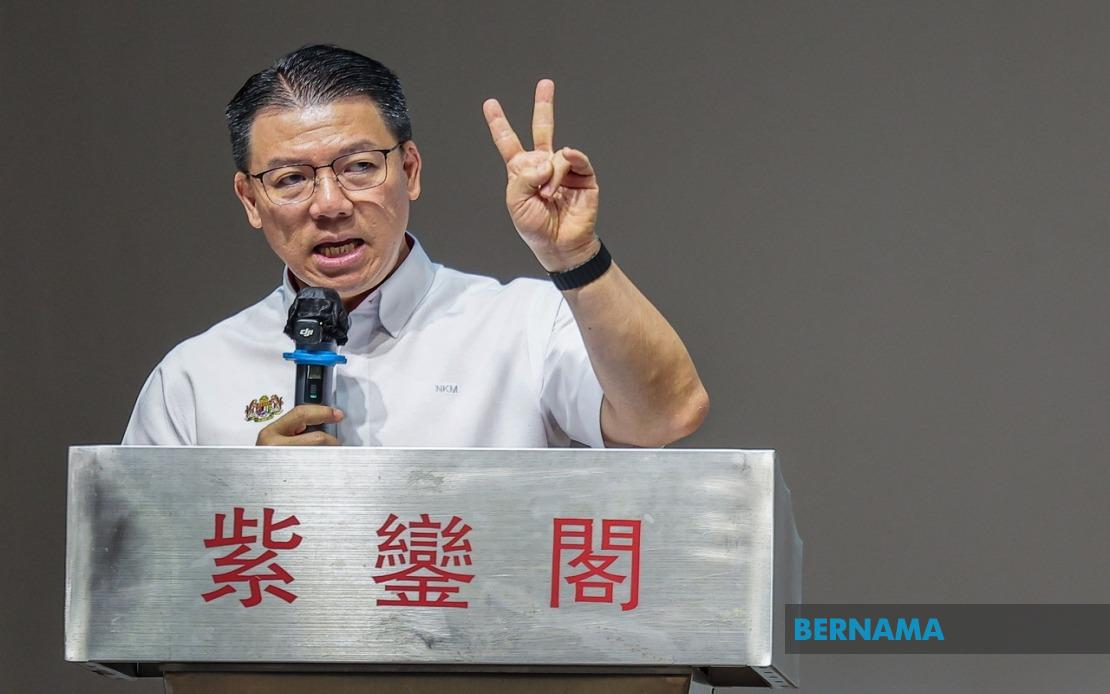
The Ministry of Housing and Local Government has committed RM200 million to a four-year initiative supporting the upkeep of non-Muslim religious facilities across Malaysia, underscoring the government's focus on inclusive national development. Speaking in Kluang on June 26, Housing Minister Nga Kor Ming outlined how this programme reflects a deliberate policy to ensure that religious communities regardless of faith receive equitable support for their institutions. The initiative encompasses churches, gurdwaras, Hindu temples, Buddhist temples and other faith-based community halls, representing a tangible expression of how administrative resources are being distributed across Malaysia's diverse religious landscape.
Since the initiative's launch in 2023, the e-RIBI System has logged 1,478 applications totalling more than RM279 million, a figure that substantially exceeds the original budget allocation. This gap between demand and available funds illustrates the genuine infrastructure needs within religious minority communities across the country. The volume of applications demonstrates that maintenance backlogs at these institutions represent a real challenge, with many facilities requiring renovation, structural repairs, safety upgrades and modernisation work. The scale of unmet demand raises questions about whether the current allocation adequately addresses the true scope of facility maintenance requirements in this sector.
Nga framed the initiative within the government's broader MADANI philosophy, emphasising that national prosperity depends on fostering unity across ethnic and religious lines rather than allowing divisions to deepen. He articulated a vision wherein infrastructure investment becomes a tool for social cohesion, arguing that when communities witness tangible government support for their religious institutions, confidence in national institutions strengthens and social stability improves. This framing reflects an understanding that perceived inequitable treatment of minority communities can erode social trust and create resentment that undermines economic confidence and foreign investment.
Johor has emerged as a particular focus, receiving RM3.14 million in this tranche to support 27 religious facilities across the state. Since the programme's inception through May 2026, the state has accessed RM18.75 million benefiting 154 institutions. These figures place Johor among the higher recipients of RIBI funding, reflecting both the state's religious diversity and the concentration of maintenance needs in this region. The allocation reflects a conscious decision to distribute resources beyond Kuala Lumpur and the Klang Valley, addressing facilities in peninsular Malaysia's eastern and southern regions where such infrastructure support may be less readily available through other channels.
The maintenance initiative covers multiple categories of work: renovations to improve building standards and accessibility, routine maintenance to extend asset lifespan, new construction projects to expand capacity at growing communities, and emergency repairs addressing safety concerns. This comprehensive scope recognises that religious institutions serve not merely spiritual functions but operate as vital community hubs hosting educational programmes, social welfare activities and cultural events. When such buildings deteriorate or become unsafe, the impact extends beyond the religious community to affect broader social infrastructure in residential areas.
Transparency and accountability mechanisms have been embedded into programme implementation, with the ministry committing to professional monitoring of all approved projects. This emphasis reflects learning from previous development initiatives where implementation quality and adherence to timelines have sometimes faltered. By publicly committing to transparent oversight, the ministry signals awareness that credibility of such programmes depends on visible, consistent delivery rather than merely announcing allocations.
The political significance of this initiative deserves careful examination. Religious harmony represents both a genuine national asset and a politically sensitive terrain in Malaysia. By directing substantial infrastructure funding toward non-Muslim religious facilities, the government demonstrates willingness to invest state resources in communities beyond the Muslim majority. This carries symbolic weight in a country where historical narratives sometimes emphasise prioritisation of Bumiputera and Muslim interests. The initiative thus serves multiple functions simultaneously: addressing real infrastructure needs, signalling inclusive governance, and building political legitimacy among minority communities.
For Malaysian investors and business communities, the programme indirectly supports social stability crucial for economic performance. Religious tensions, when they arise, can disrupt commerce, deter tourism, and complicate international business relationships. Infrastructure support that prevents grievance accumulation among minority communities reduces these systemic risks. The government's calculation appears to rest on the premise that RM200 million in maintenance funding generates broader returns through enhanced social cohesion and reduced political friction.
The gap between the RM279 million in applications against the RM200 million allocated budget suggests that successor phases may be necessary to meet demand. Policy planners must determine whether this represents the appropriate level of funding commitment, whether the application criteria are sufficiently clear, or whether additional institutional capacity exists to absorb higher allocations. These questions will shape how effectively the government can maintain momentum on its inclusivity agenda.
Regional implications also merit consideration. Southeast Asian governments increasingly face expectations to demonstrate inclusive governance that accommodates religious diversity while maintaining social order. Malaysia's RIBI initiative may serve as a regional reference point for how larger Muslim-majority nations balance religious majority interests with minority community needs through budget allocation and infrastructure policy. The programme's success or challenges could influence how other regional governments approach similar diversity management questions.
Looking forward, the programme's impact will be measured not merely by funds dispersed but by tangible improvements in facility conditions, community satisfaction, and broader social outcomes. Monitoring whether maintenance improvements translate into enhanced community engagement with national institutions, and whether religious leaders perceive equitable treatment, will determine whether this initiative achieves its underlying governance objectives beyond the administrative delivery of capital works.

