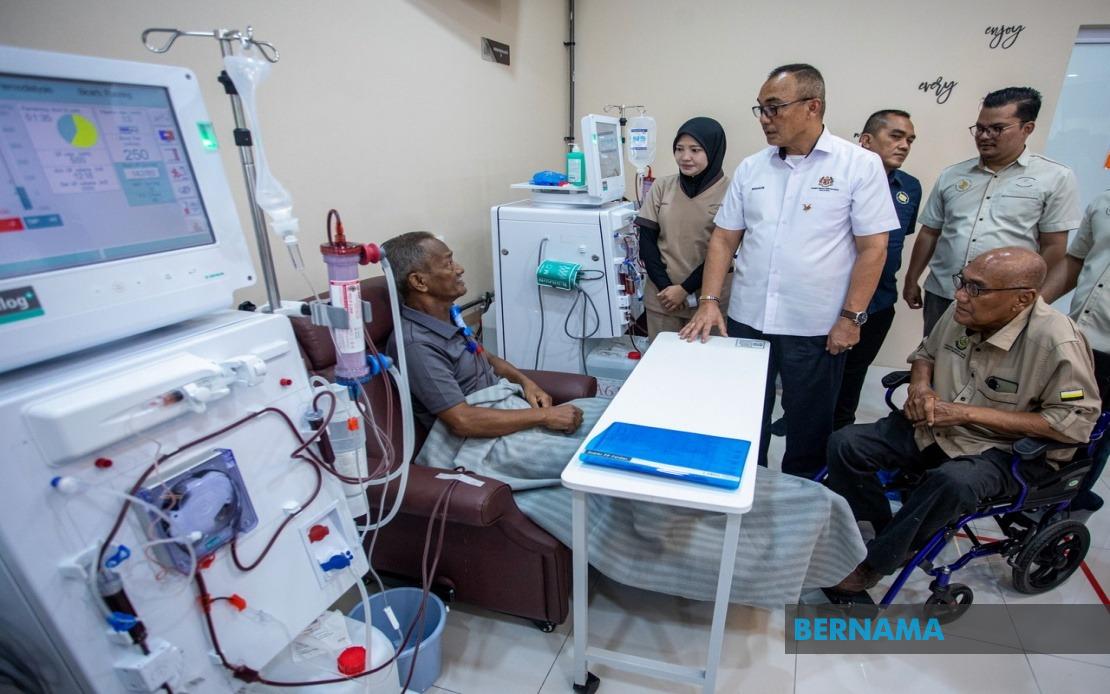
The Malaysian Armed Forces Veterans Foundation (YVATM) has secured over RM18 million in funding to construct and establish nine dialysis centres nationwide, representing a significant expansion of healthcare services for military veterans and their families. The ambitious infrastructure project reflects growing recognition of the medical needs within Malaysia's veteran population, many of whom require regular dialysis treatment for chronic kidney conditions. The initiative was formally unveiled during ceremonies at the foundation's latest facility in Batu Kurau, Perak, underscoring the government's commitment to improving healthcare access beyond urban centres.
Major General Datuk Semaon Marjuki, director-general of the Malaysian Armed Forces Veterans Affairs Department (MAF JHEV), described the network expansion as a strategic initiative designed to strengthen the welfare infrastructure supporting those who have served in the armed forces. The nine centres will be strategically positioned across key regions to ensure reasonable geographic accessibility for veterans requiring ongoing treatment. With four facilities established in Selangor—the nation's most populous state—alongside multiple centres in Perak, Negeri Sembilan, Johor, and Pahang, the distribution attempts to address both high-density urban areas and less-served regions where veteran populations may face particular challenges accessing specialist medical care.
Each dialysis centre has been designed to meet the rigorous standards established by Malaysia's Ministry of Health, ensuring that treatment quality and patient safety remain consistent across all locations. The facilities incorporate contemporary medical equipment and infrastructure, enabling staff to deliver dialysis services according to established clinical protocols. The emphasis on meeting standardised requirements is particularly significant given the critical nature of dialysis treatment, which requires precision, sterile environments, and skilled supervision to prevent complications and ensure patient wellbeing. By establishing uniform standards across all nine centres, YVATM ensures that veterans receive comparable care regardless of which facility they access.
The operating model relies on DVET Holding Sdn Bhd, a wholly-owned subsidiary of the MAF Veterans Foundation, which assumes responsibility for day-to-day management and service delivery. This arrangement allows the foundation to maintain direct oversight while leveraging professional healthcare management expertise. The subsidiary structure enables the foundation to operate as a social enterprise, potentially generating revenue to reinvest in expanding or improving services. This operational arrangement reflects broader trends in Malaysia where government-linked organisations establish commercial subsidiaries to deliver public services while maintaining accountability to stakeholder interests.
Current utilisation data reveals that approximately 2,055 armed forces veterans are actively undergoing dialysis treatment at various facilities nationwide, including JHEV-operated centres, Social Security Organisation (SOSCO) clinics, and other approved healthcare providers. This substantial patient population demonstrates the genuine medical need underlying the infrastructure investment. The number of veterans requiring dialysis reflects the prevalence of kidney disease in this demographic, which may be influenced by occupational exposures, service-related injuries, or age-related health conditions common among those who have served in the military. The expansion of dedicated facilities should reduce wait times and improve access for this vulnerable population.
Beyond serving veterans, the dialysis centres will operate on a community basis, accepting patients from the general public to improve resource utilisation and enhance financial sustainability. This dual-service approach is common among government-linked healthcare providers, where serving a specific constituency—veterans in this case—forms the primary mission while generating additional revenue through broader community access. For Malaysian citizens without veteran status, these facilities provide alternative dialysis options, particularly valuable in regions where private dialysis clinics may be scarce or unaffordable. This mixed-service model therefore contributes to Malaysia's broader healthcare accessibility agenda.
The infrastructure development occurs within a context of rising chronic kidney disease prevalence throughout Southeast Asia and Malaysia specifically. Dialysis treatment represents a significant long-term healthcare commitment, with patients typically requiring three sessions weekly for several hours per session. The availability of conveniently located, quality-assured facilities thus becomes essential for maintaining treatment adherence and preventing complications that could necessitate costly hospitalisation. By expanding the dialysis centre network, particularly in non-metropolitan regions, YVATM addresses a documented gap in Malaysia's renal care infrastructure while simultaneously honouring obligations to the veteran community.
The initiative reflects broader governmental priorities regarding veteran welfare, which has gained increased policy attention as post-independence cohorts age and require enhanced healthcare support. Military service carries occupational health risks that may manifest years or decades after discharge, creating ongoing healthcare demands that extend beyond active service years. Recognition of these delayed health impacts has translated into expanded healthcare programmes specifically designed for veterans. Malaysia's approach of establishing dedicated healthcare facilities demonstrates commitment to this principle while maintaining service accessibility through community-inclusive operating models.
Looking forward, the successful establishment of these nine centres may establish a template for expanding other specialist healthcare services within the veteran population. Dialysis represents one of several chronic conditions requiring regular specialist intervention among older veterans, including cardiovascular disease, orthopedic rehabilitation, and mental health support. If the current initiative demonstrates operational and financial viability, similar multi-facility networks addressing other health conditions could follow. This potential multiplier effect makes the dialysis centre project significant beyond its immediate scope, potentially catalysing broader veteran healthcare infrastructure development.
The distributed geographic placement across multiple states also carries implications for health system equity throughout Malaysia. Chronic disease management increasingly emphasises local accessibility, as patients unable to reach distant facilities often discontinue treatment or face severe complications. By establishing facilities in Perak, Negeri Sembilan, Johor, and Pahang alongside the Selangor cluster, the project acknowledges that healthcare accessibility extends beyond availability to include geographic convenience. This principle, applied beyond the veteran population, could inform future healthcare infrastructure planning at national and state levels, particularly as Malaysia continues addressing regional disparities in healthcare access and quality.

